What should you look for when buying?
For a cortado cookery class, the key things to consider are the skills you want to teach, keeping milk foam to a minimum, the pace of service and a setup that’s easy to manage.
| What matters to you |
What to check when buying |
Who it matters most to |
| Learning to pull espresso |
Check which grinding and brewing steps are done manually, and whether a suitable grinder is included or already available. |
If you want to teach participants how to pull espresso, they should be able to understand the grind and preparation process for themselves. Around 36% of consumers would prioritise learning to pull espresso themselves. |
| Making milk with little foam |
Check whether you can keep the milk texture light by steaming manually or adjusting the automatic settings. |
If you need warm milk with little foam for a cortado, you’ll want to be able to control the texture. Around 29% of consumers would prioritise being able to prepare this kind of milk texture easily. |
| Making several drinks in a row |
Check the specifications for the particular model to see whether brewing and steaming can be done at the same time. |
If several cortados need to be made in quick succession during the class, you’ll want to avoid unnecessary pauses between steps. Around 21% of consumers would give particular weight to the process of making several drinks. |
| Space and accessories |
Compare the machine’s dimensions and check whether a grinder and any necessary milk accessories are included. |
If workspace is limited or you still need accessories, you’ll want to plan your setup in advance. Around 14% of consumers would prioritise the space needed and keeping accessories to a manageable amount. |
These figures are a rough guide to the course requirements described here, not a representative survey of purchasing habits. With a manual process, preparing the milk may take more practice; with an automatic function, check whether you can set it to produce the small amount of foam you want. For tightly scheduled classes, the manufacturer’s specifications on how brewing and steaming work together are what matter.
Joybuy product options for your class
These Joybuy product options include portafilter machines with grinders, as well as manual and automatic milk functions. They let you weigh up the skills you want to teach, the equipment included and the planned flow of your class. Before buying for use in Germany, check the specifications for the exact version of the machine, its CE marking, and the required safety and user information. An image of the CE mark in a listing alone doesn’t prove compliance. The European Union and the Bundesnetzagentur explain the requirements and product information for each relevant area of use.
 No image available
Sage Barista Touch espresso machine with grinder
For a class where grinding, pulling espresso and automatic milk texturing are all part of the preparation process.
Features an integrated conical burr grinder, automatic Micro-Foam function and touchscreen; stainless steel finish.
Joybuy
 No image available
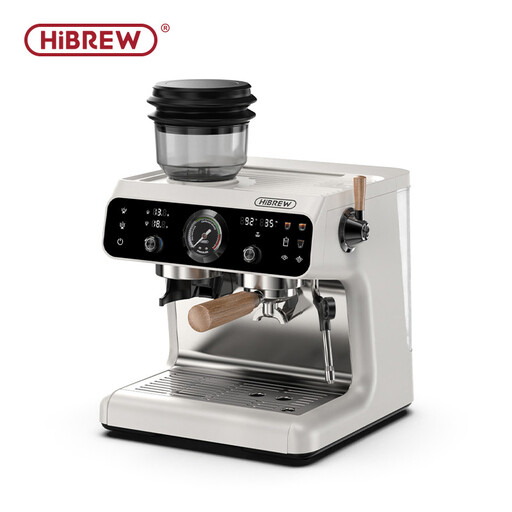
HiBREW H7B Upgraded Dual Boiler Barista Pro, White
For a class where you want to consider a model with an integrated grinder and a dual-boiler system.
Described as a dual-boiler espresso machine with an integrated grinder; white finish.
Joybuy
 No image available
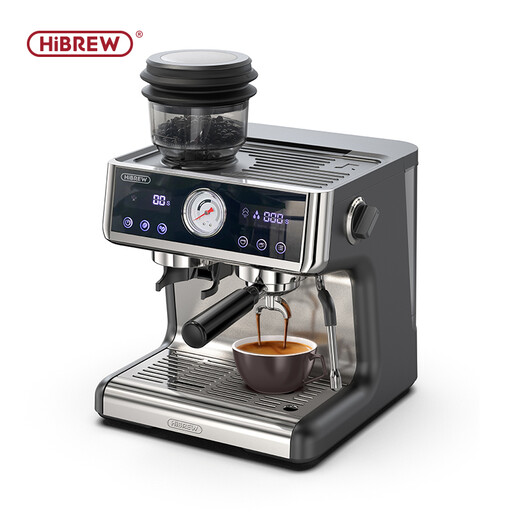
HiBREW H7A Dual Boiler System Barista Pro
For consumers who want to include a model with an integrated grinder and dual-boiler system in their class planning.
The product name specifies a dual-boiler system, an integrated grinder and a complete set.
Joybuy
 No image available
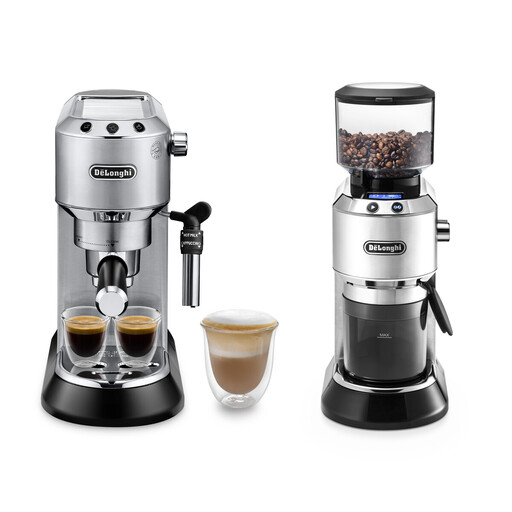
De’Longhi Dedica Style Barista Bundle ECKG6821.M
For a class where you want to take manual steps and a grinder included in the same set into account.
According to De’Longhi, the set includes a Dedica machine and a grinder; it’s not the same as the standalone EC685.M EX:4.
Joybuy
 No image available
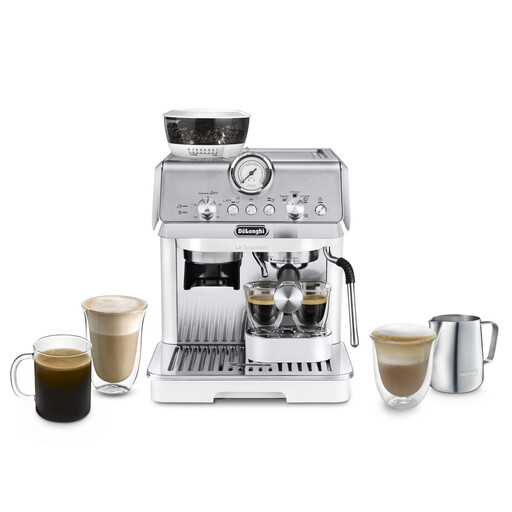
De’Longhi La Specialista Arte EC9155.W with Barista Kit
For consumers who want to include grinding and manual steaming with a steam wand in their class.
Features an integrated grinder with eight grind settings, three temperature settings, a steam wand, a 1.7-l tank and a Barista Kit.
Joybuy
Frequently asked questions
How much milk goes into a cortado?
A good starting point is roughly equal amounts of espresso and warm milk, with very little foam. Tegernseer Kaffeerösterei’s recipe calls for around 30–40 ml of espresso and a similar amount of milk; adjust the serving to suit the recipe and the cups you’re using in class.
Do I need a separate grinder for the class?
That depends on whether you already have a grinder and what’s included with the machine. The standalone De’Longhi Dedica Style EC685.M EX:4 and the ECKG6821.M set are different products; De’Longhi says the set includes an additional grinder. Check the model name and what’s included before buying.
How should I plan for cleaning after the class?
Clean the steam wand, portafilter and milk accessories after use, and follow the instructions for your specific model when descaling and carrying out maintenance. Gaggia describes the Classic E24’s descaling cycle as manual; this doesn’t mean the same descaling interval applies to other machines.
What are my rights if the machine is faulty or I buy it online?
Your statutory rights against the seller are separate from any voluntary guarantee. Online consumer contracts generally come with a 14-day right to cancel; the conditions, when the period starts and any exceptions depend on the specific contract. Verbraucherzentrale explains the differences.
What should I know about product safety in Germany?
Electric espresso machines must meet the EU product requirements that apply to them. The European Union explains that the CE marking is a declaration made by the manufacturer; for relevant products, the Bundesnetzagentur lists requirements including marking, manufacturer details and the necessary safety and user information in German. The CE mark isn’t an independent quality seal and, on its own, doesn’t prove that a particular listing complies with the requirements.


