
Lieferung heute & morgen

Qualitätsgarantie

Willkommens-Angebote freischalten: KOSTENLOSE Lieferung | Bis zu 80 % RABATT | Kostenlose 30-Tage-JoyPlus-Testphase
App herunterladen
The aroma of freshly ground beans and the hiss of the steam wand—a high-quality espresso machine with a grinder brings the authentic café experience into your own kitchen. However, the path to the perfect home espresso is often paved with marketing promises and technical pitfalls. As a Joybuy Product Recommendation Officer, I'll help you identify the crucial features and make an informed choice that fits your needs.
Many aspiring home baristas invest in a machine that looks impressive on paper but disappoints in practice. Two pitfalls are particularly common:
To avoid a poor investment, you should carefully examine three technical aspects. These are the primary determinants of your coffee's quality and the machine's ease of use.
The integrated grinder is crucial for the freshness and aroma of your espresso. Coffee beans lose a large portion of their volatile aromatic compounds just minutes after grinding.
The heating system ensures that the water reaches and maintains the ideal brewing temperature of approx. 90–94 °C.
For lovers of milk-based coffee drinks, a good espresso machine with a milk frother is a must.
Instead of presenting an overwhelming list, we have selected models that meet specific user profiles and avoid the pitfalls mentioned.
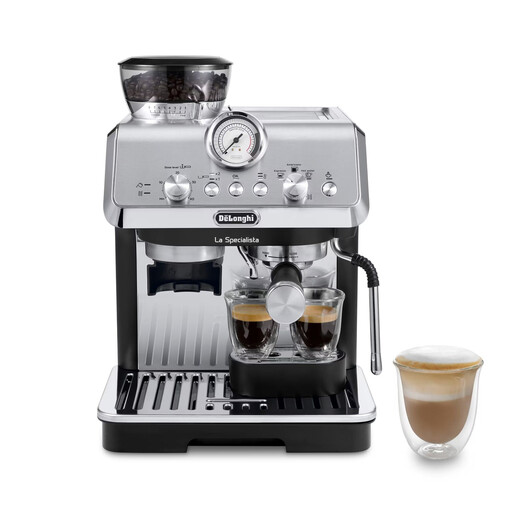
Why This Fits Their Persona: Ideal for those who want to learn the craft of a barista from the ground up. The machine offers full control over the process but supports users with thoughtful assistance features. The included barista kit allows for immediate use without any additional purchases.
It sidesteps the trap of downstream costs, as a complete barista kit (tamper, milk pitcher, dosing funnel) is already included. The integrated grinder is perfectly matched to the machine.
8 grind settings and 3 temperature levels provide precise control. The manual My LatteArt steam wand is ideal for practicing milk foam for cappuccinos.

Why This Fits Their Persona: Perfect for users who want consistent, café-quality results with maximum convenience. The intuitive touchscreen guides you through the entire process, from grinding to frothing, and saves individual preferences.
The automatic milk frothing system removes the complexity of creating perfect microfoam. The ThermoJet heating system is ready in 3 seconds, eliminating long wait times.
The combination of touchscreen operation, preset recipes, and automatic milk texturing delivers reproducible results. Up to 8 personalized drinks can be saved.
We have compiled a complete, up-to-date list of products that fully meet these strict selection criteria and German safety regulations.
The frequency depends on the water hardness in your area and your usage. Most modern machines have an automatic descaling indicator. As a rule of thumb, with average water hardness, you should descale every 2 to 3 months. Using a water filter in the tank can extend these intervals and protect the machine.
The ideal grind size is fine, similar to table salt, but not as powdery as flour. You can tell if the setting is correct by the extraction time: a double espresso (approx. 60 ml) should be extracted in about 25–30 seconds. If the water flows through too quickly, the grind is too coarse. If it flows too slowly or only drips, it's too fine.
For coffee enthusiasts who appreciate control over the brewing process and enjoy the ritual of preparation, a semi-automatic machine is an excellent choice. It offers the flexibility to experiment with different beans and parameters to perfect your personal taste—an opportunity that a fully automatic machine does not provide to the same extent. An espresso and cappuccino machine of this type is an investment in the quality of your daily coffee break.