
Lieferung heute & morgen

Qualitätsgarantie

Willkommens-Angebote freischalten: KOSTENLOSE Lieferung | Bis zu 80 % RABATT | Kostenlose 30-Tage-JoyPlus-Testphase
App herunterladen
The desire for authentic espresso, just like the one from your favourite café, leads many coffee lovers to buy their own espresso machine. An espresso machine with a grinder promises the ideal combination of freshness and control. However, the market is flooded with appliances whose marketing promises often suggest more than the technology can deliver. Before you make a decision, it's crucial to understand the common pitfalls that can lead to disappointment and unnecessary expense.
As your Joybuy Product Recommendation Officer, I will help you define objective criteria for your selection and identify the features that truly matter.
Many machines advertise professional results, but technical compromises are often hidden behind the marketing. Pay special attention to these three points:
To avoid these pitfalls, you should focus on three core technical components. These are the primary determinants of your coffee's quality and the machine's ease of use.
The heating system is the heart of every espresso machine. It determines how quickly the machine is ready for use and how constant the water temperature remains during the brewing process.
Freshly ground coffee is the foundation of good espresso. The integrated grinder should therefore not be a weak point.
For lovers of cappuccino or latte macchiato, the milk system is a key criterion.
Based on these objective criteria, we have identified models that offer a suitable solution for different user profiles.
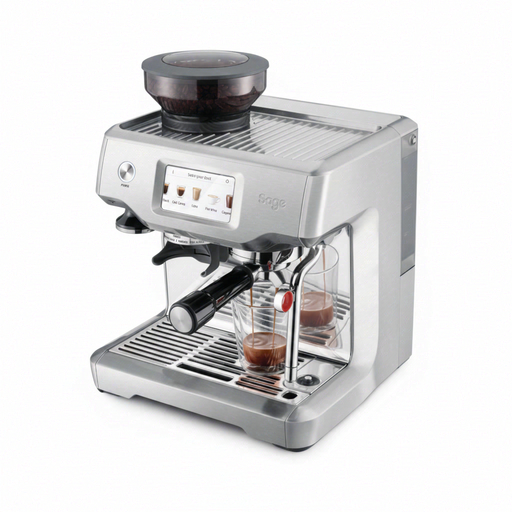
Why it's a great fit: Ideal for anyone who wants to prepare excellent coffee drinks without a steep learning curve. The espresso machine with a touchscreen visually guides you through every step, from grinding to milk frothing. You can easily save your own creations.
The machine combines a precise conical burr grinder and an automatic milk frother that adjusts the texture and temperature independently. This avoids the inconsistency of lower-quality components.
According to the manufacturer, the ThermoJet heating system reaches the optimal brewing temperature in 3 seconds. The intuitive operation via the colour display makes it the ideal espresso machine for beginners.

Why it's a great fit: For users who want to celebrate the process of coffee making. The included barista kit (tamper, tamping mat) and the manual steam wand invite you to experiment and learn barista skills.
Instead of full automation, this model focuses on control. The grinder with 8 settings and the manual steam wand give the user the tools to perfect the grind and milk foam themselves.
The My LatteArt system enables the creation of microfoam for creative coffee drinks. The Cold Extraction Technology for preparing cold brew in minutes is an additional feature.
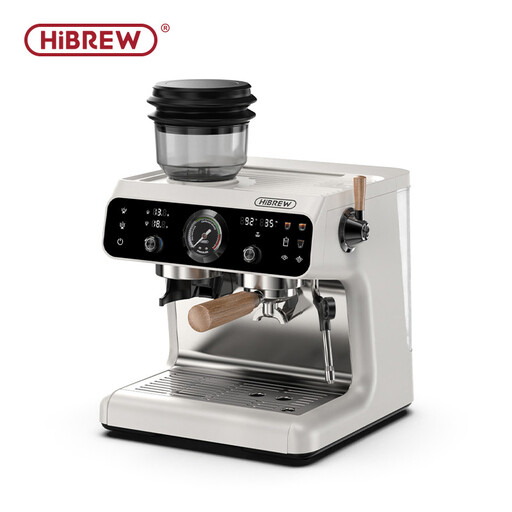
Why it's a great fit: For coffee lovers who refuse to compromise on performance. The dual-boiler system allows for simultaneous espresso extraction and milk frothing—ideal for quickly serving multiple guests.
This machine offers technical features typically found in professional-grade equipment. The dual heating system and PID temperature control deliver the stability and power necessary for true "barista-quality" results.
The conical burr grinder is adjustable in 30 settings, offering maximum precision. The PID controller allows the brewing temperature to be adapted to different roasts.
We have compiled a complete, up-to-date list of products that fully meet these strict selection criteria.
The frequency of descaling depends on the water hardness in your area and how often you use it. As a general guideline, it is recommended to descale the machine every two to three months. Many modern machines have a built-in reminder function that indicates when descaling is necessary. Using a water filter in the water tank can reduce limescale build-up and extend the descaling intervals.
For espresso, a conical or flat burr grinder is required. These grinders mill the coffee beans evenly into a fine powder, which is essential for optimal extraction under high pressure. A grinder with many fine adjustment levels is important to be able to precisely match the grind to the bean, humidity, and machine. Blade grinders are unsuitable for espresso.
That depends on the quality of the system. High-quality automatic milk frothers, like those found in some Sage models, can produce a very fine, silky microfoam that is, in principle, suitable for simple latte art patterns. However, for complex designs and full control over the texture, a manual steam wand remains the preferred choice for experienced baristas.