
Lieferung heute & morgen

Qualitätsgarantie

Willkommens-Angebote freischalten: KOSTENLOSE Lieferung | Bis zu 80 % RABATT | Kostenlose 30-Tage-JoyPlus-Testphase
App herunterladen
Switching from capsules or a fully automatic machine to a portafilter machine is a decisive step for any coffee enthusiast. The ritual of freshly grinding the beans, tamping the coffee, and watching the extraction offers an unparalleled experience. An espresso machine with a built-in grinder promises an all-in-one solution. However, the market is flooded with models whose marketing promises often disappoint more than they deliver. Before you invest, you should be aware of the common pitfalls that can quickly shatter the dream of the perfect espresso.
Many machines look high-quality at first glance but reveal their weaknesses only in daily use. Pay close attention to these three points to avoid a poor investment.
To avoid these pitfalls, focus on verifiable technical features instead of marketing slogans. A good at-home barista coffee machine is defined by the control it offers and the quality of its components.
The heart of any espresso machine with a grinder is the grinding mechanism. A hardened steel conical burr grinder is considered durable and produces uniform grounds with low heat generation. The crucial factor is the number of adjustable settings. Look for a model with at least 8 grind settings. This gives you the necessary flexibility to react to the roast level, age, and variety of the beans and to precisely control the extraction time.
A constant brewing temperature between 90°C and 94°C is essential for a balanced espresso. Machines with active temperature control reliably maintain this range. Equally important is the pump pressure. While many manufacturers advertise 15 or 20 bars, the ideal pressure for espresso extraction is measured directly at the brew group and is around 9 bars. A pressure gauge that displays the pressure during extraction is a useful tool for monitoring and optimising your technique.
A high-quality stainless steel espresso machine is more than just a visual highlight in the kitchen. The material is robust, hygienic, easy to clean, and retains heat better than plastic. Pay attention to the solid construction of the housing, the portafilter, and the steam wand. Removable parts like the water tank and drip tray should be made from durable materials and be easy to handle.
Instead of making a one-size-fits-all recommendation, we have identified products that suit different needs and budgets.
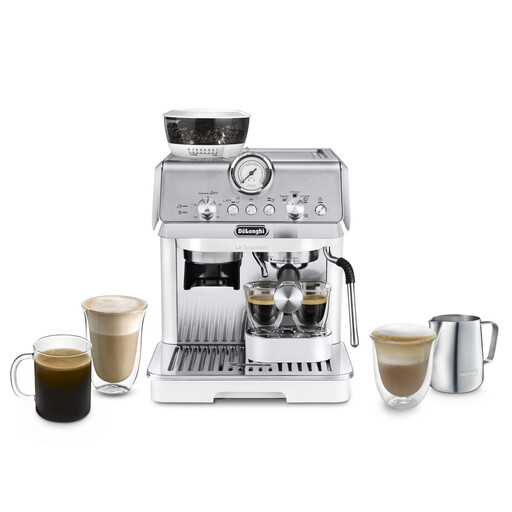
Why it's a match: Ideal for anyone seeking an all-in-one solution that simplifies the entry into home espresso but offers enough manual control for future learning curves. The included barista kit (tamper, tamping mat, milk pitcher) makes getting started straightforward. A great choice as a portafilter machine for ambitious beginners.
With 8 grind settings, it offers ample room for adjustments. The 3 selectable brew temperatures provide more consistency than devices without this feature. The dosing and tamping guide reduces coffee ground waste and facilitates a clean workflow.
A complete package of machine and professional accessories. The My LatteArt steam wand enables the creation of fine microfoam for latte art.

Why it's a match: For users who want maximum control for their budget and are willing to purchase the machine and grinder separately. This modular approach allows for individual components to be upgraded later. Paired with an external grinder like the Ariete 3023, it creates a flexible setup.
By choosing a separate grinder (e.g., one with 14 settings), the pitfall of an inadequate grind is completely avoided. The built-in pressure gauge on the IAGREEA machine provides direct visual feedback on extraction pressure, helping to improve consistency.
High flexibility and excellent value for money. The machine offers essential features like a powerful steam wand and programmable cup sizes in a compact stainless steel housing.
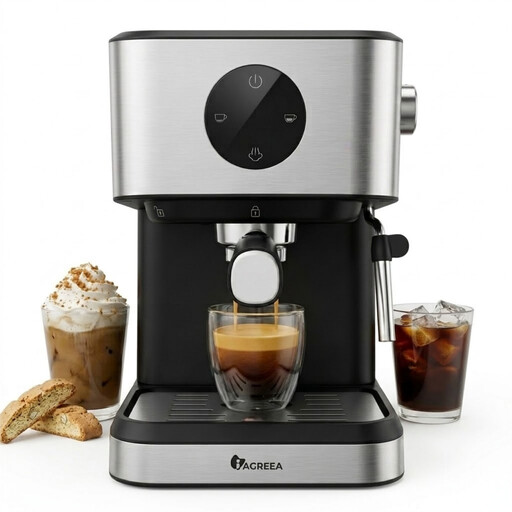
Why it's a match: Perfect for modern kitchens with limited space. Its slim and compact brushed stainless steel design fits elegantly into any environment without compromising on core functions. The small footprint makes it one of the most space-saving options available.
As a separate unit, it bypasses the disadvantages of a low-quality integrated grinder. The stainless steel housing is not only stylish but also durable and easy to wipe down, reducing cleaning effort compared to plastic models.
Compact, space-saving design with a high-quality stainless steel finish. The large, removable 1.5-litre water tank is a practical everyday feature in this size class.
We've compiled a complete, real-time list of products that fully meet these strict selection criteria and safety regulations.
1. How often do I need to descale an espresso machine with a grinder? The frequency depends on the water hardness in your area and your usage. With average water hardness, descaling every 2 to 3 months is recommended. Many modern machines, like the De'Longhi La Specialista Arte, have an indicator to remind you. The brew group and grinder should be cleaned weekly.
2. What is the right grind setting for espresso? There is no universal setting. The ideal grind is fine, similar to table salt, but not as powdery as flour. A good rule of thumb: the extraction for a double espresso (approx. 40-60 ml) should take between 25 and 30 seconds. If the coffee runs through too quickly, grind finer. If it takes too long, grind coarser. This process is called "dialing in."
3. Is a portafilter machine worthwhile for beginners? Yes, if you are willing to engage with the process. Models designed specifically as a portafilter machine for beginners often offer assistance like pre-set programs or pressure gauges. For many, the learning experience and the resulting coffee quality are well worth the investment. A combo unit like the De'Longhi EC9155.W can make it easier to get started, as the grinder and machine are already matched to each other.