
Lieferung heute & morgen

Qualitätsgarantie

Willkommens-Angebote freischalten: KOSTENLOSE Lieferung | Bis zu 80 % RABATT | Kostenlose 30-Tage-JoyPlus-Testphase
App herunterladen
The desire for café-quality espresso in the comfort of your own home leads many coffee lovers to purchase an espresso machine. But the market is filled with tempting offers and technical specs that often confuse more than they clarify. The wrong choice can lead to frustration and a machine that sits unused after just a short time.
As a Joybuy Product Recommendation Officer, I analyse product data to provide you with objective and practical guidance. This guide focuses on the crucial criteria that are often overlooked, helping you to avoid common purchasing traps.
Before we dive into features, it's essential to understand the most prevalent marketing traps that can lead to a poor purchase.
To make an informed decision, you should focus on three core technical aspects that determine the performance and longevity of a barista-style coffee machine.
As mentioned, it's not the maximum pump pressure that's critical, but the constant pressure at the brew head. Good machines feature an Over-Pressure Valve (OPV) that regulates the pressure to the ideal 9 bars. Also, pay attention to the heating system. A Thermoblock system heats up quickly and delivers water at a consistent temperature. Models with a PID (Proportional-Integral-Derivative) controller offer even more precise temperature control, which makes a noticeable difference, especially with lighter roasts.
The decision for or against an espresso machine with a grinder depends on your priorities.
A solid stainless steel construction is an indicator of quality. It not only provides an attractive appearance but also ensures the necessary thermal stability. If you enjoy cappuccinos or lattes, a good coffee machine with a milk frother is important. A manual steam wand offers the most control for creating the fine microfoam needed for latte art, but it requires practice. Automatic milk systems are more convenient but often produce a stiffer, less silky foam.
Here are some recommendations tailored to different needs and budgets, which take the aforementioned pitfalls into account.
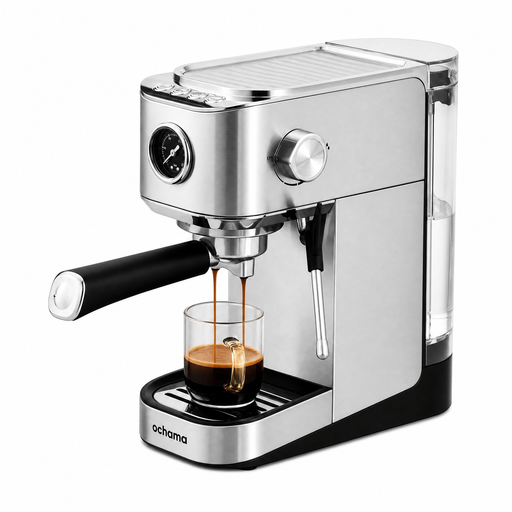
Why it's a good fit: This device offers the essential functions for manual espresso brewing without unnecessary complexity. The full metal body made of stainless steel is a significant advantage in this price range for durability and temperature stability, making it excellent for learning the fundamentals of espresso preparation.
The machine focuses on its core function—extraction—instead of including a subpar integrated grinder. This gives you the freedom to add a separate, high-quality grinder later if needed, without being tied to a compromise.
Robust full metal body and a cup warming feature, often found only on more expensive models. The high pump pressure of 20 bars provides the necessary power for a good extraction.
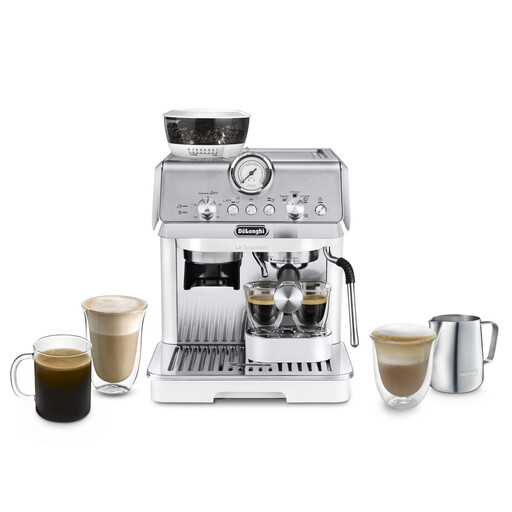
Why it's a good fit: This model is a complete home barista station. It offers an integrated grinder, temperature control, and a comprehensive accessory kit. It's ideal for users who want to control and perfect the entire process, from bean to the perfect cappuccino machine.
The integrated grinder with 8 settings is high-quality for a combination machine and offers enough control to minimise the typical "all-in-one" compromise. The included barista kit (tamper, tamping mat) also prevents hidden follow-up costs for necessary accessories.
Three temperature settings for different bean types and roast levels. The My LatteArt steam wand allows you to create fine microfoam for latte art.
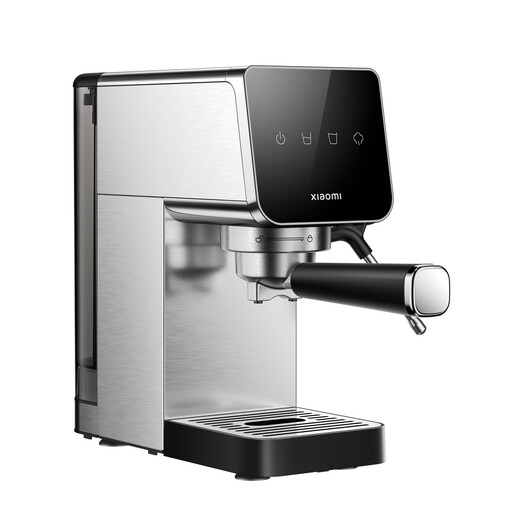
Why it's a good fit: At only 14 cm wide, this machine is extremely space-saving and fits into even the smallest kitchens. Its minimalist, modern design is a visual highlight, without compromising on the core functionality of espresso extraction.
The device focuses on solid extraction and a compact body, rather than trying to cram too many features into a small unit. It avoids the trap of a low-quality integrated grinder and instead relies on a powerful pump and precise temperature control.
Ultra-compact design, a powerful 20-bar pump system, and precise NTC temperature control for consistent brewing results.
We have compiled a complete, up-to-date list of products that fully meet these strict selection criteria and comply with European safety standards.
1. What is the ideal pump pressure for an espresso machine, 15 or 20 bars? The value stated on the packaging (e.g., 15 bars or 20 bars) describes the maximum pressure the pump can generate. However, for the actual espresso extraction, a constant 9 bars at the coffee grounds is optimal. A 15-bar pump is therefore more than sufficient to achieve this target pressure. A higher number is primarily a marketing point and does not automatically lead to better coffee.
2. Do I need an espresso machine with an integrated grinder? That depends on your needs. An espresso machine with a grinder is a space-saving and convenient solution for beginners. However, you must ensure that the grinder offers enough adjustment settings. For coffee enthusiasts who want maximum control over the grind size and bean type, a separate, high-quality coffee grinder is usually the better choice.
3. How long does an espresso machine last and how do I maintain it properly? The lifespan heavily depends on the build quality and maintenance. Models with a high proportion of stainless steel and a robust brew group often last 5 to 10 years or even longer with regular care. The most important maintenance task is regular descaling according to the manufacturer's instructions. Additionally, the brew group and portafilter should be cleaned after each use to remove old coffee oils that can impair the taste.