Busy mornings
You want to make a milky coffee in just a few steps before heading out, without spending ages cleaning up afterwards. Philips, Nespresso and Krups describe milk functions that let you prepare drinks at the touch of a button.


If you want to keep your morning routine simple, consider a bean-to-cup machine with a milk system or a capsule machine with a milk function. If you’d rather have more control over your espresso and milk froth, a portafilter machine could be a better fit. Whichever you choose, you’ll need to clean it after making milk-based drinks and factor in the ongoing cost of consumables. If you’re planning to enjoy your latte at lunchtime, you’ll also need a separate plan for transporting and storing the milk.
You want to make a milky coffee in just a few steps before heading out, without spending ages cleaning up afterwards. Philips, Nespresso and Krups describe milk functions that let you prepare drinks at the touch of a button.
You want to enjoy your latte at lunchtime, so you’ll need to plan how to handle, transport and store the milk separately from your choice of machine. The German Federal Institute for Risk Assessment highlights the importance of keeping food at sufficiently low temperatures during transport and storage.
You’re happy to put in a few extra steps to have more control over your espresso and milk froth. De’Longhi describes a manual cappuccino system, while Sage lists an automatic steam wand for the Bambino Plus.
A good fit if: You want to make coffee from beans and a milk-based drink on weekdays with just a few steps.
Keep in mind: An automatic milk system still needs cleaning after use, and it won’t store your finished drink for you.
A good fit if: You want to make drinks one at a time with minimal espresso preparation.
Keep in mind: Capsules are an ongoing expense, and depending on the model, you may also need to clean the milk container or frother.
A good fit if: You want to prepare and adjust your espresso and milk yourself.
Keep in mind: You’ll need to allow extra time for preparation and cleaning.
The German Federal Institute for Risk Assessment warns against keeping food at insufficiently low temperatures during transport and storage. The German consumer advice centre distinguishes between the refrigeration requirements for fresh milk and unopened UHT milk.
| Priority | What to check when buying | Who is this important to? |
|---|---|---|
| A quick morning routine | Check the milk-based drink you want and the steps involved before you’re finished; allow for adding caramel as a separate step. | If I’m short on time in the morning, a quick preparation and clean-up routine matters to me. Around 25% of consumers put their morning routine first. |
| Keeping milk until lunchtime | Work out in advance whether you can keep it chilled until you’re ready to drink it, or add the milk once you reach your destination. | If I’m not having my latte until lunchtime, I need a practical plan for the milk, transport and storage. Around 25% of consumers prioritise safe milk handling. |
| Cleaning after making a milk-based drink | Compare the parts that need cleaning and the care instructions for the specific model. | If I regularly make milk-based drinks, I want to know how to care for the parts that come into contact with milk afterwards. Around 20% of consumers put cleaning first. |
| Adjusting the espresso and milk | Check whether you’d like to froth milk manually or would prefer an automatic steam wand. | If I want to adjust my espresso and milk froth myself, I’m happy to put in a few extra steps. Around 15% of consumers prioritise customisation. |
| Consumables | Factor in suitable beans or capsules and, where applicable, filters and descaling products for the specific model. | If I use my machine frequently, I want to take ongoing consumables into account when making my decision. Around 15% of consumers put running costs first. |
The machine prepares your drink, but it doesn’t control the temperature during later transport and storage.
Before you buy, decide how you’ll keep the milk or finished latte chilled until you’re ready to drink it, or whether you’ll add the milk once you reach your destination.
You may need a suitable way to keep it chilled during transport.
Automatic milk systems and frothers still need cleaning. The parts that come into contact with milk vary by model.
Check the cleaning instructions for the specific machine before building it into your morning routine.
Cleaning takes time, and some models may also require cleaning products.
If you use your machine regularly, you’ll need to factor in beans or compatible capsules, as well as filters and descaling products where applicable.
Check which consumables the exact model needs and consider how often you’ll use it.
You’ll need to buy beans or capsules regularly, and some models also require filters and descaling products.
The Series 3300 EP3347/90 is a bean-to-cup machine with an automatic LatteGo milk system.
The Original Lattissima One is designed to make espresso and milk-based drinks one at a time at the touch of a button.
The Nespresso Atelier XN8908 combines Original capsules with a frother for hot and cold milk-based drinks.
The Dedica Style EC685.M EX:4 is a slim portafilter machine for preparing espresso and milk manually.
The Bambino Plus SES500BSS4EEU1 combines a portafilter with an automatic steam wand.
This selection includes bean-to-cup machines with milk systems, as well as an Original capsule machine with a milk function, for making a milky coffee in the morning.
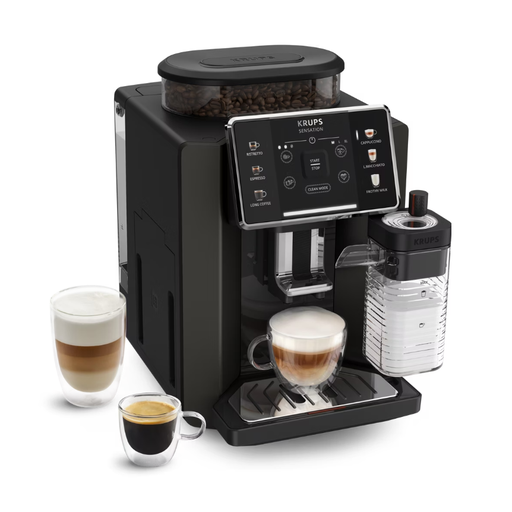 No image available
For a morning routine with automatically prepared coffee and milk-based drinks.
Touch controls; six coffee and milk specialities. You can adjust the drink volume, strength and amount of milk froth. The milk container is removable and dishwasher-safe.
You’ll need a separate plan for transporting and storing your finished milky latte if you’re having it later.
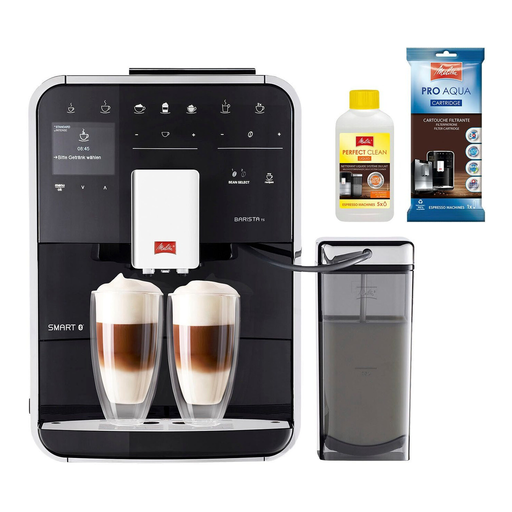 No image available
For automatically preparing coffee and milk-based drinks as part of your regular morning routine.
One-touch function; 21 coffee varieties and eight user profiles. The milk container and milk system parts are described as dishwasher-safe.
The milk system needs cleaning after making milk-based drinks, and you’ll need a separate solution to store your finished latte until lunchtime.
 No image available
For milk-based drinks at the touch of a button, prepared directly into your travel mug.
The product description lists LatteCrema Hot & Cool, 40 recipes and a maximum cup height of 16 cm for the takeaway system. Automatic cleaning, rinsing and descaling programmes are also listed.
The machine can’t replace suitable storage for your finished milk-based drink until lunchtime.
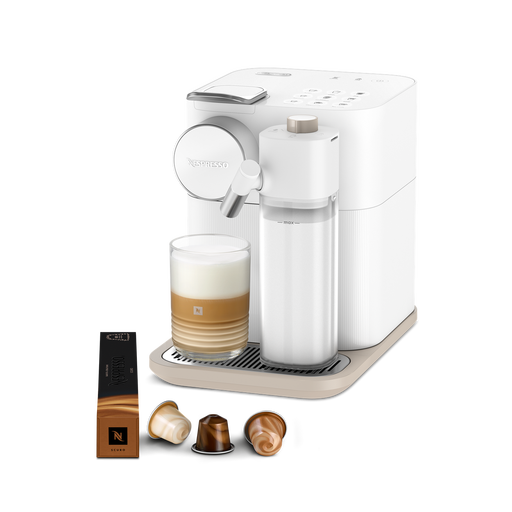 No image available
For making espresso and milk-based drinks one at a time with just a few preparation steps.
The product description lists several milk-based drink recipes, a drinks button and an automatic milk rinse cycle. Requires Nespresso Original capsules.
Ongoing capsule costs and cleaning the parts that come into contact with milk are worth considering. You’ll also need a separate storage solution for transporting your drink until lunchtime.
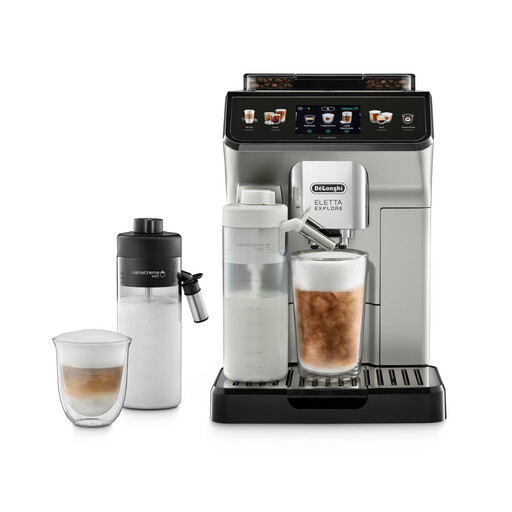 No image available
For automatically preparing milk-based drinks using one-touch recipes.
The product description lists seven recipes and a built-in conical grinder with 13 settings. The LatteCrema milk system has an automatic cleaning function, and removable parts are dishwasher-safe.
You’ll need to plan separately for storing your finished milk-based drink until lunchtime.
No. A milk function doesn’t mean the drink will be stored safely once it’s made. The German Federal Institute for Risk Assessment warns that keeping food at insufficiently low temperatures during transport and storage can allow harmful germs to multiply. Plan for suitable refrigeration or add the milk once you reach your destination; this doesn’t establish a general safe storage time for a finished latte.
No. The German consumer advice centre recommends transporting fresh milk chilled; UHT milk needs to be refrigerated once opened. This doesn’t mean that a prepared milky coffee can be kept unrefrigerated until lunchtime.
Check the electrical specifications and instruction manual for the specific model against the place where you plan to set it up. Clean the parts that come into contact with milk according to the manufacturer’s instructions, and follow the descaling guidance. Milk systems and cleaning requirements vary by model.
For a qualifying distance sale from a retailer, you generally have a 14-day right to cancel, starting from the date of delivery; exceptions apply. You also have a statutory warranty of at least two years for faulty goods. This is separate from any additional manufacturer’s guarantee.
Electrical and electronic equipment covered by relevant harmonised EU legislation must carry a CE mark. Check the marking, model and electrical specifications in the specific product listing. The CE mark isn’t an independent quality label for the taste of the espresso.