For those learning to make espresso
You want to handle the coffee grounds, portafilter and espresso preparation yourself in class, and are happy to take on a few extra steps.


For a mocha in a weekend cookery class, a portafilter machine is a good fit if participants are meant to practise making espresso and preparing milk themselves. A bean-to-cup machine with a milk system is a suitable choice if you want a repeatable routine with fewer manual brewing steps. An automatic steam wand sits somewhere in between: espresso is still made using the portafilter, while the milk requires less hands-on control. Chocolate remains a separate ingredient with all these options; the machines described here do not offer a general-purpose mocha programme.
You want to handle the coffee grounds, portafilter and espresso preparation yourself in class, and are happy to take on a few extra steps.
You want to froth milk for your mocha and decide whether to control the steam wand yourself or use settings to adjust the milk texture.
You care more about an easy-to-repeat routine and cleaning between or after drinks than demonstrating every step of making espresso.
A good fit if: you want to demonstrate or practise making espresso and frothing milk in class.
Bear in mind: preparing the milk remains a separate step.
A good fit if: you want to make espresso using a portafilter, but with less hands-on control of the milk. Sage lists three temperature settings and three texture settings for the Bambino Plus SES500.
Bear in mind: preparing espresso with a portafilter still involves some set-up and hands-on operation.
A good fit if: a repeatable routine matters more than demonstrating how to use a portafilter. Philips describes the Series 2300 EP2333/40R1 as making espresso at the touch of a button, with an automatic LatteGo milk system.
Bear in mind: you’ll need to add the chocolate separately, and the milk system also needs cleaning.
| Buying priority | What to check when buying | Who is it important to? |
|---|---|---|
| Learning to make espresso | Check whether participants will use the portafilter themselves in class or whether espresso at the touch of a button is enough. | If you want espresso preparation to be part of the class, every visible step matters. Around 33% of consumers put hands-on espresso making first. |
| Milk preparation and texture | Compare a manual steam wand, an adjustable automatic steam wand and an automatic milk system on the specific model. | If you want to froth the milk for your mocha yourself or control its texture, the type of milk preparation is key. Around 27% of consumers prioritise this. |
| An easy-to-repeat routine | Plan how you’ll prepare the espresso, milk and chocolate around the actual size of your class. | If several participants will be making drinks, you’ll want a routine that’s easy to repeat. Around 20% of consumers put this simplicity first. |
| Cleaning and counter space | Check the dimensions of the specific model and how to clean the parts that come into contact with milk. De’Longhi lists a width of 15 cm for the EC685.M EX:4; Philips recommends cleaning LatteGo after every use. | If counter space is limited or you want to clean up quickly after frothing, the machine’s dimensions and cleaning routine matter. Around 20% of consumers focus mainly on cleaning or counter space. |
Espresso and milk functions won’t automatically add chocolate to your drink.
Plan for chocolate as a separate ingredient and check the instructions for the specific machine to see how to add it to your drink.
Automatic milk systems still have parts that need cleaning. Philips recommends cleaning LatteGo after every use.
Compare the cleaning steps for the exact model with your planned class routine.
A De’Longhi Dedica Barista Bundle ECKG6821.M with a grinder and accessories is not necessarily the same product as the standalone Dedica Style EC685.M EX:4.
Before buying, compare the full model number, what’s included and the electrical specifications.
A grinder and accessories may take up extra counter space.
The Bambino SES450 and Bambino Plus SES500 are portafilter machines for making espresso yourself.
The Dedica Style EC685.M EX:4 combines a manual portafilter with an adjustable cappuccino system.
The Series 2300 EP2333/40R1 bean-to-cup machine is an alternative to hands-on preparation.
This Joybuy selection features portafilter machines with manual milk wands for classes where participants will make the espresso and prepare the milk themselves.
 No image available
This machine is worth considering for a class where participants will make the espresso and prepare the milk themselves; chocolate remains a separate ingredient.
20 Bar; 50 Oz water tank; milk frother with steam function; stainless steel.
 No image available
The portafilter and steam wand suit a class where participants want to make espresso and froth milk themselves. Chocolate needs to be added separately.
Pressure gauge; steam wand; cup warmer; single and double shots; removable 1.1-litre water tank.
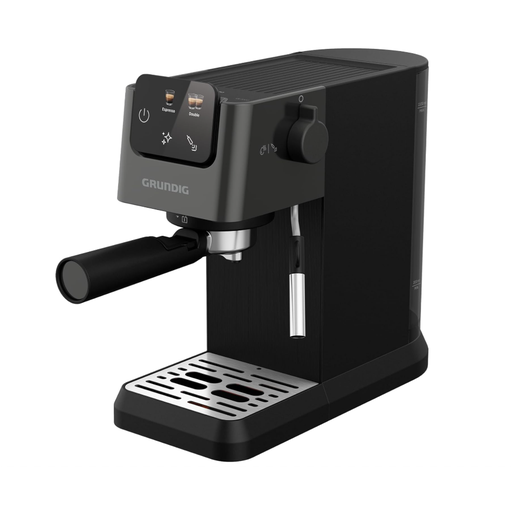 No image available
This semi-automatic portafilter machine is intended for classes where participants can practise making espresso and preparing milk. The product description says it’s designed for home use, so check that it’s suitable for your class.
For ground coffee; milk frothing wand; touch display; memory function; removable water tank; 1628 W.
Chocolate is a separate ingredient for mocha.
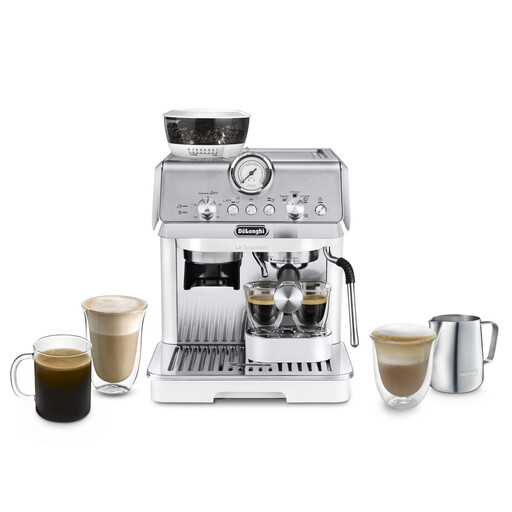 No image available
This portafilter machine has an integrated grinder and a manually operated steam wand, making it suitable for a class where you want each step of the process to be visible. Add chocolate separately.
Integrated grinder with 8 grind settings; preset recipes; 3 temperatures; milk frothing wand; 1.7-litre tank; barista kit.
No. For the mocha described here, you need espresso, chocolate and milk. Check the espresso and milk functions separately; their presence doesn’t mean the machine will dispense chocolate for you.
Follow the instructions for your specific model. Philips recommends rinsing both LatteGo parts under running water or cleaning them in the dishwasher after every use. This manufacturer’s recommendation isn’t a general cleaning schedule for all machines.
For your statutory consumer rights, contact the seller, not automatically the manufacturer. The Verbraucherzentrale generally states that the period is two years from delivery. For sales contracts made on or after 31 July 2026, it describes a one-off 12-month extension if you choose repair when a fault occurs. A voluntary guarantee has its own terms.
Look for clear product and manufacturer details, the CE marking applicable to the appliance, and German instructions with all the necessary information. The European Union describes the CE marking as the manufacturer’s declaration that the product complies with relevant EU rules, not as approval by a central EU body. The Bundesnetzagentur lists points to check, including whether the product can be identified and whether manufacturer details are provided.