Latte lovers with limited worktop space
You need room for more than just the machine: you’ll also need space for your cup, oat drink and frothing. That’s why it’s important to consider both the footprint and your workflow.


For an oat milk latte in a small kitchen, start by measuring the entire work area for your machine, cup, jug and, if needed, grinder. De’Longhi lists the Dedica Duo EC890.M as 15 cm wide. A manual steam wand lets you control the foam yourself, while automatic settings can save you a few steps. A capsule machine makes pulling an espresso simpler, but you’ll need compatible capsules. KRÜSS explains that plant-based drinks foam differently depending on their composition, so no machine feature can guarantee the same result with every oat drink.
You need room for more than just the machine: you’ll also need space for your cup, oat drink and frothing. That’s why it’s important to consider both the footprint and your workflow.
You want to control the milk texture, choosing whether to guide a steam wand yourself or use the settings on an automatic one. The recipe of your oat drink also makes a difference.
You want to cut down on steps when making espresso or frothing milk, so you’re weighing up capsules or semi-automatic bean preparation against having more control yourself.
First, measure the space available for the machine and your work area. Then decide how much control you want when frothing milk and how many preparation steps fit into your routine.
| What to consider | What to check | Who it matters most to |
|---|---|---|
| Footprint and work area | Measure the width, depth and height of the space, and allow room for your cup, jug and coffee preparation. De’Longhi lists the Dedica Duo EC890.M as 15 cm wide; Nespresso gives the Creatista Plus White Sea Salt a depth of 39.3 cm. | If you need space for a cup and milk jug as well as the machine, plan for the whole work area. Around 29% of consumers prioritise usable worktop space. |
| Frothing oat drink | Check whether the steam wand is manual or automatic, and what settings it offers. KRÜSS explains that plant-based drinks foam differently depending on their composition. | If you want to tailor the foam to the oat drink you actually use, this is an important consideration. Around 29% of consumers put oat drink texture first. |
| Steps to make a latte | Compare the whole process, from making the coffee to cleaning the milk wand. The steps vary depending on whether you grind and tamp the coffee yourself or use capsules or automatic functions. | If you want to keep things simple, compare the process from making the coffee to cleaning the wand. Around 24% of consumers prioritise an easy routine. |
| Consumables and care | Check whether you want to use capsules, beans or ground coffee, and read the care instructions for the specific model. De’Longhi says how often Dedica machines need descaling depends on the local water hardness. | If you’re weighing up coffee type and day-to-day care, check which consumables you’ll need and what the cleaning instructions say. Around 18% of consumers prioritise care and consumables. |
The stated width doesn’t account for the space you’ll need for your cup, jug or the steps involved in making your drink. Depth can also be a deciding factor in a small kitchen.
Measure the full available space for the machine and your work area, and run through the whole process from making the coffee to finishing your latte.
You may need extra space for a grinder and milk jug.
KRÜSS explains that plant-based drinks can froth differently because their compositions vary. Automatic settings therefore don’t guarantee the same result with every oat drink.
Compare the level of manual control with the available settings, and try the drink you plan to use regularly.
Capsule, manual portafilter and semi-automatic bean machines differ in the consumables they need and the steps involved.
Check which type of coffee suits the machine and what cleaning and care the instructions recommend for that specific model.
Depending on how you make your coffee, you’ll need compatible capsules or beans. If your machine doesn’t have a grinder, you may also need a separate one.
The Dedica Duo EC890.M is aimed at anyone looking for a slim portafilter machine with a manual steam wand.
The Bambino lets you froth milk manually, while the Bambino Plus has an adjustable automatic steam wand.
The Creatista Plus combines capsule brewing with an automatic steam wand.
The Baristina Latte BAR400/60 is a bean-to-cup machine for anyone who’d rather not grind and tamp the coffee themselves.
These products are espresso machines with milk-frothing functions for latte drinks.
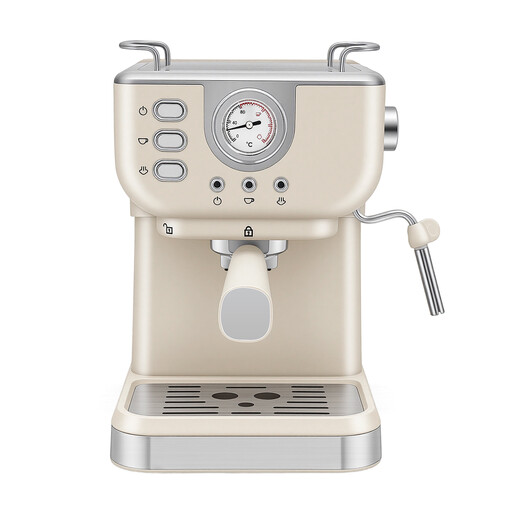 No image available
For lattes if you’re looking for a semi-automatic espresso machine with a milk-frothing function.
Dimensions: 19,5 × 26 × 28 cm. Water tank: 1,5 l.
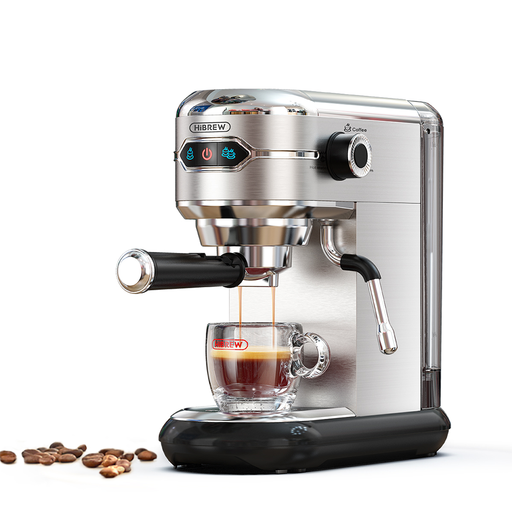 No image available
An option for lattes if you want to use ground coffee or pods.
One- or two-cup option; removable 1,1 l water tank; steam system for milk drinks.
 No image available
For lattes if you want to froth the milk yourself using a manual steam wand.
Water tank: 50 oz. With cup-warming tray.
Frothing is a separate step.
 No image available
For lattes if you want to adjust the steam wand manually and froth the milk yourself.
Dimensions: 11,2 inches wide and 5,1 inches deep. Removable water tank: 1,1 l.
Milk is frothed manually using the adjustable steam wand.
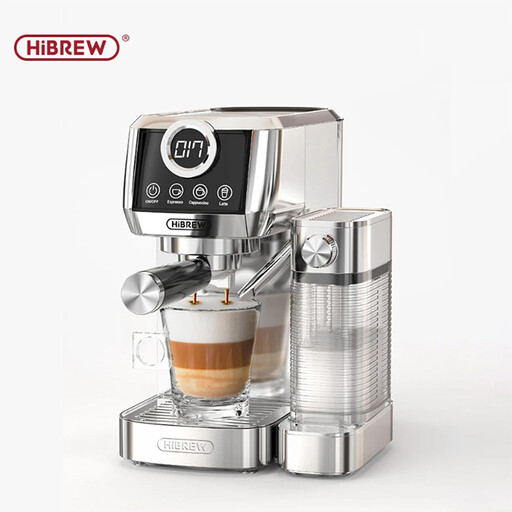 No image available
An option for lattes if you want to use ground coffee and automate milk preparation.
51 mm portafilter; automatic milk frothing; removable 1,3 l water tank.
Not necessarily. De’Longhi lists the Dedica Duo EC890.M as 15 cm wide. Also measure the depth and height, and allow room for your cup, jug and coffee preparation.
No. Automatic settings can save you a few steps, but KRÜSS explains that plant-based drinks foam differently depending on their composition. Check the results with the oat drink you plan to use.
A capsule machine can make pulling an espresso simpler, but you’ll need compatible capsules. If you want to use beans without grinding and tamping them yourself, Philips describes these as automatic steps on the Baristina Latte BAR400/60. Also compare how you’ll prepare and clean the milk.
Clean any parts that come into contact with milk according to the instructions for your specific model. De’Longhi says how often Dedica machines need descaling depends on the local water hardness, so follow the manufacturer’s instructions.
To place a product on the market in the European Economic Area, the manufacturer must assess the applicable conformity requirements, draw up the EU declaration of conformity and apply the required CE marking. The European Commission outlines this manufacturer responsibility; it doesn’t prove that a particular machine on sale meets these requirements.