If you want to make several piccolo lattes with as little hands-on effort as possible, a bean-to-cup machine with adjustable drink volumes and an accessible milk system could be a good choice. If you’d rather control the espresso dose and milk texture yourself, consider a portafilter machine, but be prepared for more steps. A capsule machine with a milk function offers a different approach, although it ties your coffee-making to compatible capsules. A piccolo is a small drink made with espresso, steamed milk and a little microfoam, so a large latte setting won’t necessarily be suitable.
Which machines suit different needs?
Families with several requests for milky coffee
If you want to make several small drinks after a meal, consider not only adjustable serving sizes but also how much repeated hands-on work is involved in frothing the milk. Perfect Daily Grind describes a piccolo latte as a small drink made with espresso, steamed milk and a little microfoam.
Piccolo fans with barista ambitions
If you want to control the espresso dose and milk texture yourself, you could consider a portafilter machine with a steam wand. Depending on the model, you’ll still be responsible for several steps. De’Longhi and Sage describe different ways to froth milk manually or with adjustable assistance.
Households short on space or time for cleaning
If counter space and cleaning afterwards matter to you, compare the dimensions of the specific model and check how its milk-contact parts are maintained. De’Longhi notes that how often Dedica machines need descaling depends, among other things, on the local water hardness.
What should you look for when buying?
Portafilter machine with steam wand
A good fit if: You want to control the espresso dose and milk texture yourself, and make the piccolos one after another.
The trade-off: Pulling the espresso, frothing the milk and cleaning all involve separate steps.
Bean-to-cup machine with milk system
A good fit if: Simple repetition and fewer manual steps are your priorities when making several drinks.
The trade-off: Check whether you can adjust the espresso and milk volumes separately to suit your small glass.
Capsule machine with milk function
A good fit if: You want a simple choice of espresso and automatic milk frothing, and you’re happy to use a capsule system.
The trade-off: You’ll need compatible capsules. There’s no evidence that this approach saves time or money compared with the alternatives.
| Priority |
What to check before buying |
Who it matters most to |
| Several small drinks |
Check that you can adjust espresso and milk volumes separately, and see how the machine handles making several cups. |
When I serve several small milky drinks at a family meal, I don’t want to froth each portion of milk individually, but I still want to be able to adjust the volumes. Around 36% of consumers put the ease of making several drinks first. |
| Control over the recipe |
Check the espresso dose and whether you can control the milk texture manually or adjust its settings for a small glass. |
I want to control the espresso amount and fine-textured milk for my small glass, and I’m happy to take care of the individual steps myself. Around 29% of consumers prioritise this level of control over the recipe. |
| Cleaning and maintenance |
Check the design and cleaning requirements of the milk-contact parts, as well as the model-specific descaling instructions. |
After making several drinks, I want to be able to clean the milk-contact parts thoroughly and follow the instructions to plan descaling. Around 21% of consumers prioritise low-maintenance care. |
| Consumables |
Consider the type of coffee you’ll need, whether you already have a grinder, and which cleaning products are suitable for the specific machine. |
Before deciding, I want to know which consumables and accessories my chosen system will need day to day. Around 14% of consumers pay particular attention to these ongoing requirements. |
Which buying mistakes should you avoid?
-
Assuming a large latte setting is the same as a piccolo setting
A piccolo uses small amounts of espresso and milk. The word ‘latte’ on its own doesn’t tell you whether the serving size will suit a small glass.
Before choosing, check whether you can adjust the espresso and milk volumes to suit the serving you want.
-
Assuming automatic milk frothing means a maintenance-free milk system
Even a milk system with only a few parts needs cleaning after use. De’Longhi says that how often Dedica machines need descaling depends, among other things, on the local water hardness.
Before buying, look at the cleaning steps and the model-specific descaling instructions.
Allow time to clean and maintain the machine.
-
Comparing only the machine, rather than the complete coffee-making system
Depending on the option you choose, you may also need a grinder, compatible capsules or suitable cleaning products.
Check what equipment you already own and which consumables are recommended for the specific system.
Extra equipment or consumables may mean more steps in your daily routine.
Key brands to consider
De’Longhi
The models mentioned range from manual portafilter machines to bean-to-cup machines with milk systems. This overview refers to these specific models, not the brand’s entire range.
- De’Longhi says the Dedica Duo EC890.M is 15 cm wide and has a manual steam wand. For the Rivelia EXAM440.55.B, the manufacturer lists adjustable drinks and an automatic clean cycle for the milk system after use.
- Frothing milk with the Dedica Duo is still a manual task. The Rivelia’s automatic cleaning doesn’t replace all routine maintenance either.
Sage
The Bambino Plus SES500BSS4EEU1 combines a portafilter machine with adjustable assistance for frothing milk.
- Sage says the automatic steam wand offers three settings each for milk temperature and texture.
- Making espresso and cleaning the portafilter are still part of the process. A quoted heat-up time doesn’t tell you how long it will take to make several drinks in total.
Philips
The LatteGo 3300 EP3347/90 is a bean-to-cup machine for espresso and milk-based drinks.
- Philips describes the model as having an integrated grinder with 12 settings and a two-part milk system with no tube.
- The quick-cleaning claims come from the manufacturer. Check whether you can adjust the volumes to suit your small piccolo serving.
Nespresso
The Original Creatista Plus White Sea Salt combines capsule espresso with an integrated automatic steam wand.
- Nespresso lists a choice of ristretto and espresso, as well as adjustable milk froth.
- The model uses Original capsules. There’s no evidence that it costs less to run than a bean-to-cup machine.
Krups
The Arabica Picto EA8108 is a bean-to-cup machine with a grinder and manual steam wand.
- Krups says you can adjust the coffee volume from 20 to 220 ml.
- The steam wand is manual. If you’re expecting automatic milk frothing, bear this difference in mind when choosing.
Joybuy products for piccolo lattes
The Joybuy products below include bean-to-cup machines and espresso machines with steam wands. For piccolo servings, check how easily you can adjust the volumes on each model and how much effort is involved in maintaining the milk system.
 No image available
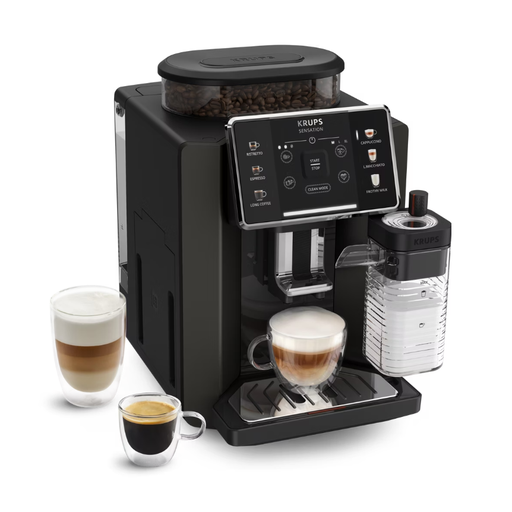
Krups Sensation Milk EA9129 bean-to-cup coffee machine, black
This model could suit you if you make several milk-based drinks and its adjustable drink volumes and removable milk container are a good fit for your routine.
View at Joybuy
 No image available
IAGREEA 20Bar espresso machine with steam wand
An option if you want to control single or double shots and the milk texture yourself; bear in mind that this involves repeating the steps by hand.
View at Joybuy
 No image available
De’Longhi Magnifica Evo ECAM290.61.SB
This model could suit a household with several coffee drinkers if its stated ability to make two espressos at once is important to you and you prefer automatic milk frothing.
View at Joybuy
 No image available
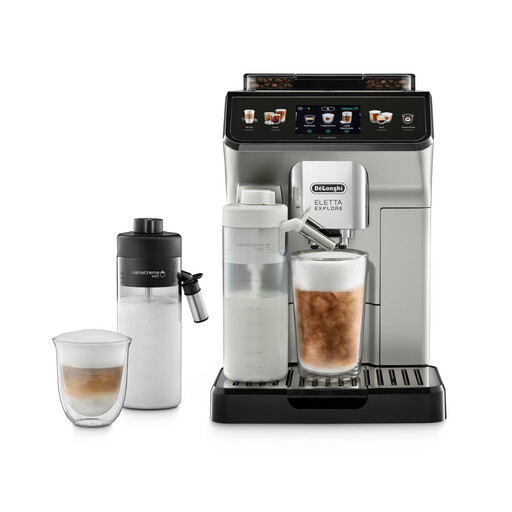
De’Longhi Eletta Explore ECAM450.55.S
If you make several drinks, the stated two-cup function and automatic milk system could work well for your routine. Check how to clean the machine after use, too.
View at Joybuy
 No image available
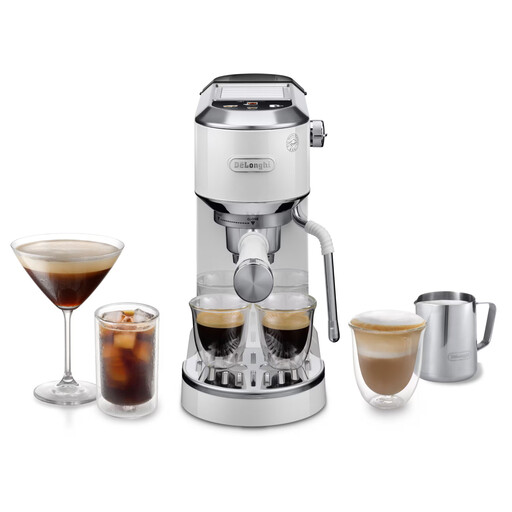
De’Longhi Dedica Duo EC890.WI
Worth considering if counter space is limited and you want to froth milk yourself; making milk froth manually means extra steps when preparing several piccolos.
View at Joybuy
Frequently asked questions
How large should I make a piccolo latte?
As a guide, Perfect Daily Grind describes a glass of around 85–114 ml, with a single espresso, steamed milk and a little microfoam. It also gives an example using around 20–30 ml of espresso and 40–60 ml of milk. This is a recipe guide, not a fixed standard.
Can I simply use the latte button to make a piccolo?
Only if you can adjust the espresso and milk volumes to suit a small glass. A latte button on its own doesn’t tell you whether the serving it makes will be right for your piccolo.
What should I clean after making milk-based drinks, and when should I descale?
Clean the milk-contact parts according to your model’s instructions. De’Longhi notes that how often Dedica machines need descaling depends on the local water hardness. This model-specific example isn’t a standard interval for all machines.
Who can help if my machine develops a fault after I buy it in Germany?
The statutory warranty is the seller’s responsibility and is separate from any voluntary manufacturer’s guarantee. Verbraucherzentrale explains retailers’ obligations when goods are faulty, as well as additional rules for sales contracts from 31 July 2026 if you choose a repair for a fault.
What should I check for electrical product safety?
Check whether EU rules requiring a CE marking apply to the mains-powered machine. If they do, the marking must be displayed. The European Union explains the requirements for the marking. The Bundesnetzagentur also advises checking for clear instructions and safety warnings in German.


