Latte-makers in a hurry
If you regularly make a milky coffee before heading to work, it’s worth weighing up the manual steps and the cleaning afterwards together. Philips and Sage’s product descriptions illustrate different ways of doing things.


If you want to keep the morning routine to a minimum, a bean-to-cup machine with a milk system could be just the thing. A traditional espresso machine is better suited to those who want to fine-tune their espresso and milk themselves, while a capsule machine may require a separate or integrated milk step, depending on the model. If you won’t be drinking your latte until lunchtime, you’ll need to plan how to keep it chilled, whatever machine you use. The German Federal Institute for Risk Assessment advises that food should be kept sufficiently chilled during transport, too.
If you regularly make a milky coffee before heading to work, it’s worth weighing up the manual steps and the cleaning afterwards together. Philips and Sage’s product descriptions illustrate different ways of doing things.
If you won’t drink your vanilla latte until several hours later, you’ll need to arrange chilled, hygienic transport regardless of which machine you use. The German Federal Institute for Risk Assessment and the consumer advice centre offer guidance on chilling and storing food.
If you want to make the espresso and milk yourself and don’t mind a few extra steps, a manual espresso machine could be a good fit. De’Longhi and Sage describe models that include manual milk preparation.
Compare the whole process, from making the espresso and preparing the milk to cleaning the machine. If you won’t be drinking your latte until lunchtime, you’ll also need to plan how to keep it reliably chilled until then.
| Priority | What to look for when buying | Who is it most important to? |
|---|---|---|
| Fewer steps in the morning | Check whether the specific model makes both espresso and a milk drink for you, or requires a separate step for the milk. | If I want to make a milky coffee quickly before heading to work, the whole process matters to me; around 28% of consumers prioritise keeping morning preparation to a few steps. |
| Keeping it chilled until lunchtime | Plan how to keep it chilled until you drink it, and choose a clean, suitable container. | If I won’t drink my latte until lunchtime, I need to think about keeping the milk chilled too; around 22% of consumers prioritise safe transport until their lunch break. |
| Cleaning after making a milk drink | Compare the parts of a milk system that need cleaning with the care required for a steam wand. | If I make milk drinks every day, I want to know what cleaning is involved afterwards; around 22% of consumers say cleaning requirements are their top buying priority. |
| Fine-tuning the espresso and milk yourself | Check whether there’s an integrated grinder and whether you froth the milk manually. | If I want to handle the settings and milk preparation myself, I’ll factor in the extra steps; around 17% of consumers prioritise being able to customise their drink. |
| Counter space and capsule system | Measure the space required, including accessories, and check which specific capsule system the machine uses. | If my kitchen has limited counter space, I’ll also consider accessories and the room needed to prepare the milk; around 11% of consumers prioritise the space available. |
A machine that makes espresso and lungo won’t necessarily prepare the milk as well. If you need a separate solution, that means another step and potentially more counter space.
Check what milk preparation is included with the specific model, and whether it comes with the accessories you need for your preferred routine.
Preparing the milk separately may mean making room on your worktop for an additional milk frother.
Keeping food sufficiently chilled is important during transport, too. An espresso machine won’t automatically keep a prepared milk drink chilled until you’re ready to drink it.
Plan how to keep it chilled separately from the machine, and don’t assume an ordinary container will keep it safe for a particular length of time.
Making a milk drink also involves preparing the milk and cleaning the machine afterwards. A manual steam wand and a removable milk system each require different steps.
Use the instructions for each model to compare the whole process, from brewing to cleaning.
The documented Series 3300 EP3347/90 is a bean-to-cup machine with a LatteGo milk system, designed to make milk drinks at the touch of a button.
The Dedica Style EC685.M EX:4 is a slim, manual espresso machine with an adjustable cappuccino system.
The Barista Express SES870BSS4EEU1 combines an espresso machine and grinder for manual preparation.
The Essenza Mini C Pure White is a compact machine that uses Nespresso Original capsules.
The models below include bean-to-cup machines with milk systems, as well as a capsule machine with an integrated milk system. Whatever the machine’s features, make separate plans to keep your drink chilled until you’re ready to have it.
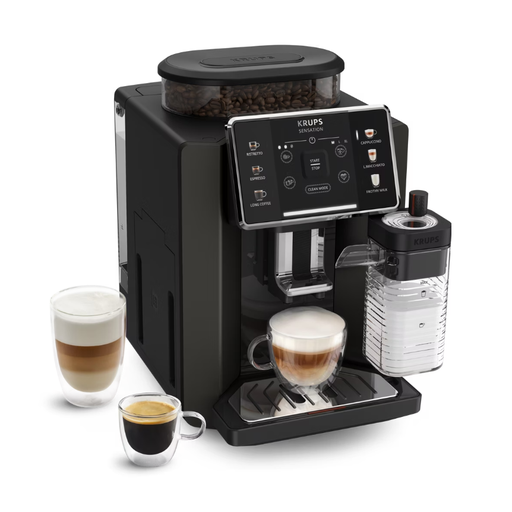 No image available
For anyone who wants to make a milky coffee before heading to work with just a few manual steps: the description lists six coffee and milk specialities, prepared at the touch of a button.
The milk container is removable and dishwasher-safe, and cleaning programmes are described for the milk system. The machine’s instructions specify cold milk and explain how to clean the milk system.
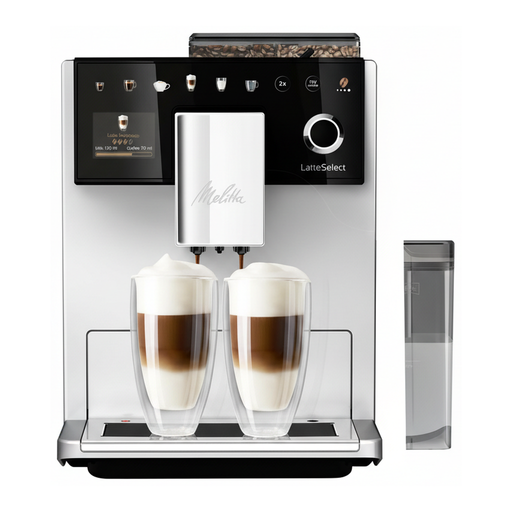 No image available
For anyone who wants to prepare milk drinks automatically and adjust the drink settings: the description lists automatic grinding, brewing and milk frothing.
According to the description, you can adjust the coffee strength, drink volume, brewing temperature and milk foam consistency. The milk system should be cleaned daily.
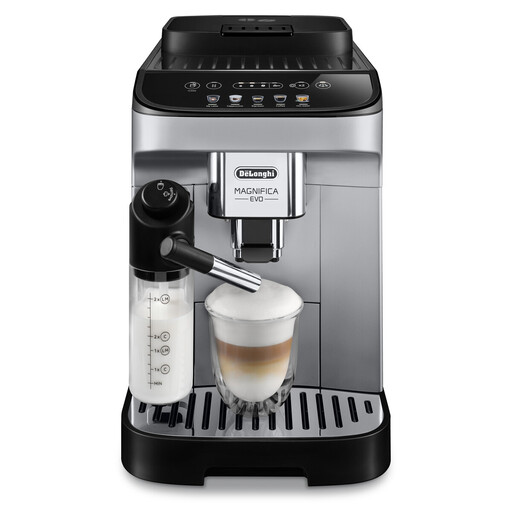 No image available
For anyone who wants to make a milk drink with just a few manual steps: the description lists seven recipes at the touch of a button and the LatteCrema Hot milk system.
The description includes the MyLatte function and automatic cleaning of the milk system after use. The milk container is used to prepare milk drinks.
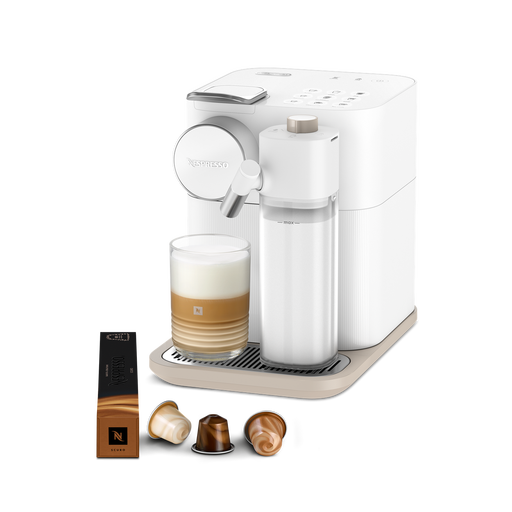 No image available
For anyone who wants to combine capsules with an integrated milk system for milk drinks: the description lists cappuccino, latte macchiato and flat white, among others.
This model uses Nespresso Original capsules. After making milk drinks, run the specified rinse cycle; according to the description, some parts of the milk jug are dishwasher-safe.
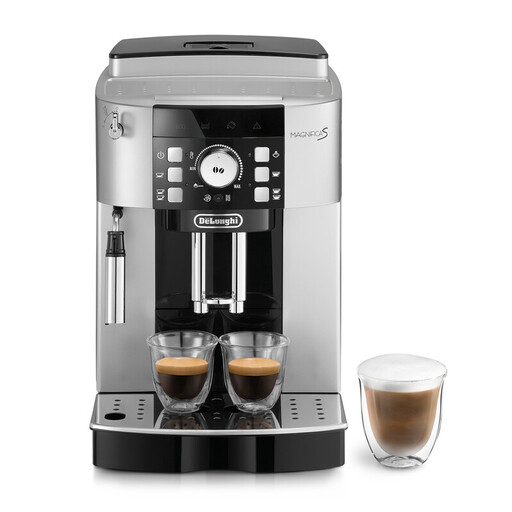 No image available
For anyone who wants to make espresso automatically and add milk foam separately: the description lists automatic grinding, tamping and brewing, along with an integrated milk frother.
Milk frothing is done manually; the machine isn’t described as making milk drinks automatically at the touch of a button. The description gives the water tank capacity as 1.8 l.
Only add syrup where the instructions for your chosen model say it’s suitable. The features described for these machines don’t amount to general approval for adding syrup to the milk tank.
You can’t assume it’ll be safe to store the drink for a particular length of time. The German Federal Institute for Risk Assessment stresses the need to keep perishable food sufficiently chilled, including during transport. So make sure you have a reliable way to keep it chilled until you’re ready to drink it.
Yes. Follow the cleaning instructions for your specific machine after preparing milk. Philips describes the EP3347/90 as having a two-part LatteGo system with no tubes, while De’Longhi lists a manual cappuccino system for the EC685.M EX:4.
Electrical equipment covered by the EU Low Voltage rules must carry the CE marking. The European Commission explains that the rules apply to equipment operating at 50 to 1,000 V AC. According to Your Europe, the marking is the manufacturer’s declaration of conformity, not an independent quality mark. Check the details for the specific product listing.