
Lieferung heute & morgen

Qualitätsgarantie

Willkommens-Angebote freischalten: KOSTENLOSE Lieferung | Bis zu 80 % RABATT | Kostenlose 30-Tage-JoyPlus-Testphase
App herunterladen
Investing in an espresso machine with a grinder is a significant step for any coffee enthusiast who wants to brew authentic espresso in the comfort of their own home. However, the market is flooded with technical jargon and marketing promises that often create more confusion than clarity. Many machines look high-end at first glance but quickly prove to be a bad investment. As your Joybuy Product Recommendation Officer, I'll help you identify the crucial features and steer clear of common purchasing traps.
Before we dive into the technical details, it's essential to know the most common traps that can lead to disappointment and unnecessary expense.
To make an informed decision, you should focus on the following three core aspects. These are the primary determinants of your coffee's quality and the machine's longevity.
The grinder is the heart of any barista coffee machine. Look for an integrated espresso machine with a conical burr grinder. A conical burr grinder made of hardened stainless steel operates at a lower speed than flat burr grinders, which reduces heat buildup and preserves the volatile aromas of the coffee beans. The number of grind settings is crucial. A good grinder should offer at least 15-30 steps to allow for fine adjustments for different bean types and roasts.
This is where the biggest functional difference between price classes lies. While single-boiler systems require compromises, more advanced systems enable a seamless workflow:
A prosumer espresso machine for home should be built to last. A housing made of brushed stainless steel is not only visually appealing but also durable and easy to clean. The portafilter itself should also be made of solid, chrome-plated brass or stainless steel. A stainless steel portafilter with a standard 58 mm diameter retains heat better and ensures a more stable extraction temperature than lighter aluminium versions.
Based on these objective criteria, we have curated a selection of products that cater to different needs and use cases.
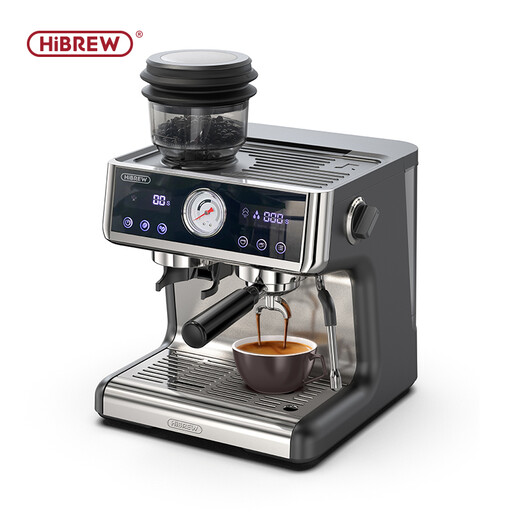
Why This Fits Their Persona: Ideal for users who want full control over the brewing process and refuse to compromise on preparing milk-based drinks. The machine is suitable for demanding home use as well as for small offices or cafés.
The dual boiler heating system bypasses the waiting times of single-boiler machines. The integrated stainless steel conical burr grinder with 30 grind settings provides the necessary precision that is missing in cheap combo units.
Simultaneous extraction and milk frothing. Precise control of temperature and extraction time via an LCD touchscreen. Robust body made of brushed stainless steel.
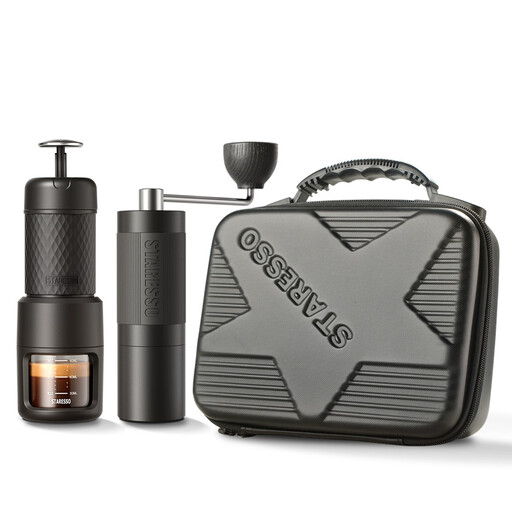
Why This Fits Their Persona: A solution for travellers, campers, or office workers who don't want to miss out on freshly ground and brewed espresso on the go. This set offers a power-free alternative.
Instead of being a low-quality electric machine, this set focuses on mechanical quality. It includes a precise manual conical burr grinder, thus avoiding the trap of useless integrated grinders in budget devices.
Completely manual operation without electricity. Includes a high-quality stainless steel conical burr grinder with 12 grind settings. Compact and portable in the included carrying case.
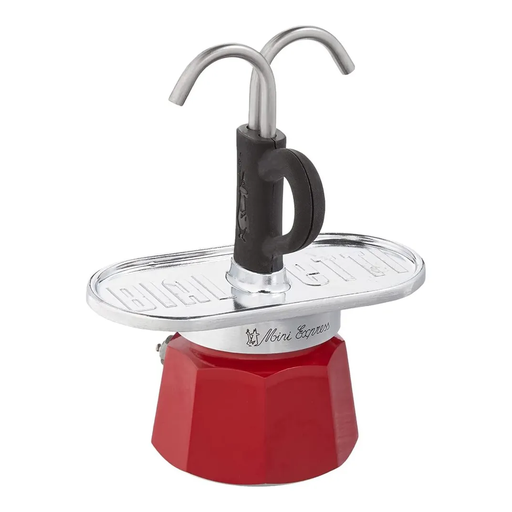
Why This Fits Their Persona: For lovers of classic Italian coffee who want a simple, reliable, and stylish method for preparing strong Moka pot coffee. An alternative for those who don't need milk frothing capabilities.
This set doesn't pretend to be a fully automatic espresso machine. It focuses on the proven Moka pot method and delivers a consistent result instead of disappointing with questionable pump technology.
Unique design where the coffee flows directly into the included cups. Robust stainless steel construction and simple, manual operation on the stovetop.
From high-quality espresso cups to storage containers for your coffee beans – discover our carefully curated selection of accessories to complete your coffee experience.
Daily cleaning is straightforward and crucial for longevity and taste. The portafilter and steam wand should be cleaned after each use. A more thorough cleaning of the group head by backflushing with a blind basket is recommended once a week. Depending on usage, the grinder should be cleaned of old coffee oils every few weeks or months using a special grinder cleaner.
A conical burr grinder consists of an inner cone and an outer ring. It grinds at a lower speed, which results in less heat buildup and preserves the coffee oils. A flat burr grinder uses two stacked discs and operates at higher speeds. Both can produce excellent results, but conical burr grinders are often considered more advantageous for home use due to the lower heat transfer to the grounds.
For people who regularly prepare milk-based drinks like cappuccino or latte macchiato, a dual boiler espresso machine is a significant upgrade in convenience. The ability to pull an espresso shot and steam milk simultaneously saves time and ensures a professional workflow. Those who primarily drink espresso or Americano can also be satisfied with a high-quality heat exchanger or even a single-boiler model, but they must accept the respective system-related wait times.