
Lieferung heute & morgen

Qualitätsgarantie

Willkommens-Angebote freischalten: KOSTENLOSE Lieferung | Bis zu 80 % RABATT | Kostenlose 30-Tage-JoyPlus-Testphase
App herunterladen
Switching from a fully automatic coffee machine to a portafilter machine is a decisive step for any coffee enthusiast. The desire for more control, better espresso quality, and the ritual of preparation leads many to an espresso machine with a grinder. However, the market is flooded with marketing promises and technical data that confuse more than they help. Before you make a decision, it's crucial to understand the most common pitfalls that can lead to a poor investment.
Many buyers focus on the wrong features or overlook critical details. Here are three common problems you should avoid:
To make an informed decision, you should focus on the technical parameters that directly influence coffee quality.
The grinder is the heart of any barista-style coffee machine. It grinds the beans and significantly determines the extraction time and aroma. Look for a conical or flat burr grinder made of hardened steel or ceramic. The number of available grind settings is crucial. A grinder with fewer than 8-10 settings often lacks the necessary flexibility to adapt to different bean varieties or the age of the coffee.
The heating system is responsible for maintaining a constant water temperature during the brewing process.
For most home users, a high-quality thermoblock system represents an excellent compromise between performance and convenience.
The portafilter itself and the included filter baskets are critical. Professional machines often use a portafilter with a 58 mm diameter. Many home models use smaller diameters like 51 mm or 54 mm. This is not a direct disadvantage, but the range of accessories is often larger for 58 mm systems. More important is the type of filter baskets:
Instead of making a one-size-fits-all recommendation, we have selected products for different needs and approaches.
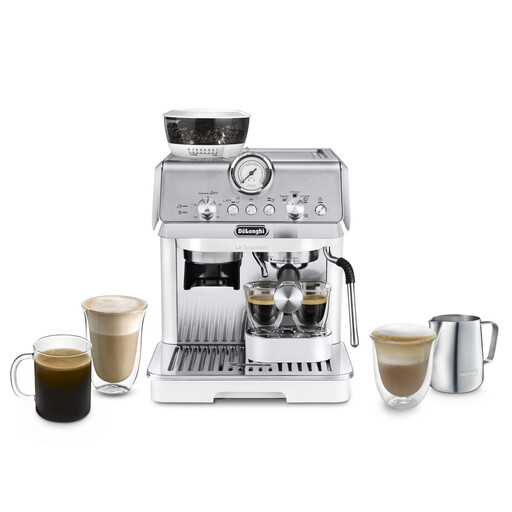
Why This Fits Their Persona: Ideal for beginners looking for a complete, coordinated system. The integrated grinder, steam wand, and included accessories allow for an immediate start into the world of espresso and latte art without needing to source additional components.
The model avoids the accessory trap by including a complete barista kit, featuring a solid tamper and single-wall filter baskets. With 8 settings, the grinder provides a solid foundation for fine-tuning.
The all-in-one concept with preset recipes and the My LatteArt system makes it an accessible latte art machine. The three temperature settings offer additional control.

Why This Fits Their Persona: For enthusiasts who prefer to choose their machine and grinder separately for maximum control or future upgrades. This model focuses on the core functions of extraction.
By forgoing an integrated grinder, you avoid the risk of a subpar component. You can instead pair it with a specialised grinder like the Ariete 3023, which offers 14 grind settings.
The integrated pressure gauge provides direct visual feedback on the extraction pressure—a professional feature that makes it easier to master the technique. The compact stainless steel housing is durable and space-saving.
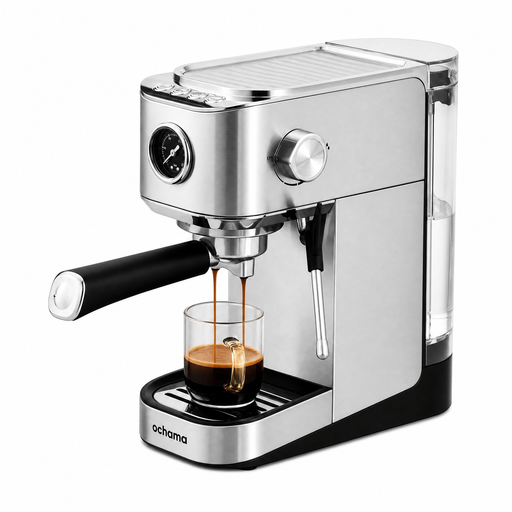
Why This Fits Their Persona: For users on a limited budget who already own a grinder or plan to purchase a basic model separately. The focus here is clearly on solid extraction and durability, thanks to its metal housing.
This approach forces a conscious decision for a separate grinder, preventing you from being tied to an inadequate integrated system. The investment is clearly divided.
The robust all-metal construction is remarkable in this price range. The cup warmer function is a practical detail that keeps the coffee at its optimal temperature for longer.
We've compiled a complete, up-to-date list of products that fully meet these strict selection criteria and German safety regulations.
The frequency of descaling largely depends on the water hardness in your area and how often you use the machine. In Germany, water hardness varies greatly. As a rule of thumb, descale every two to three months with average use. Many modern machines, like the De'Longhi espresso machine, have an indicator light that shows when descaling is required. Always follow the manufacturer's instructions.
The ideal grind size is fine, comparable to the consistency of fine table salt. The goal is an extraction time of about 25 to 30 seconds for a double espresso (approx. 40-60 ml). However, the perfect grind size is not a fixed value; it must be adjusted depending on the coffee bean, its roast date, and even the ambient humidity. Start with a medium setting in the fine range of your grinder and adjust gradually until the flow and taste are right.
Essentially, yes, as long as the machine has a steam wand for frothing milk, making it a coffee machine with a grinder and milk frother. However, the quality of the milk foam—the fine, silky texture needed for latte art—depends on the power of the steam wand and the user's technique. Machines with powerful, manually controllable steam wands offer more control and make it much easier to create microfoam.