
Lieferung heute & morgen

Qualitätsgarantie

Willkommens-Angebote freischalten: KOSTENLOSE Lieferung | Bis zu 80 % RABATT | Kostenlose 30-Tage-JoyPlus-Testphase
App herunterladen
An espresso machine for home use can prepare espresso, cappuccino, or Americano. However, choosing the right model depends less on bold advertising claims than on its design, ease of use, cleaning requirements, and available space. Focusing solely on a figure such as “20 bar” means overlooking important details.
A 20-bar espresso machine may sound impressive at first. What matters, however, is the pressure actually applied to the coffee grounds during extraction. Many machines advertise their maximum pump pressure, even though grind size, dosage, tamping pressure, and water temperature also influence the flavour.
A pressure gauge, stable temperature control, and suitable filter baskets often provide more meaningful guidance when choosing a machine than the highest bar rating. Models with a pump pressure of 15 to 20 bar can be suitable for home use, but should not be selected based on this figure alone.
An espresso machine with a milk frother or automatic milk container is convenient for cappuccino and latte macchiato. However, milk lines and containers need to be rinsed regularly. With a manual espresso machine with a steam wand, you clean the wand immediately after frothing and have greater control over the milk texture.
If you only use the milk function occasionally, a steam wand is often the more straightforward option. For several milk-based drinks per day, an automatic system can save time, but it requires consistent hygiene.
A bean-to-cup coffee machine grinds, doses, and brews at the touch of a button. A portafilter machine, by contrast, gives you greater control over grind size, quantity, and extraction time. A capsule espresso machine is generally particularly fast and space-efficient, but ties you to compatible capsules and creates ongoing consumable costs.
Before buying, it is therefore important to be clear about your priorities: do you want to experiment, or prepare a cup with as little preparation as possible?
The tank capacity should match the number of drinks you prepare each day. A 0.6-litre tank is sufficient for occasional cups, while capacities of 1.1 to 1.8 litres mean less frequent refilling when several people are using the machine. According to the product data, bean-to-cup machines such as the De’Longhi Magnifica Start Milk ECAM220.61.W offer a 1.8-litre water tank and a 250 g bean hopper.
Before buying, also measure the available depth and height. A machine with a 2.5-litre tank may be convenient, but it requires more countertop space. In smaller kitchens, compact models measuring approximately 14 cm in width or a capsule machine are often easier to accommodate.
Removable water tanks, drip trays, portafilters, and brewing units make maintenance easier. Automatic rinsing programmes are helpful for milk systems, but they do not replace manually cleaning the container and milk lines.
Plan to descale the machine regularly, taking the water hardness in your region into account. Local water hardness can vary considerably across Germany. Use only the cleaning and descaling products approved in the manual. For machines with a 230-volt connection, you should also ensure that the socket is properly earthed.
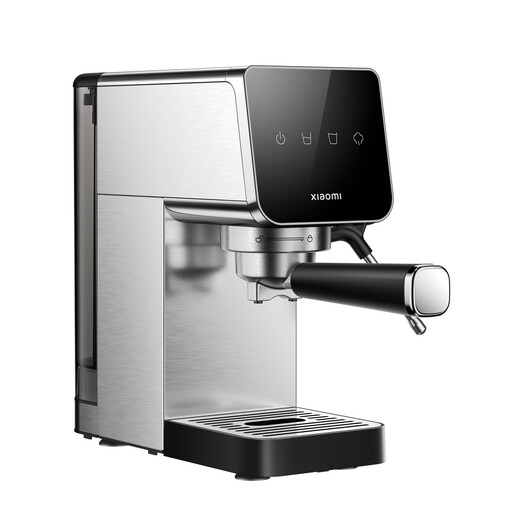
Why does it suit this profile? This compact model is well suited to smaller kitchens and users who want to prepare espresso and milk-based drinks manually.
Alongside the 20-bar pump, the specifications list NTC temperature control, a pre-infusion function, and a 0.9-litre tank.
14 cm width according to the product description, single and double espresso functions, plus a steam wand.
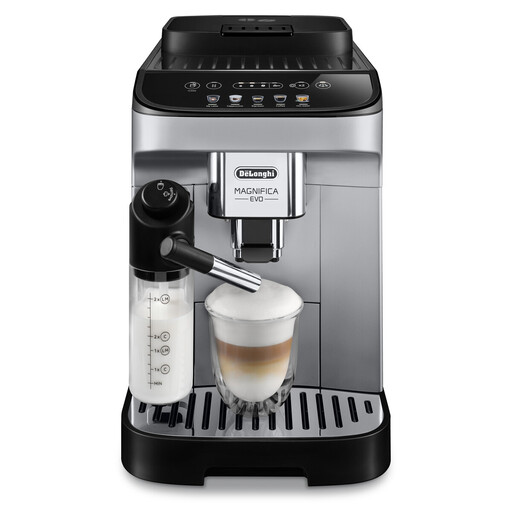
Why does it suit this profile? Families and professionals can select a range of coffee and milk-based drinks using the direct-selection buttons.
According to the manufacturer, the automatic LatteCrema milk system runs an automatic cleaning cycle after use; removable parts are dishwasher-safe.
Seven direct recipes, a 1.8-litre water tank, a 250 g bean hopper, and 13 grind settings according to the product data.
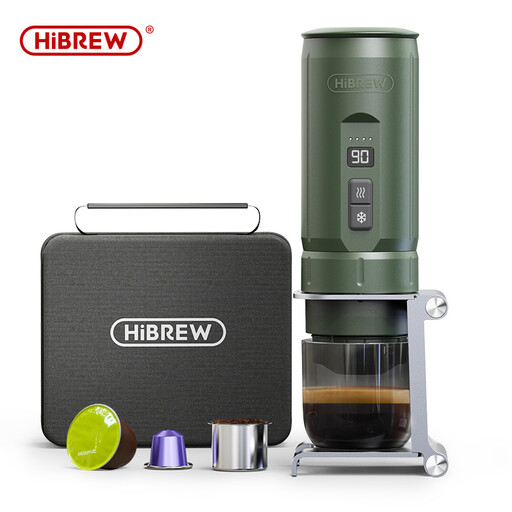
Why does it suit this profile? This portable espresso machine is designed for individual servings on the go, in a vehicle, or while camping.
The product data specifies water markings for 50, 75, and 100 ml, as well as a replaceable battery. This makes the limited serving size clear.
20-bar pump pressure according to the product specifications, a digital display, and programmable temperature and brewing parameters.
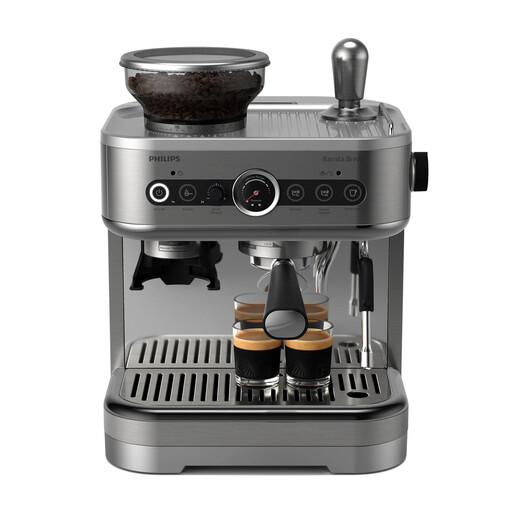
Why does it suit this profile? It is designed for users who want to combine an integrated espresso grinder with manual milk frothing.
In addition to 15 bar pressure, the specifications include PID temperature control and a pressure gauge. These parameters support precise manual control.
250 g bean hopper, 2.5-litre water tank, five grind settings, and a 58 mm portafilter according to the product description.
Our complete selection of espresso machines includes models for different budgets, kitchens, and usage scenarios. Before buying, check the technical specifications, dimensions, and care instructions.
For a well-informed purchase decision, it is not enough to consider the maximum pump pressure alone. Models with 15 to 20 bar are common across the range. More important factors include a suitable portafilter, consistent water temperature, and the ability to adjust the grind size and coffee quantity appropriately.
A bean-to-cup machine handles grinding, dosing, and brewing automatically, making it ideal for fast, effortless preparation. A portafilter machine requires more hands-on steps, but offers greater control. If you regularly prepare cappuccino, you should also choose between a manual steam wand and an automatic milk system.
In addition to electricity and water, you will need to budget for coffee beans, ground coffee, ESE pods, or capsules. With a capsule espresso machine, the purchase price is often not the only relevant factor. Compare the cost per drink, the availability of compatible capsules, and the price of descaling and cleaning products. Regular maintenance can also help preserve the machine’s intended performance over the long term.