Hosts serving several cappuccinos
You want to serve several drinks after dinner with as little hands-on effort as possible, so you’re looking for a cappuccino programme and an easy-to-access milk system.


If you want to serve several cappuccinos with minimal effort, a bean-to-cup machine with a dedicated cappuccino programme could be a good fit. If you’d rather control the espresso and milk froth yourself, consider a portafilter machine with a steam wand; for the occasional single serving, a capsule machine with a milk function may suit you. Manufacturer information does not confirm that several complete drinks can be dispensed at once, nor that milk-system care is no longer needed. Capsule machines also tie you to compatible capsules. Before buying, check the electrical specification and conformity information for the exact machine.
You want to serve several drinks after dinner with as little hands-on effort as possible, so you’re looking for a cappuccino programme and an easy-to-access milk system.
You want to control the espresso and milk froth yourself, and are happy to put in some practice and take a few extra steps.
You’re more likely to make single servings, and are weighing up the convenience of portioned coffee against being tied to compatible capsules.
A good fit if: you want to do as little by hand as possible when serving several cappuccinos. Philips and Siemens list cappuccino as a selectable drink on the respective models.
The trade-off: An automatic milk system still needs to be cleaned. A cappuccino programme doesn’t confirm that several complete drinks can be dispensed at the same time.
A good fit if: you want to take charge of the preparation and adjust the espresso or milk froth yourself. The De’Longhi Dedica Duo has a manual steam wand, while the Sage Barista Express combines a grinder with manual milk frothing.
The trade-off: You’ll need to repeat the preparation steps for additional guests. De’Longhi notes that using a traditional milk frother takes practice.
A good fit if: you tend to make individual cappuccinos occasionally and prefer pre-portioned coffee. Nespresso lists Original capsules and an automatic steam wand for the Creatista Plus.
The trade-off: You’re tied to the compatible capsule system, and drinks for several guests will still need to be made one at a time.
For an evening with friends, four different priorities matter: serving, control over preparation, cleaning afterwards and portioning for occasional use.
| What matters | What to check before buying | Who it matters most to |
|---|---|---|
| Serving several cappuccinos | Check the cappuccino programme, the process for making drinks one after another and how accessible the milk system is on the specific model. | If I want to serve several cappuccinos after dinner with as few steps as possible, an easy process matters to me. Around 40% of consumers prioritise minimal hands-on effort when making several drinks. |
| Controlling the espresso and milk froth | Check the type of steam wand and whether the specific model has a grinder. | If I want to adjust the espresso and milk froth myself, I’m happy to practise and repeat the steps for additional cups. Around 30% of consumers put control over espresso and milk froth first. |
| Cleaning the milk system and machine | Compare removable milk-system parts and the cleaning and descaling instructions for the exact model. | I don’t want to be left with a fiddly milk-system clean-up after the last cappuccino. Around 20% of consumers place the greatest importance on a straightforward milk-system clean. |
| Occasional servings and worktop space | Check the machine’s dimensions and the availability of compatible capsules or ground coffee. | If I only make the occasional cappuccino and have limited worktop space, the right serving size and machine shape matter to me. Around 10% of consumers prioritise occasional single servings or a compact footprint. |
Manufacturers list cappuccino as a selectable drink, but that doesn’t mean several complete cappuccinos can be dispensed at the same time.
When you’re serving guests, plan to make drinks one after another and check the dispensing process for the specific model.
Automatic milk systems and manual steam wands have different cleaning routines. An automatic cleaning step doesn’t necessarily replace the rest of the milk-system care.
Read the cleaning instructions for the specific model before choosing, and factor in the work involved after dinner.
The Joybuy product page for the Philips EP5547/90 lists 120 V and 9600 W. The model name alone doesn’t confirm which electrical version will actually be supplied.
Before choosing a machine for use in Germany, check the electrical specifications and related conformity information for the exact model.
The LatteGo 5500 EP5547/90 is a bean-to-cup machine with a milk system; Philips says you can make a cappuccino at the touch of a button.
The Dedica Duo EC890.M is a slim portafilter machine with a manual My-LatteArt steam wand.
The Barista Express SES870BSS4EEU1 combines a grinder with manual milk preparation.
The EQ6 plus s300 TE653501DE is a bean-to-cup machine with cappuccino at the touch of a button.
The Creatista Plus White Sea Salt pairs Original capsules with an automatic steam wand for milk-based drinks.
This selection at Joybuy includes espresso machines for cappuccino with automatic or manual milk preparation. Before buying, check the electrical specification and conformity information for the exact machine.
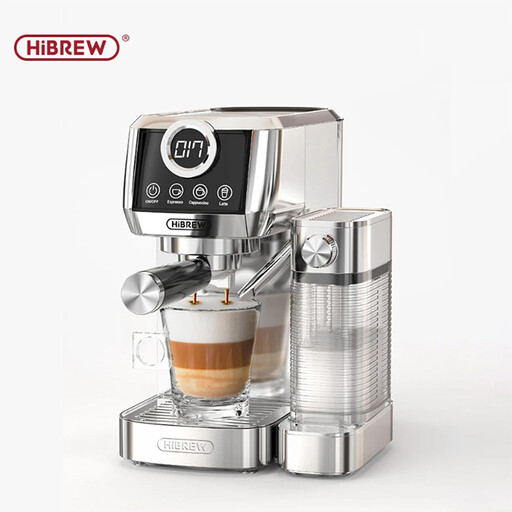 No image available
For cappuccino with automatic milk frothing; the product description says it can brew and steam at the same time.
Features listed include six coffee modes, a 1.3 l water tank and a 700 ml milk container. Brewing and steaming at the same time doesn’t mean that several complete cappuccinos can be dispensed simultaneously.
 No image available
For cappuccino with minimal manual preparation; the description lists a cappuccino recipe at the touch of a button and an automatic LatteCrema milk system.
The model has an integrated grinder with 13 settings and a removable milk container. The two-cup function is described for espresso, not for dispensing two cappuccinos at the same time.
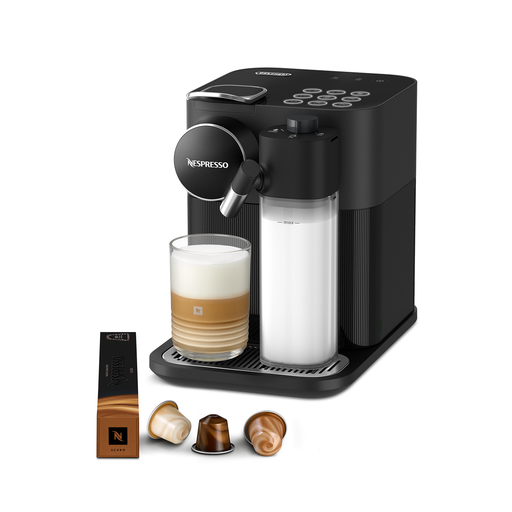 No image available
For cappuccino with a one-touch milk system and individual capsule portions.
The description lists a removable 0.5 l milk container. The machine is designed for Nespresso Original capsules, and a rinse cycle is specified after each milk-based drink.
 No image available
For adjusting the milk froth while preparing espresso, with manual steps at the portafilter.
The description lists an integrated conical burr grinder, five recipes and an automatic milk frother with adjustable temperature and texture. Making espresso involves grinding, dosing and tamping.
 No image available
For cappuccino with a choice of froth settings, if you want to handle the portafilter preparation yourself.
The description lists 25 grind settings, four frothing options and an integrated scale. The preparation described involves grinding into the portafilter and frothing the milk separately.
No. Espresso and the type of milk preparation you want are what matter when choosing a machine. Add cinnamon to your finished drink to taste; you don’t need a dedicated machine programme.
Frothing milk with a traditional milk frother takes practice. De’Longhi recommends starting with cold milk; clean the wand afterwards, following the instructions for your exact machine.
Where the relevant EU product regulations apply, CE marking is the manufacturer’s declaration that the product meets the applicable requirements; it is not an individual quality award issued by a public authority. Also check the electrical specification and information for the exact machine.
If the product is faulty, you generally exercise your statutory rights against the seller; these are separate from any voluntary guarantee. The Verbraucherzentrale states that new purchases are generally covered for two years and explains additional time-limit rules that have applied since 31 July 2026 when you opt for a repair.