Hosts making several milky coffees
If you want to make several lattes one after another or in pairs, look for a feature that explicitly allows you to make multiple milk drinks. Krups Germany lists this feature for the Evidence EA8918.


If you want to make several caramel lattes with as few steps as possible, a bean-to-cup machine could be a good fit, provided the specific model explicitly supports making multiple milk drinks. Krups says the Evidence EA8918 can make two milky coffees at the touch of a button. A traditional espresso machine is better suited to making espresso and frothing the milk yourself for each glass, while a capsule machine with a separate milk frother could work for occasional servings and a compact espresso set-up. With any type of machine, check the cleaning routine and exactly what’s included: a double espresso spout doesn’t mean it can dispense two complete milk drinks.
If you want to make several lattes one after another or in pairs, look for a feature that explicitly allows you to make multiple milk drinks. Krups Germany lists this feature for the Evidence EA8918.
If milk drinks are a regular part of your routine, compare how the milk-contact parts are cleaned. Philips Germany describes LatteGo as a two-part system with no tubes.
If you want to adjust the espresso and milk foam yourself for every glass and don’t mind a few extra steps, a traditional espresso machine could be right for you. Sage Germany describes the Barista Express as having an integrated grinder and manual milk preparation.
First decide what matters most to you: a clearly confirmed process for making multiple milk drinks, manual control or a compact set-up.
| What to consider | What to look for | Who it matters most to |
|---|---|---|
| Multiple milk drinks | Check whether the exact model can make two complete milk drinks; a double espresso spout isn’t enough to confirm this. | When I’m making several glasses for guests, I want to keep individual steps to a minimum. Around 36% of consumers mainly prioritise making multiple milk drinks with little hands-on effort. |
| Cleaning the milk system | Compare the instructions and the parts that come into contact with milk, such as tubes, containers and removable components. | If I regularly make milky coffees, I want to know which parts need cleaning afterwards. Around 29% of consumers focus primarily on milk-system care and cleaning effort. |
| Manual control | With a traditional espresso machine, check whether the specific version includes a grinder and steam wand, and factor in the extra steps involved in making several glasses. | If I want to tailor the espresso and milk foam for every glass myself, I’m happy to put in a little extra work. Around 21% of consumers put manual control first. |
| Capsules and space | Check capsule compatibility, exactly what’s included in the set and, if needed, whether you have room for a separate milk frother. | For occasional servings, a compact espresso set-up matters more to me than an integrated milk function. Around 14% of consumers mainly prioritise saving space and occasional use. |
A claim that a machine can make two espresso servings isn’t the same as a feature for making two complete lattes.
Check whether the exact model explicitly supports making two milk drinks.
An Aeroccino is only listed as included with a set when the set is specifically described as containing one.
Check the full product name and what’s included before choosing a set.
A separate frother takes up extra space and needs to be factored in as an additional appliance.
The systems we researched differ in their use of tubes, removable parts and stated cleaning routines.
Compare the care instructions for the specific model with the number of servings you plan to make.
The Evidence EA8918 is a bean-to-cup machine for milk drinks, with a feature explicitly designed to make two milky coffees.
According to Philips, the LatteGo 5500 EP5547/90 bean-to-cup machine offers preset espresso and milk drinks, including latte macchiato.
The Magnifica Evo ECAM290.81.TB EX:1 is a bean-to-cup machine with LatteCrema Hot and specified milk recipes.
The Barista Express is a traditional espresso machine with an integrated grinder and manual milk preparation.
The Essenza Mini from the Original capsule system is a compact espresso option that you can pair with a separate milk frother if needed.
The Joybuy products featured here are bean-to-cup machines with a milk system. If you’re making several caramel lattes, the key question is whether the specific model explicitly supports making multiple complete milk drinks. You can add caramel to each glass separately.
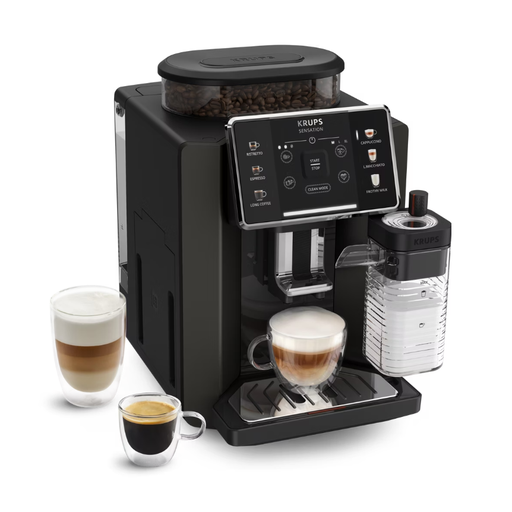 No image available
This could suit you if you’re looking for a bean-to-cup machine with a milk system and a removable milk container.
The product description lists six coffee and milk specialities, as well as a removable, dishwasher-safe milk container.
A claim that it can make two cups doesn’t confirm that it can dispense two complete milk drinks.
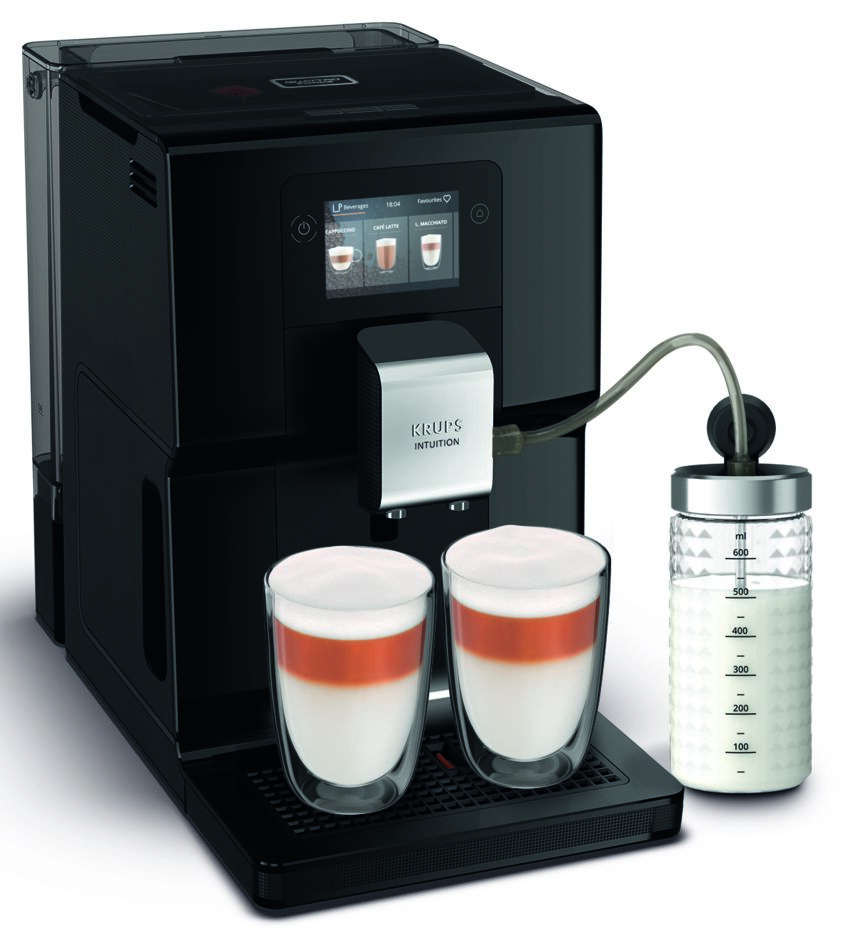 No image available
This could be worth considering if you prefer an integrated one-touch cappuccino system and customisable drink options.
The product description lists eleven drink specialities, a milk container and up to eight customisable recipes.
It isn’t specified as having a function for making two complete milk drinks.
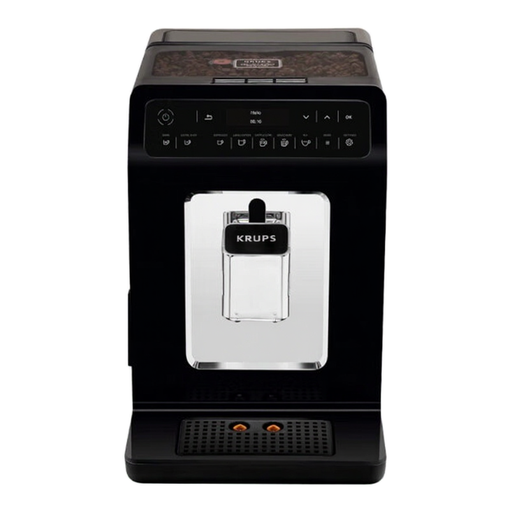 No image available
This could suit you if you want to make several cappuccinos and are looking for a feature that explicitly prepares two cups at once.
The product description lists a one-touch cappuccino function for two cups at once, eleven coffee specialities and three tea programmes.
 No image available
This could suit you if you want to make milk drinks with LatteCrema Hot and adjust the amount of milk for each drink.
The product description lists LatteCrema Hot, MyLatte and removable, dishwasher-safe parts.
The two-cup function is for espresso, not for two complete milk drinks.
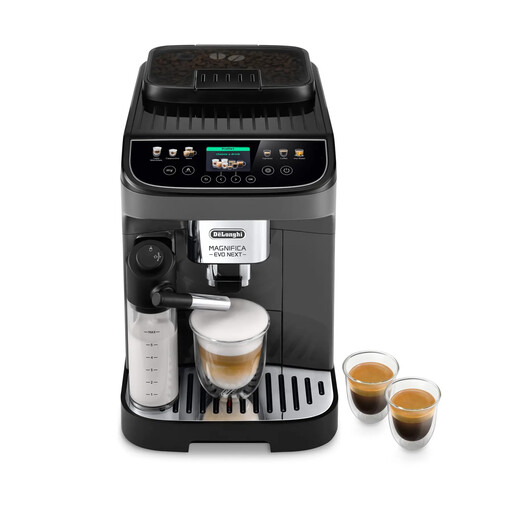 No image available
This could be worth considering if you’re looking for preset milk drinks and customisable drink settings.
The product description lists ten drinks, LatteCrema Hot and up to three user profiles.
The Doppio+ function is described as making two espressos, not two complete milk drinks.
Milk-based drinks shouldn’t be left unrefrigerated for long periods. Germany’s Federal Institute for Risk Assessment recommends storing perishable foods at between 2 °C and 7 °C at most; hot food should be cooled quickly to below 7 °C for longer storage. Ideally, prepare the milk component close to the time you plan to serve it.
Check the care instructions for the specific machine and allow time for the cleaning steps they describe. Philips describes LatteGo as a two-part system with no tubes; Krups lists a milk tube and a rinse cycle for the Evidence EA8918. According to the Verbraucherzentrale, opened milk should be kept refrigerated and used within a few days.
Mains-powered appliances covered by the Low Voltage Directive must meet the relevant EU requirements; the European Commission specifies 50 to 1,000 V AC. Germany’s Federal Network Agency lists CE marking, identifiable manufacturer details and German-language instructions as points to check. The CE mark is the manufacturer’s own declaration of conformity and isn’t an independent quality seal for the coffee.
No. For consumer purchases in Germany, statutory rights relating to a fault are claims against the seller. A guarantee is an additional voluntary benefit and is subject to its own terms, as the Verbraucherzentrale explains.