Kitchens with limited worktop space
If you need to fit a machine and milk-preparation equipment on a small worktop, depth and room to operate it matter just as much as width. De’Longhi and Lavazza list dimensions for their respective models.


Measure more than just the width: check the depth, height and space needed to prepare milk and operate the machine. A slim portafilter machine lets you froth the milk yourself; a capsule machine with an integrated milk programme saves you a few steps, but ties you to its capsule system. For chocolate in your cappuccino, you can follow a suitable recipe rather than assume the machine has a chocolate function.
If you need to fit a machine and milk-preparation equipment on a small worktop, depth and room to operate it matter just as much as width. De’Longhi and Lavazza list dimensions for their respective models.
If you want to prepare milk foam as automatically as possible, compare a manual steam wand, hands-free frothing and an integrated milk system. Sage and Philips describe these features on selected models.
If you want to control how much chocolate goes into your drink, you can add it as a separate ingredient. A recipe from Lavazza Deutschland shows how to prepare it separately.
First check that the whole machine, including the space needed to operate it, will fit on your worktop. Then compare milk preparation, recipes and cleaning requirements.
| What matters | What to look for when buying | Who should pay particular attention? |
|---|---|---|
| Space for the whole set-up | Compare the width, depth and height of the specific model, as well as the space needed to operate it and store milk accessories. | If I need to prepare milk and operate the machine on a small worktop, I need to consider the space required for the whole set-up. Around 36% of consumers put available space first. |
| Milk preparation | Check whether milk is frothed manually or prepared automatically, and which parts need cleaning. | If I want to make cappuccino with as few steps as possible, I pay particular attention to the milk system. Around 29% of consumers put milk convenience first. |
| Adding chocolate to your recipe | Check the recipe and the machine instructions; a cappuccino function does not mean the machine can prepare chocolate automatically. | If I want to control how much chocolate goes into my cappuccino, I need to be able to add it separately from the espresso and milk. Around 21% of consumers prioritise their chocolate recipe. |
| Cleaning and coffee format | Compare compatible coffee formats and the cleaning steps for the milk nozzle or milk system. | If easy cleaning and choosing the right coffee format matter to me, I check both before deciding. Around 14% of consumers put cleaning and ongoing effort first. |
A slim machine can still take up a lot of depth. De’Longhi lists dimensions of 149 × 330 × 305 mm for the Dedica Style EC685.M EX:4; Lavazza gives dimensions of 145 × 380 × 280 mm for the Deséa.
Compare all three machine dimensions with your usable worktop space, and allow extra room to operate it and prepare milk.
A function for espresso or milk does not mean that the machine can process chocolate.
Choose a machine based on how it prepares espresso and milk. Add the chocolate separately using a suitable recipe, and follow the instructions—especially before putting ingredients in a milk container.
The Dedica Style EC685.M EX:4 is a slim portafilter machine; the Dedica Maestro Plus EC950.M uses a different milk system and has different dimensions.
The Bambino Plus is an alternative portafilter machine with hands-free milk frothing.
The Virtuoso+ XP444C10 is a manual portafilter machine with a steam wand.
The A Modo Mio Deséa combines a capsule system with a cappuccino programme.
The EP3347/90 bean-to-cup machine combines a grinder with the LatteGo milk system.
These products include espresso machines with manual milk preparation and bean-to-cup machines with automatic milk systems. Check the dimensions of the specific model and allow space for operating and cleaning it.
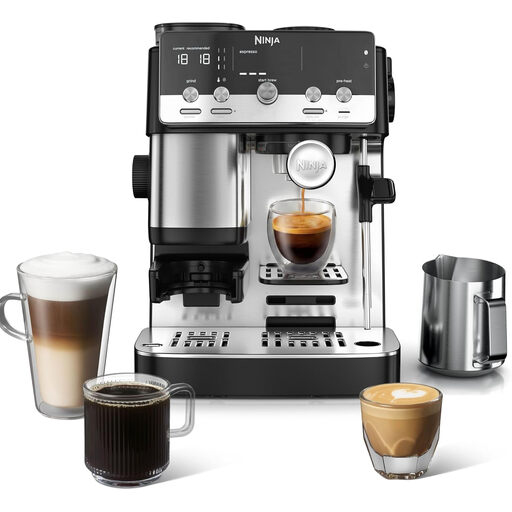 No image available
An option if you want to make espresso and filter coffee and froth the milk yourself.
Integrated grinder; manual milk frother.
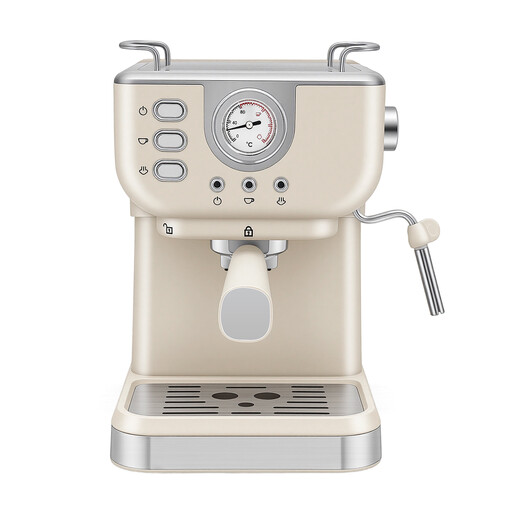 No image available
An option if you want to make espresso and milk foam yourself; check that the dimensions will fit your worktop before choosing.
Listed in the product name: 1050 W, 20 bar and a 1.5-l water tank.
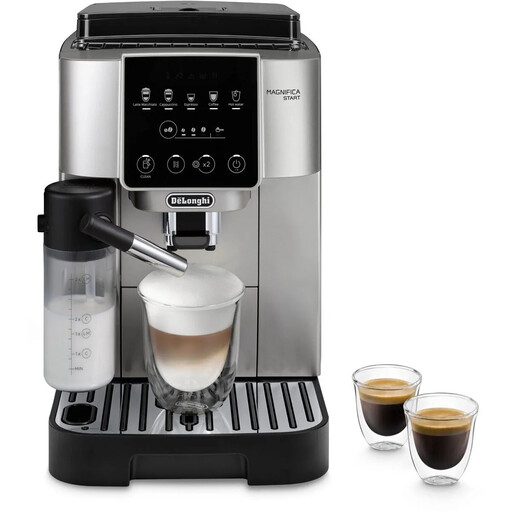 No image available
An option if you want to grind beans and use an automatic milk system. Allow enough space for the machine and to operate it.
Listed in the product name: 13-setting grinder, 1.8-l water tank, 250-g bean hopper and five one-touch drinks.
 No image available
An option if you want to prepare the milk foam yourself using a steam wand.
Listed in the product name: 20 bar and a 50-oz water tank.
 No image available
An option if you want to make espresso and froth milk manually; remember to allow extra room to work.
Listed in the product name: adjustable steam wand, cup warmer and removable 1.1-l water tank.
No, not if you add the chocolate to the drink separately. A recipe from Lavazza Deutschland shows how to prepare it in the cup. Check the instructions for your specific machine to see whether ingredients can go into its milk container.
Measure the usable width, depth and height, and allow room to fill and operate the machine and prepare milk. De’Longhi lists dimensions of 149 × 330 × 305 mm for the EC685.M EX:4, while Lavazza gives 145 × 380 × 280 mm for the Deséa; the narrower Deséa is not also less deep.
With a manual steam wand, you froth the milk yourself; integrated systems take care of more preparation steps. For the specific model, also check which parts need cleaning after use.
Clean the wand after frothing milk, following the instructions for your model. Krups recommends this for the specific steam wand in question to prevent dried milk from blocking it; this advice does not automatically apply to every machine.
For electrical products covered by the Low Voltage Directive or the 1. ProdSV, the manufacturer or its authorised representative must affix the CE marking before the product is placed on the market. Check the specific product listing separately; the marking is not a judgement on espresso quality.