Which type of machine is right for you?

For classes focused on milk frothing

If participants will be practising espresso-making and texturing milk with the steam wand, easy access to the controls and clear steps are important. Sage Appliances Deutschland and Gaggia describe manual milk frothing for the models in question.

For classes serving several drinks

If you’re organising several soya cappuccinos in a row, plan the steps and cleaning in advance. An automatic milk system may suit the way you want to run the class. Philips describes plant-based alternatives for the LatteGo system on the Series 3300.

For occasional use, with easy care in mind

For one-off classes, straightforward cleaning and getting the machine ready to use again can make all the difference. Philips describes LatteGo as a two-part system with no tubes; De’Longhi’s care guidance for the Dedica and Dedica Arte notes that local water hardness affects how often you need to descale.

What should you look for when buying?

Portafilter machine with a manual steam wand

A good fit if: Dialling in espresso and frothing milk are part of the class. Sage Appliances Deutschland and Gaggia specify a manual steam wand for the models described.

Bear in mind: It takes practice to use, and involves several hands-on steps.

Portafilter machine with assisted milk frothing

A good fit if: You want to keep making espresso on a portafilter machine, but make frothing less dependent on each participant’s technique. Sage specifies an Auto MilQ setting for soya milk on the Barista Touch Impress.

Bear in mind: This is a feature of the specific model, not proof that it works with every soya drink or a guarantee of a particular number of drinks.

Bean-to-cup machine with a milk system

A good fit if: A simpler sequence of steps matters more than practising with a steam wand together. Philips describes the LatteGo system on the Series 3300 as suitable for plant-based milk alternatives.

Bear in mind: The drinks menu and cleaning requirements need to match the exact model. A suitability claim is no substitute for testing the soya drink you’ll use in class.

What matters What to check before buying Who is it important to?
Frothing soya drink Check whether the exact model has a manual steam wand, a soya setting or a milk-system suitability claim; try the drink you plan to use. If I want to teach milk texturing in class, it matters how much control participants have themselves. Around 33% of consumers prioritise control when frothing soya drink.
Making several drinks Decide how many drinks you plan to make and how much time you have; check the workflow, tank and cleaning requirements for the specific model. If several people are ordering one after another, I want to plan each step in advance. Around 27% of consumers prioritise the workflow for making several drinks.
Learning how to make drinks Check whether participants will grind, dose and froth for themselves, or mainly make ready-to-serve drinks. If practical instruction is part of the class, I want to be able to demonstrate each step clearly. Around 20% of consumers prioritise learning and teaching how to prepare drinks.
Caring for the milk system and machine Check which parts can be cleaned, the care instructions for the steam wand or milk system, and the model’s descaling guidance. For occasional use, I don’t want to be left struggling with hard-to-reach parts that come into contact with milk after the class. Around 20% of consumers prioritise ease of cleaning and maintenance.

Which buying mistakes should you avoid?

  • Assuming a soya setting guarantees results with every drink

    Philips and Sage describe features for plant-based alternatives, including a soya setting on certain systems. That doesn’t mean every type of soya drink will froth in the same way.

    Try the soya drink you plan to use with the exact machine model before the class.

    A trial takes time and uses extra ingredients, so make sure you schedule one before the class.

  • Planning for the machine, but nothing else

    With a manual espresso machine, accessories and maintenance can affect how your class runs. The Gaggia Classic E24 is described as having filters and manual controls; an integrated grinder isn’t listed for this model.

    Check what’s included and read the care instructions for the exact version. See whether you’ll need a separate grinder.

    You may need to allow for a separate espresso grinder, as well as cleaning and descaling products.

  • Assuming similar model numbers mean the same thing

    The Joybuy product listing gives the model as EC9255.T, while De’Longhi lists the EC9255.M version. Similar series names don’t prove that the models, accessories or features are the same.

    Compare the full model number and the features you need before applying information from one version to another.

Which brands are worth considering for this use?

Sage

Sage describes both manual frothing on the Barista Express and a soya setting on the Barista Touch Impress.

  • The specific models offer different approaches to manual and assisted preparation.
  • The Touch Impress soya setting doesn’t automatically apply to the Barista Express, nor does it guarantee foam quality with every drink.

Philips

Philips describes the LatteGo milk system on the Series 3300 as suitable for plant-based alternatives.

  • Philips says LatteGo consists of two parts, with no tubes, and can be rinsed under running water.
  • The manufacturer’s claim about using plant-based alternatives doesn’t guarantee foam quality with every type of soya drink.

De’Longhi

The ranges described include manual milk frothers and models with the LatteCrema Hot system; La Specialista Arte Evo is a portafilter range.

  • De’Longhi lists plant-based alternatives for LatteCrema Hot & Cool.
  • This claim applies to the specified system and can’t be applied to every Magnifica or La Specialista model.

Gaggia

The Classic E24 is a manual option for classes, with a steam wand.

  • Gaggia lists manual operation, three included filters and a water tank with a 2,1 l capacity.
  • The product information doesn’t confirm automatic milk frothing or a particular number of drinks per class.

Lelit

The Anna PESAN06 is aimed at people who want to monitor temperature and extraction pressure on a manual portafilter machine.

  • Lelit lists a PID display, a pressure gauge, and a steam and hot-water wand.
  • The model has a single boiler; the product information doesn’t say how long it takes to make several soya cappuccinos in a row.

Joybuy products for your class

This selection from Joybuy includes everything from manual espresso machines to bean-to-cup models. If you’re using soya drinks, check the exact variety and cleaning routine before the class.
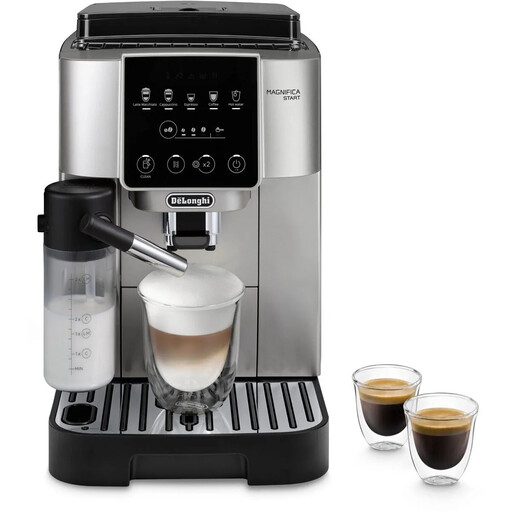
De’Longhi Magnifica Start ECAM 220.80.SB

De’Longhi Magnifica Start ECAM 220.80.SB

For a cappuccino-making process with fewer hands-on steps, the product information lists one-touch drinks and a LatteCrema Hot milk system. Try the soya drink you plan to use before the class.

View at Joybuy

IAGREEA espresso machine with steam wand, 20 Bar

IAGREEA espresso machine with steam wand, 20 Bar

The manual steam wand is a good fit for a class where participants will be learning to froth milk themselves. Allow time for the steps involved and for cleaning afterwards.

View at Joybuy
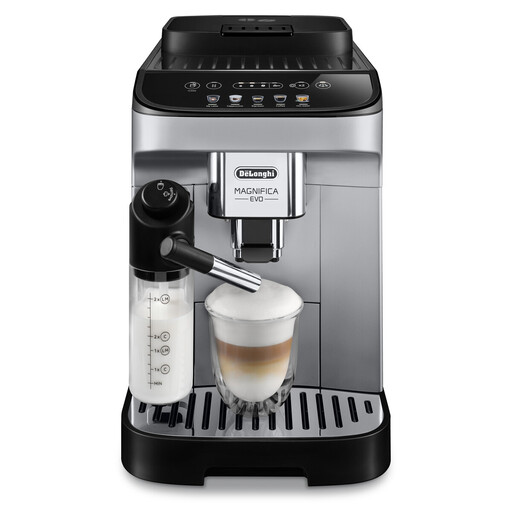
De’Longhi Magnifica Evo ECAM290.61.SB

De’Longhi Magnifica Evo ECAM290.61.SB

For an automatic milk-drink workflow, the product description lists LatteCrema Hot and plant-based drinks. Check the cleaning instructions for the exact model and try the soya drink you’ll be using in class.

View at Joybuy
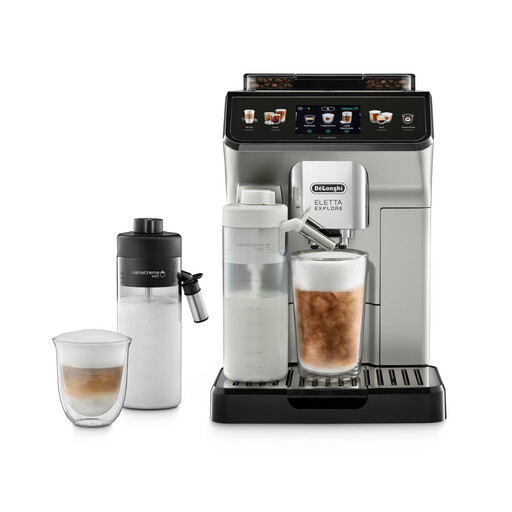
De’Longhi Eletta Explore ECAM450.55.S

De’Longhi Eletta Explore ECAM450.55.S

The product information lists soya as a plant-based alternative for LatteCrema Hot & Cool. If this bean-to-cup machine suits your class, try the specific drink and check how to care for the milk system.

View at Joybuy
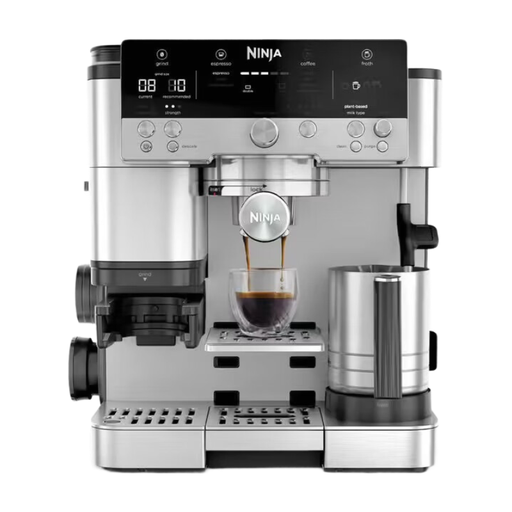
Ninja Luxe Premier 3-in-1 ES601EU

Ninja Luxe Premier 3-in-1 ES601EU

The product listing specifies espresso-making, an integrated grinder and four foam settings. Before the class, check whether one of the settings works with the soya drink you’ll be using.

View at Joybuy

Frequently asked questions

Will every milk frother work equally well with soya drink?

No, there’s no evidence that they all perform equally. Philips describes plant-based alternatives for LatteGo on the Series 3300; Sage lists a soya setting for the Barista Touch Impress. Check the exact model and try the soya drink you plan to use.

What should I plan for when it comes to cleaning before the class?

Set up the machine and accessories according to the relevant instructions, and allow time to clean any parts that come into contact with milk. Philips describes LatteGo as a two-part, tube-free system; Sage explains how to clean and purge the steam wand on the Barista Express Impress.

What ongoing costs and rights should I consider?

Allow for model-specific cleaning and descaling products, and a separate grinder if needed. The Verbraucherzentrale explains that consumer purchases are generally covered by a two-year statutory warranty from delivery. This applies against the seller and is distinct from a voluntary guarantee.

Do participants need to be told that soya is an allergen?

When a food business operator provides non-prepacked drinks to consumers, § 4 LMIDV requires information about relevant allergenic ingredients; soya beans are among the allergens that must be declared. Whether this requirement applies to a particular private or commercial cookery class depends on how it is organised. Discuss the ingredients and how the milk systems will be used with participants.

Does a CE mark prove that a product has passed an independent safety test?

No. The European Union explains that, by applying the CE mark, the manufacturer declares that the product meets the relevant EU requirements; no central EU body gives blanket approval. For a specific appliance, check the marking and manufacturer’s information, and make sure it’s suitable for the power supply you plan to use.