
Lieferung heute & morgen

Qualitätsgarantie

Willkommens-Angebote freischalten: KOSTENLOSE Lieferung | Bis zu 80 % RABATT | Kostenlose 30-Tage-JoyPlus-Testphase
App herunterladen
An espresso machine for home should work reliably, fit in your kitchen and allow you to prepare drinks such as espresso, cappuccino and latte macchiato. The choice ranges from an electric portafilter machine and the classic stovetop espresso maker to a portable manual press. However, if you focus only on a high bar rating or an elegant housing, you may overlook important details.
Many appliances are advertised as a 20-bar espresso machine. This figure generally refers to the pump’s maximum pressure, not necessarily the pressure applied to the coffee grounds throughout the entire extraction process. Brewing technology, temperature control, portafilter, operation and the ability to tamp evenly are also relevant when choosing a machine.
A machine with 15 or 19 bar may also be suitable for its intended use. So do not compare only the highest number on the packaging.
A moka pot heats water on the hob and pushes it through the ground coffee using steam pressure. The result is a strong, espresso-style coffee, but it is not prepared in the same way as with an electric portafilter machine.
A stovetop espresso maker does not require electricity and is practical for the kitchen, office or camping. An electric espresso machine, on the other hand, works with a pump, a separate brewing head and, depending on the model, a steam wand. If you regularly want to prepare cappuccino or latte, you should take this difference into account.
Coffee residue, milk deposits and limescale can make everyday use more difficult. Look for a removable water tank, a detachable drip tray and easily accessible filters. On machines with a milk frother, the steam wand should be wiped down and flushed immediately after use.
“Dishwasher-safe” usually applies only to certain removable parts. The manufacturer’s instructions in the user manual remain the deciding source of information.
Three points are crucial when choosing an electric espresso machine:
For an espresso machine for home, the tank size should match your consumption. A tank holding between around 0.9 and 1.2 litres is often more compact and easier to clean for individual households. Larger tanks reduce the need for refilling, but require more space.
Measure the available depth, width and height, including the clearance to wall cupboards. A cup warmer or a tall cup may require additional space. Particularly slim models measuring around 14 to 15 cm in width are suitable for small kitchens, halls of residence and offices.
An espresso machine with milk frother offers more drink options, but requires additional cleaning. A manual steam wand provides flexible control over the milk texture, although it takes some practice. If you only drink black coffee, this feature is not essential.
You should also consider:
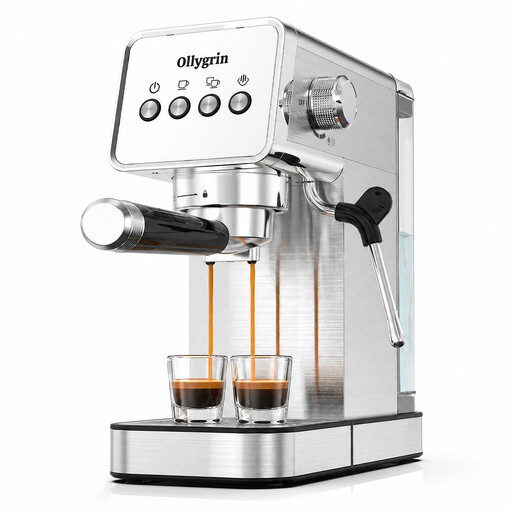
Why this product suits this profile: This electric espresso machine combines a 1.2-litre water tank with a steam wand and removable drip tray. It is suitable for beginners who want to prepare espresso and milk-based drinks without needing several separate appliances.
The removable components make refilling and cleaning easier. However, the 20-bar figure should be understood as the pump rating, not as the sole indication of drink quality.
20-bar pump, steam wand, removable 1.2-litre water tank and drip tray.
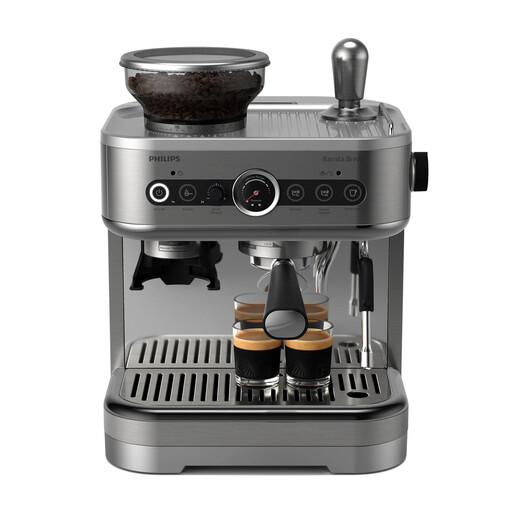
Why this product suits this profile: This model combines a portafilter, integrated conical grinder, TFT display and PID temperature control. It is aimed at households that want to grind beans fresh and prepare several drinks with one appliance.
The product details specify not only the pressure, but also the temperature control, grinder, tank capacity and cleaning options. This allows the overall equipment to be assessed more comprehensively.
2.5-litre water tank, 250-g bean hopper, five grind settings, 15 bar and dishwasher-safe removable parts according to the product details.
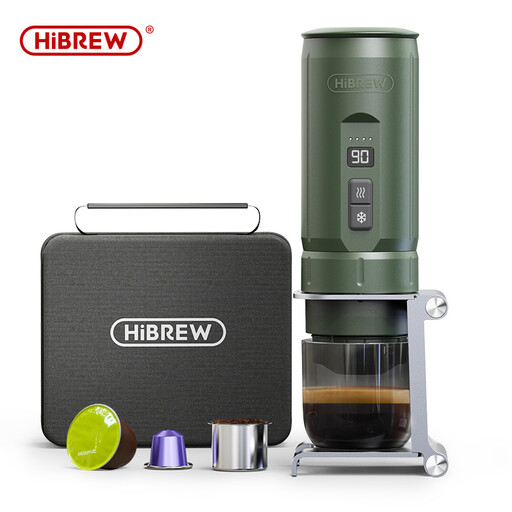
Why this product suits this profile: This portable espresso machine runs on a battery and features a display with 50, 75 and 100 ml markings. It is designed for travel, camping, the office and situations where there is no permanent kitchen space.
The technical specifications state the power source, tank markings, weight and dimensions. Before buying, check whether a replacement battery and charging accessories are suitable for your intended use.
20 bar pump pressure, digital display, replaceable battery system and stainless steel water tank with three fill markings.
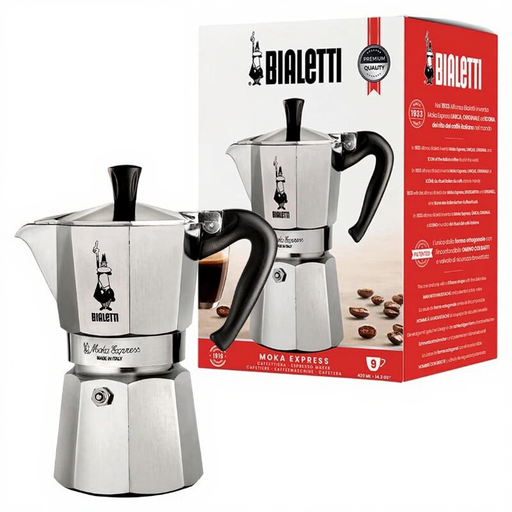
Why this product suits this profile: This manual espresso pot is suitable for gas, electric and ceramic hobs and prepares around 130 ml of coffee according to the product details. It does not require electricity and is suitable for small kitchens or occasional use.
The stated hob compatibility excludes induction hobs. This information helps prevent ordering the wrong product; induction hobs require a moka pot that is expressly designed for induction use.
Aluminium housing, safety valve and use on gas, ceramic and electric hobs; hand-wash only.
We have put together a complete, regularly updated list of products that fully meet these strict selection criteria and the safety regulations applicable in the EU.
An espresso machine is easier to manage day to day when cleaning becomes part of your regular routine:
With a capsule machine such as the Philips L’Or Barista Sublime LM9012/23, the capsule system, waste container and ongoing capsule costs are key considerations instead. A coffee machine for espresso with an integrated grinder saves you from buying a separate grinder, but requires more space and maintenance.
For beginners, an electric portafilter machine with single and double filters, a removable water tank and straightforward controls is a practical choice. If you want to adjust as little as possible, you could consider a capsule machine. A moka pot is more affordable and can be used without electricity, but it does not produce traditional pump espresso.
Ongoing costs depend mainly on the type of coffee, how much you consume and descaling requirements. Ground coffee and beans give you plenty of flexibility. Capsules are pre-portioned and convenient, but can result in higher material costs per drink. Electricity consumption, water filters, cleaning products and possible spare parts must also be factored in.
There is no standard service life that applies to every machine. It depends on the type of machine, frequency of use, water quality and maintenance. Regular descaling, removing coffee residue and gently cleaning removable parts all help ensure reliable use over the long term. The applicable warranty and statutory guarantee conditions should be checked before buying.