
当日/次日达

品质保障

开启新人专享福利: 全场免邮 | 低至 2 折 | 免费试用 30 天 JoyPlus 会员
下载 Joybuy
If you want to buy eSUN 3D printing filament for an FDM 3D printer, you will often come across many similar product names: PLA Basic, Matte PETG, 1.75 mm, 1 kg and a wide range of colours. However, the key differences are not limited to price or colour. The material type, printer temperature and intended use determine whether the filament will perform reliably in everyday use.
PLA filament for FDM printers is often suitable for decorative objects, figures, prototypes and educational projects. PETG, on the other hand, is frequently used for functional components where strength, toughness or lower water absorption are important. If you choose based solely on colour or price, you may end up buying a material that is not suitable for your planned model.
An indication such as 1 kg of filament generally refers to the amount of material on the spool. The actual total weight, including the spool, may be higher. Before buying, you should also check the spool dimensions and the printer's spool holder. A 1 kg spool is an economical choice for many users, but it needs enough space on the filament holder.
The specification 1.75 mm 3D printing filament is only suitable for printers that process this filament diameter. You also need to consider the nozzle temperature, print bed, feed path and recommended printing speed. PETG, in particular, may require different settings from PLA.
First, check whether your printer processes 1.75 mm or 2.85 mm filament. In a 1.75 mm system, the diameter should be as consistent as possible so that the extruder can feed the material in a controlled manner. The spool width is equally important: it must rotate freely without rubbing against the holder or housing.
eSUN PLA Basic Filament is described by the product information as an affordable PLA material for many FDM printers. PLA is generally relatively easy to process and is often used for models, display objects, enclosure prototypes and school projects.
eSUN Matte PETG Filament combines a PETG base with a matt, low-reflection surface, according to the product description. High strength, toughness, water resistance and consistent processing are also highlighted. PETG can be a good choice for functional parts and prototypes, but it requires suitable temperature and adhesion settings.
Filament in a range of colours makes it easier to identify components or customise models. With matt PETG, the surface finish is also an important consideration. The matt texture can reduce reflections and make layer lines less noticeable. However, the result still depends on layer height, nozzle temperature, part cooling and printing speed.
Before buying, you should therefore distinguish between the following requirements:
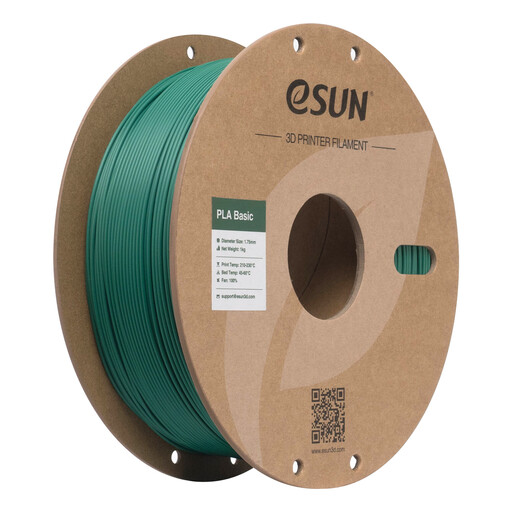
Why this product suits this profile: According to the product information, the 1.75 mm version and 1 kg spool are suitable for many common FDM printers and regular beginner projects.
The clearly stated material, diameter and quantity make comparison easier, rather than relying solely on a colour name.
PLA base, 1.75 mm diameter and 1 kg of material according to the product name; Holly Green colour for visible models.
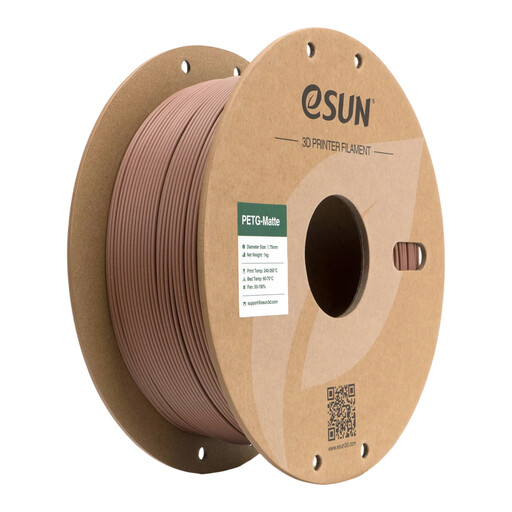
Why this product suits this profile: The PETG base and matt Terracotta finish appeal to users who value a more understated appearance alongside functional properties.
The material type, diameter and spool quantity are clearly stated. This makes it easier to compare the product objectively with PLA and glossy PETG.
According to the product description, PETG with high strength, toughness, water resistance and a matt surface; 1.75 mm and 1 kg.
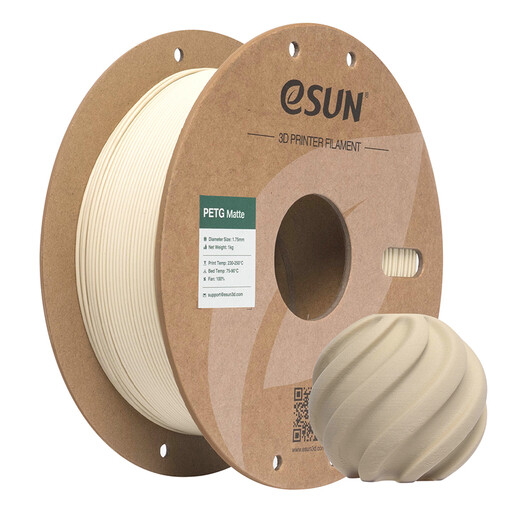
Why this product suits this profile: The 1 kg spool is practical for regular print jobs, prototypes and functional models, provided your printer supports PETG.
Choosing PETG instead of PLA takes into account components where, according to the product description, strength, toughness and water resistance are important.
Matt PETG in Light Khaki, 1.75 mm, 1 kg and, according to the product description, designed for reliable printing and low warping.
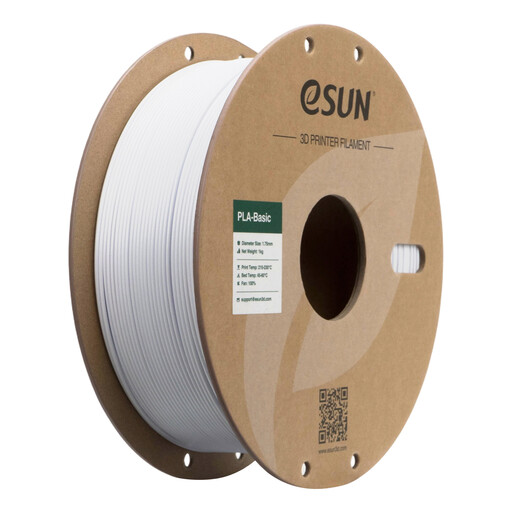
Why this product suits this profile: Cold White is suitable for models, technical display objects and projects that require a neutral base colour.
The selection focuses on verifiable specifications—PLA, 1.75 mm and 1 kg—instead of unsubstantiated quality claims.
PLA Basic material, 1.75 mm and 1 kg according to the product name; light colour for contrast and subsequent painting.
Even suitable filament with high print reliability requires the right settings. Follow the manufacturer's temperature recommendations and begin with a small test object when using new materials. With PETG, a clean print surface, sufficient adhesion and controlled cooling can be crucial.
Filament should be stored in a dry, dust-protected and preferably airtight environment. Depending on the material, moisture can negatively affect the surface, cause stringing and increase operating noise during printing. For longer-term storage, a sealable box with desiccant is a practical solution.
No. The key factors are the filament diameter, extruder, permitted temperatures and spool dimensions. The variants mentioned here are specified as 1.75 mm. Before buying, you should compare this specification with your printer model.
PLA is often used for simple models, figures, decorations and school projects. PETG can be a sensible choice for functional components when strength, toughness or water resistance are important. Actual printability depends on the printer and its settings.
That depends on the weight of the models, infill, wall thickness and the number of failed prints. Small decorative objects require considerably less material than large enclosures or functional components. You can check the estimated material usage in the slicer before printing.