
Lieferung heute & morgen

Qualitätsgarantie

Willkommens-Angebote freischalten: KOSTENLOSE Lieferung | Bis zu 80 % RABATT | Kostenlose 30-Tage-JoyPlus-Testphase
App herunterladen
Purchasing an electric car is a major step, but choosing the right accessories is just as crucial for a seamless charging experience. A suitable EV charging cable is essential. The market offers a wide variety of options, but not all are suited to your specific needs. Incorrect assumptions about performance or functionality often lead to unnecessary expenses or safety risks.
This guide, created by the Joybuy Product Recommendation Officer, will help you understand the essential criteria and avoid common pitfalls. We focus on the facts so you can make an informed decision.
Before we dive into the technical details, let's look at the most common errors that can lead to frustration and additional costs.
To avoid these mistakes, you should check three core parameters. These determine the compatibility, safety, and practical usability of your charging cable.
The charging power, measured in kilowatts (kW), is the most important factor. It must be matched to your vehicle and your charging station.
In Europe, the Type 2 plug (also known as the Mennekes plug) has established itself as the standard for AC charging. Virtually all new electric cars and public charging stations in the region use this connection. Ensure that your cable has the correct Type 2 plug on both the vehicle and station ends.
The right length depends on where you charge.
Here are some product recommendations tailored to specific use cases that avoid the pitfalls mentioned.

Why This Fits Their Persona: This cable is the ideal solution for drivers who regularly charge at home on an 11 kW wallbox and on the go at public stations. It offers a balanced combination of performance and handling.
The 11 kW power is perfectly matched to the most common home charging stations and many vehicle models, avoiding the unnecessary cost of a 22 kW cable. The 7m length provides ample flexibility for public charging stations. The T?V certification ensures tested safety.
Robust construction with a TPU cable jacket and silver-plated contacts for durability and excellent conductivity. Includes a practical carrying case for storage.
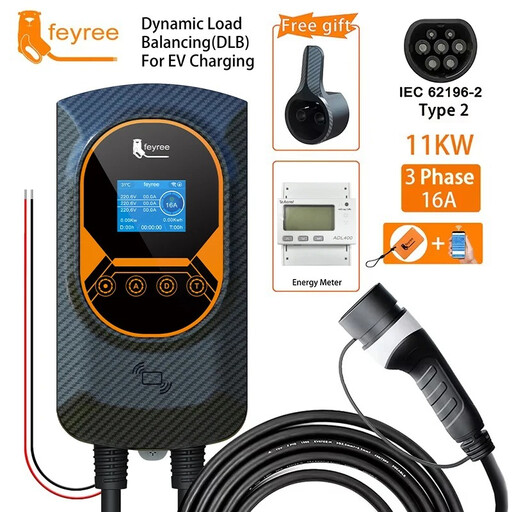
Why This Fits Their Persona: Ideal for homeowners looking for a smart and safe home charging station. This wallbox optimises the charging process and integrates intelligently into the household.
The wallbox with load management (Dynamic Load Balancing) feature prevents overloading the home's electrical connection by automatically adjusting the charging power to the household's total electricity consumption. The app-controlled charging allows for scheduling charging sessions during off-peak hours, which saves on electricity costs.
Full control over the charging process via smartphone app (Tuya). Comprehensive safety features (including overvoltage and overheat protection) and a high protection class (IP66) for safe outdoor operation.
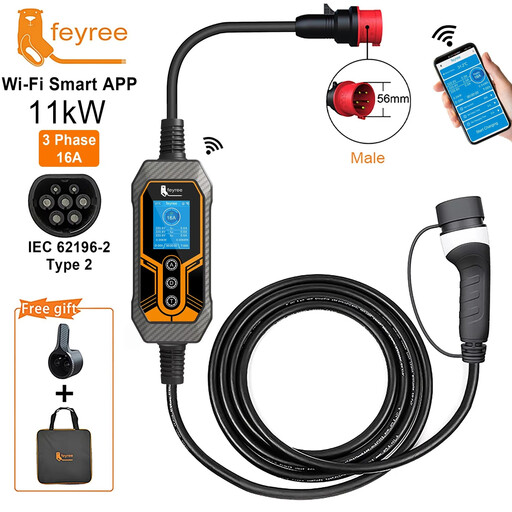
Why This Fits Their Persona: Perfect for drivers without a fixed wallbox or for those who travel frequently and want to charge with high power at various locations (e.g., holiday homes, workplaces).
This portable EV charger is far more than a slow Schuko emergency cable. Thanks to its CEE plug, it enables charging at up to 11 kW from industrial sockets, offering a true alternative to a permanently installed wallbox. App control ensures safe and convenient operation.
High flexibility thanks to its portable design. Adjustable charging current (8A-16A) and scheduled charging via the app. The 2.8-inch LCD screen displays all relevant charging data in real time.
We have compiled a complete, up-to-date list of products that fully meet these strict selection criteria and safety regulations.
The right charging power depends on two components: your vehicle's on-board charger (OBC) and the power of the charging station. An 11 kW charging cable is sufficient for most use cases, as many EVs and almost all private wallboxes are designed for this power level. A 22 kW cable only speeds up charging if both your car and the charging station support 22 kW. A vehicle with an 11 kW OBC will still only charge at 11 kW, even at a 22 kW station with a 22 kW cable.
A T?V certification or a comparable seal (e.g., CE) is critically important. These seals confirm that the product has passed strict safety tests according to European standards. This covers electrical safety, material quality, heat resistance, and mechanical durability. A charging cable without this certification can pose a significant safety risk.
A simple portable charger for a standard Schuko household socket is only recommended as an emergency solution due to its very low charging power (approx. 2.3 kW). A full charge can take over 24 hours. However, more powerful portable chargers with a red CEE plug (three-phase power) can achieve charging speeds of 11 kW and represent a viable alternative to a permanently installed home charging station, provided a suitable socket has been professionally installed by an electrician.