
Lieferung heute & morgen

Qualitätsgarantie

Willkommens-Angebote freischalten: KOSTENLOSE Lieferung | Bis zu 80 % RABATT | Kostenlose 30-Tage-JoyPlus-Testphase
App herunterladen
Buying an electric car is the first step. The second, often underestimated, is choosing the right charging equipment. The market for EV charging cables and wallboxes is crowded and full of technical jargon. The wrong choice not only leads to financial loss but also to daily frustration when charging. Before you make a purchase, you should be aware of the most common pitfalls that many buyers overlook.
To avoid these problems, it's essential to base your purchasing decision on objective technical parameters that match your vehicle and your living situation.
The selection of the right charging equipment depends on three core factors: charging power, connection, and safety features. Understanding these fundamentals will protect you from making a bad purchase.
The charging power determines how quickly your vehicle's battery is charged. It is limited by the weakest link in the chain: the vehicle, the charging cable, and the power source.
Almost all modern electric cars and public AC charging stations in Europe use the same standard.
Modern charging solutions offer more than just power transmission.
Based on these objective criteria, we have identified some products that represent a suitable solution for specific user groups.
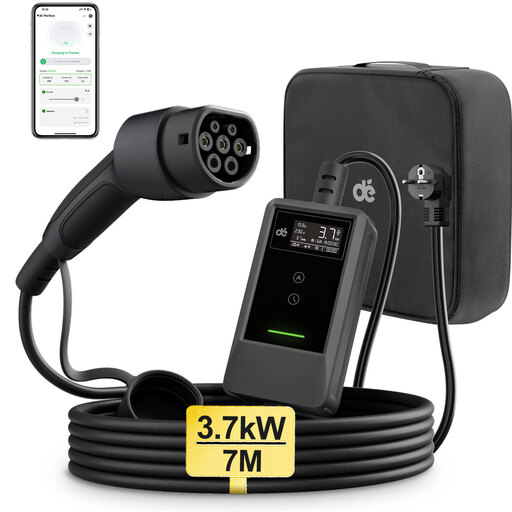
Why This Fits Their Persona: Ideal for renters, PHEV owners, or as a secondary cable for travel. It requires no complex installation and can be used with any standard domestic socket (Schuko), offering maximum flexibility.
The app control allows you to adjust the current (e.g., to 10A) to prevent overloading older home electrical systems—a key safety feature often missing from basic emergency cables.
Plug-and-play solution with no installation costs. The 7-metre cable length provides enough room for most parking situations.
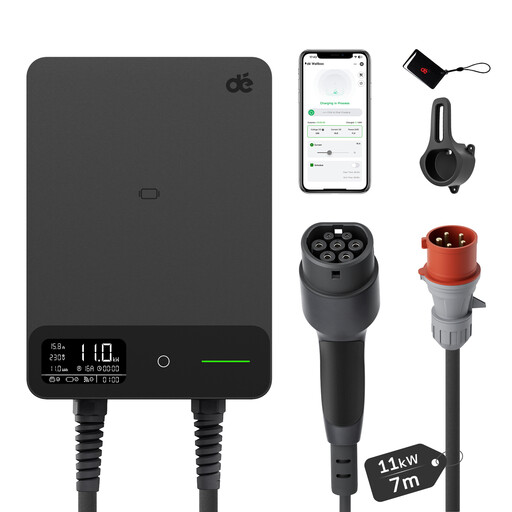
Why This Fits Their Persona: A permanent, high-performance, and smart charging solution for the home. The 11 kW power is optimal for fast overnight charging without requiring complex approval from the grid operator.
According to the manufacturer, this model has an integrated Type B RCD (AC 30mA + DC 6mA), which provides a high level of safety and bypasses the need for an expensive external RCD of this type in the home's electrical system.
The combination of app control for charge scheduling and RFID cards for authorisation prevents unauthorised use by third parties—ideal for accessible carports.

Why This Fits Their Persona: For drivers who frequently charge at public stations and require maximum flexibility. This cable serves as the connection between the charging station and the vehicle when the station doesn't have a tethered cable.
The generous 10-metre length solves the problem of blocked or awkwardly positioned charging stations. Being rated for 22 kW ensures the cable won't become a bottleneck for future vehicles with higher charging capacities.
T?V-certified according to the manufacturer, which signals a tested safety standard. The high power capacity and long length offer maximum future-proofing and flexibility.
We have compiled a complete, up-to-date list of products that fully meet these strict selection criteria and German safety regulations.
Does an 11 kW wallbox need to be approved? No, in Germany, a wallbox with a charging capacity of up to 11 kW only needs to be registered. This means you or your installer must report the installation to the responsible grid operator before commissioning. A system only requires formal approval if its capacity exceeds 11 kW, as is the case with a 22 kW wallbox.
Can I charge my EV from a normal Schuko socket? Yes, using a domestic socket is possible with a dedicated EV charger (often called a "charging brick" or mobile charging station). However, this should be considered an emergency solution or for vehicles with small batteries (PHEVs). Household sockets are not designed for the hours-long continuous load of high currents, which can lead to overheating. It is recommended to have the electrical installation checked by a professional beforehand.
What does the "Type 2" connector mean? The Type 2 charging cable is the standardised connector in Europe for AC charging of electric vehicles. It was established as the European standard and is used by almost all European and Asian car manufacturers. Nearly every public AC charging station and every wallbox sold in Germany is equipped with a Type 2 socket or a permanently attached Type 2 cable.