
Lieferung heute & morgen

Qualitätsgarantie

Willkommens-Angebote freischalten: KOSTENLOSE Lieferung | Bis zu 80 % RABATT | Kostenlose 30-Tage-JoyPlus-Testphase
App herunterladen
Investing in a wallbox for your electric vehicle is a key step towards greater convenience and efficiency. However, the market is flooded with technical jargon, various power levels, and complex pricing models. Buying without the right information can lead to poor investments. Misleading marketing promises and overlooked technical details often result in users purchasing a charging solution that is unsuitable for their needs or unnecessarily expensive. This guide reveals the most common pitfalls and explains which parameters truly matter.
Before you decide on a model, you should be aware of the typical mistakes that often lead to dissatisfaction and unexpected costs.
To find the right wallbox for your EV, focus on these three objective criteria. They define the functionality, safety, and long-term operating costs of your charging station.
The charging power, measured in kilowatts (kW), determines how quickly your vehicle's battery is charged.
The decision between a permanently installed and a mobile charging solution depends on your living situation and your need for flexibility.
In Europe, the Type 2 charger connector is the standard for AC (Alternating Current) charging. All models presented here use this connection. More important is the cable length. Measure the distance from the planned mounting position of the wallbox to your car's charging port. A cable that is too short is impractical in daily use. Lengths of 5 to 7.5 metres generally offer sufficient flexibility.
Instead of making a one-size-fits-all recommendation, we have identified products tailored to specific needs and lifestyles.
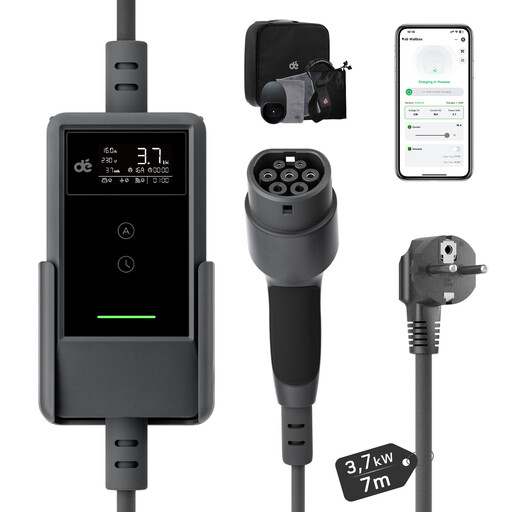
Why This Fits Their Persona: Ideal for users who cannot or do not want to install a permanent wallbox. This mobile charging solution simply plugs into an existing Schuko socket and is perfect for plug-in hybrids or pure EVs with low daily mileage.
This charger bypasses the cost and hassle of a permanent installation. The charging power is adjustable via an app, which prevents overloading older home wiring—an often-overlooked safety risk.
Plug-and-Play Solution: No installation costs. App Control: Allows for adjusting the charging current and monitoring the charging process.
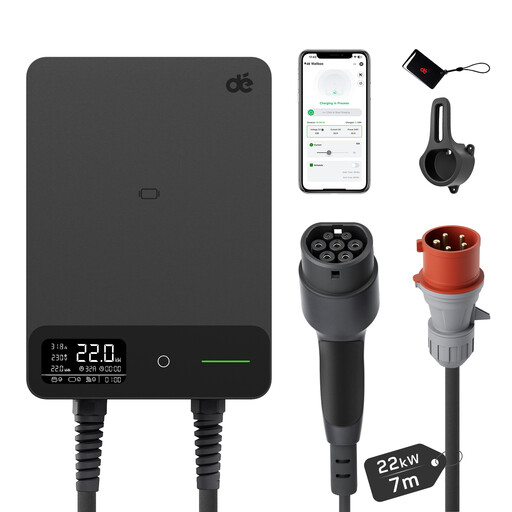
Why This Fits Their Persona: For homeowners seeking a future-proof and high-performance charging solution. The 22 kW output ensures maximum charging speed (provided it's supported by the vehicle and grid operator). The integrated electricity meter is ideal for cost tracking or for billing a company car.
Although it's a 22 kW model, it avoids the trap of being just a "dumb" high-power device. The app control enables smart management to schedule charging sessions and avoid peak loads. It's an investment in control, not just speed.
High Charging Power: Up to 22 kW for rapid charging. Integrated Electricity Meter: For precise consumption tracking. Long Cable: 7.5 metres for maximum flexibility.
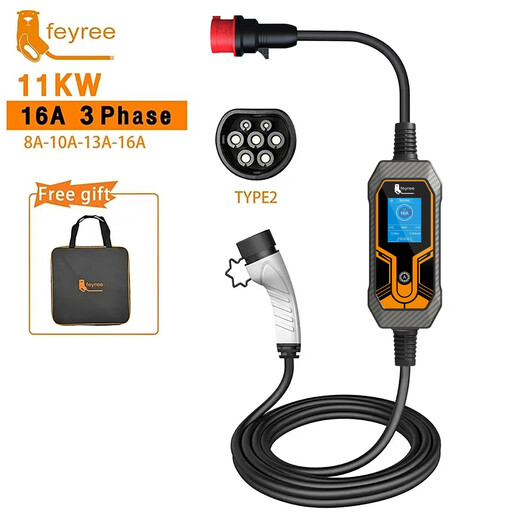
Why This Fits Their Persona: This mobile wallbox is the solution for anyone who already has a CEE industrial socket (16A) and wants to leverage the power of an 11 kW wallbox without a permanent installation. Perfect for workshops, holiday homes, or as a high-performance mobile alternative.
This device offers a sensible compromise: it delivers a solid 11 kW charging power, which is optimal for most EVs, while avoiding the need for grid operator approval (unlike 22 kW) and the permanence of a fixed installation.
Full 11 kW Power: Fast charging via a CEE socket. Portable Design: High charging power on the go. Adjustable Charging Current: Provides added safety and flexibility.
We've compiled a complete, up-to-date list of products that fully meet these strict selection criteria and safety regulations.
Does a wallbox have to be installed by an electrician? Yes, for safety and warranty reasons, the installation of a permanently mounted wallbox (both 11 kW and 22 kW) must be carried out by a qualified electrician. A mobile wallbox that plugs into an existing socket does not require installation. However, it is recommended to have the socket, especially in older buildings, checked by a professional to ensure it is suitable for continuous load.
What is the difference between an 11 kW and a 22 kW wallbox? The main difference lies in the charging speed and the regulatory requirements. A 22 kW wallbox can theoretically charge an EV twice as fast as an 11 kW model. However, in many regions, a 22 kW station must be approved by the local grid operator before use, whereas an 11 kW station often only needs to be registered. You should also check if your vehicle can even accept a charging power of 22 kW.
Can I save on charging costs with a wallbox? Yes, especially with a smart charging station. These allow you to control and schedule charging sessions via an app. This means you can charge your vehicle when electricity is cheapest, for example, using a special off-peak tariff. If you have a photovoltaic system, a smart wallbox can manage the charging process to primarily use the self-generated, free solar power.