
Lieferung heute & morgen

Qualitätsgarantie

Willkommens-Angebote freischalten: KOSTENLOSE Lieferung | Bis zu 80 % RABATT | Kostenlose 30-Tage-JoyPlus-Testphase
App herunterladen
An EVA puzzle mat for babies and children can define a play area, cover hard floors and be stored away compactly when needed. However, products vary considerably in their material details, tile size, edge design and care requirements. A low purchase price does not necessarily mean good value if the mat is too small or the interlocking pieces come apart during everyday use.
For parents, nurseries and schools, three common purchasing concerns are particularly relevant:
This guide explains which details to check before buying a baby or children’s play mat.
EVA stands for ethylene-vinyl acetate, a foamed plastic often used to make a foam mat. According to the product details for the Benrita models mentioned here, the tiles are made from non-toxic EVA foam. This describes the material as declared by the seller, but does not replace checking the product labelling.
Check for:
For babies and young crawlers, lay the mat out fully before first use, check it for damage and air it thoroughly. A crawling mat is no substitute for supervision. If a product has no clear age guidance, it is best to err on the side of caution.
With an interlocking mat, it is not just the number of pieces that matters, but the actual area they cover when assembled. The 12 x 12-inch dimensions listed in the product details work out at approximately 30.5 x 30.5 cm per square tile.
Six tiles therefore cover around 0.56 m². An 18-piece set arranged as 3 x 6 tiles can cover approximately 0.56 x 1.83 m. The usable outside dimensions may vary depending on the layout and edge pieces.
So, check the following:
Edge pieces can create a straight outer edge and prevent the interlocking pattern from being exposed around the sides. For rooms with an irregular shape, a modular set is often more practical than a floor mat cut to size for a child’s bedroom.
An easy-clean play mat should be suitable for wiping with a lightly damp cloth and a mild cleaner that is safe for the material. According to the product details for the Benrita models, the tiles are easy to clean. Even so, avoid harsh solvents and let the pieces dry completely before putting them back together.
A non-slip play mat will not necessarily stay put on every type of floor. Dust, moisture, smooth tiles and uneven surfaces can all affect its grip. Place the mat on a clean, level floor and check that the joints fit together neatly once assembled.
The products below differ mainly in their coverage, colour, features and intended use. The product details are taken from the respective listings.
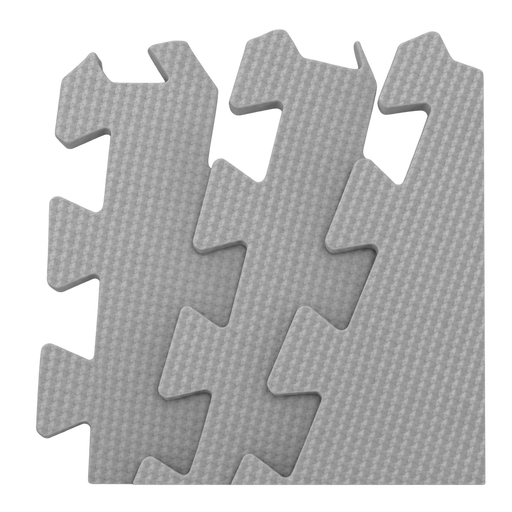
Why it suits this profile: The set includes six square tiles and ten edge pieces. It is suitable for defining a smaller play area when you do not need much coverage to begin with.
The number of tiles and edge pieces is clearly stated, making it easier to work out how much coverage you need before buying.
EVA foam according to the product details, an interlocking design that needs no assembly, and a neutral light grey colour.
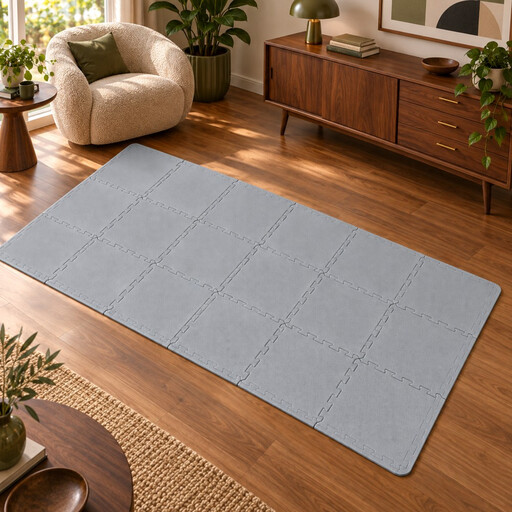
Why it suits this profile: This 18-piece set is a good option for families planning a longer or larger play and activity area, and who want a consistent look.
The product details specify 18 square tiles and 30 edge pieces. This reduces the risk of planning for too small an area or not having enough edge pieces.
A modular interlocking design, a light grey finish and, according to the product details, easy cleaning.
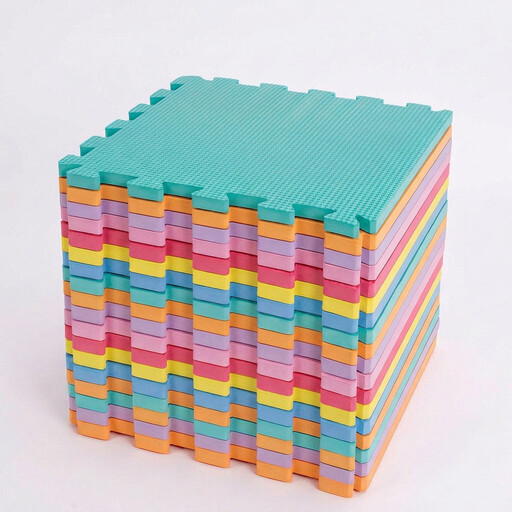
Why it suits this profile: The colourful design is suitable for play, sorting and learning areas at home, in nurseries or in the classroom. According to the product details, it can also be used as a yoga or fitness mat.
The modular design can be adapted to different rooms. Even so, check before buying that the colours suit the intended learning or living space.
18 tiles with 27 edge pieces, a colourful design and, according to the product description, the option to use it as a play mat, yoga mat or fitness mat.
We’ve put together a complete, regularly updated list of products that meet these strict selection criteria and fully comply with the safety regulations in force in the EU.
Place the impact-absorbing floor mat on a dry, level surface. Connect the tiles loosely at first, then check all the joints. Edges that stick out should not extend into walkways. If using the mat for yoga or fitness, set aside a separate area so that toys, sand and small objects do not damage the surface.
In many cases, all you need to do is:
Replace any tile that shows visible signs of damage. How long the mat lasts depends on how often it is used, the floor beneath it, sunlight, temperature and cleaning. It would not be reasonable to give a single lifespan that applies to every situation.
That depends on the specific age guidance, material labelling and construction. Check the manufacturer’s instructions and only use the mat under supervision. For babies, there should be no detachable small parts, damaged edges or open joints.
First remove any dust and toys. Wipe the surface with a lightly damp cloth and a mild cleaner. Avoid harsh chemicals, prolonged soaking and high heat. The tiles must be completely dry before you assemble the mat again.
Measure the area you want to cover and use the actual dimensions of one tile to calculate how many you need. For the models mentioned here, each tile measures 12 x 12 inches, or approximately 30.5 x 30.5 cm. Allow for edge pieces as well as any variation caused by the interlocking joints.