
Lieferung heute & morgen

Qualitätsgarantie

Willkommens-Angebote freischalten: KOSTENLOSE Lieferung | Bis zu 80 % RABATT | Kostenlose 30-Tage-JoyPlus-Testphase
App herunterladen
An EVA puzzle mat for children can cover hard floors in a play area, be expanded as needed and taken apart when required. These mats are also commonly sold as interlocking floor mats for children’s rooms, EVA crawling mats or as bases for yoga and fitness. However, not every model is suitable for every room or purpose.
Before buying, parents, nurseries and people who exercise should look beyond colour and price. The key factors are the area to be covered, material details, edge pieces, cleaning and whether the mat is genuinely suitable for its intended use.
Many products look like great value because they contain a large number of pieces. What matters, though, is the area covered by each tile. A 12 × 12-inch tile measures approximately 30.5 × 30.5 cm. Six tiles cover around 0.56 m², while 18 cover approximately 1.67 m².
Measure the available space and plan the layout before you buy. A small set may be enough for a play corner, while a family playroom or activity room will usually need several packs.
The term “non-toxic” often comes from the product description. It should not be treated as proof of an independently verified safety mark. According to the product descriptions, the products featured here are made from EVA foam; the information provided does not include specific details about certificates or compliance with a particular standard.
So, check for:
If babies or toddlers use the mat, check it regularly for cracks, loose edges and small pieces that could come away.
A soft protective mat can make contact with a hard floor more comfortable. However, this does not automatically mean the surface is slip-resistant or provides complete protection against falls. Stability also depends on the floor beneath it, the size of the covered area and how securely the tiles fit together.
Only describe a slip-resistant puzzle mat as such if the seller provides clear evidence of this feature. On smooth tiles or laminate, try a quick movement test. The mat should not shift noticeably during normal crawling, play or light exercise.
EVA is a foamed plastic often used for puzzle mats because it is lightweight and easy to work with. A foam play mat should feel even throughout and show no visible damage. A very soft surface may be comfortable for crawling, while firmer tiles can provide a more stable base for fitness exercises.
Also check whether the surface has minimal pores and can be wiped clean with a damp cloth. Spilt drinks, dust and fingerprints are all part of everyday life in children’s spaces.
A well-fitting interlocking system makes the mat easier to assemble and helps stop individual tiles coming apart under light pressure. Edge pieces give the mat a neater finish and reduce exposed joins around the sides.
Depending on the version, the sets featured here include either six or 18 square tiles, along with matching edge pieces. Once assembled, check that all the joints are fully connected. Do not trap the mat under furniture, doors or radiators.
A single-colour floor mat for children can create a calmer look in a child’s room, while coloured tiles can help define a play area. A mat that is easy to take apart is handy for lessons, childcare settings or activities that change regularly.
For yoga and home workouts, you should also check that the area is long and wide enough. One 30.5 cm tile is not a complete exercise mat, so you will need to connect several tiles to create a suitably sized surface. For exercises that put a lot of pressure on one spot, check that the foam is suitable.
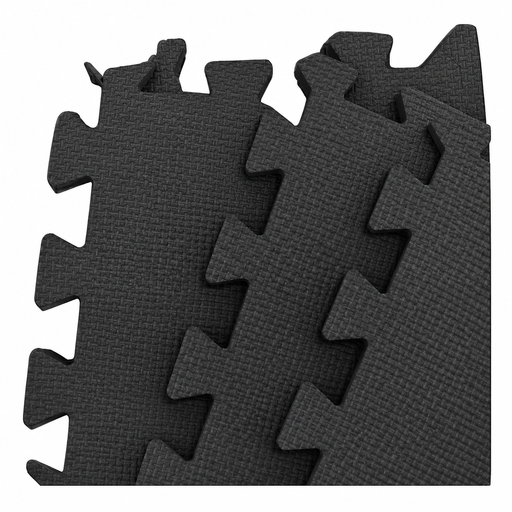
Why this product suits this profile: The six-tile set is suitable for a defined play corner, a small workout area or gradually expanding the space.
The stated number of tiles and their dimensions make it easier to work out the area covered than choosing based on product photos alone.
EVA foam, interlocking design, six tiles and ten edge pieces, according to the product description.
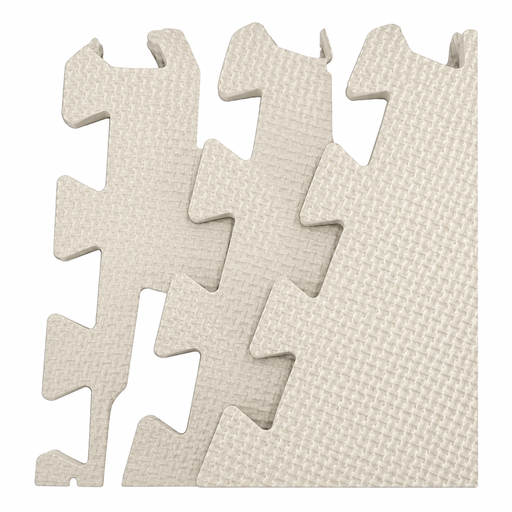
Why this product suits this profile: The single-colour design works well with understated interiors and can be used as a compact indoor crawling mat.
The pack clearly states that it contains six tiles, helping you avoid mistaking a small pack for enough to cover an entire room.
Solid off-white colour, EVA material, interlocking design and ten edge pieces, according to the product description.
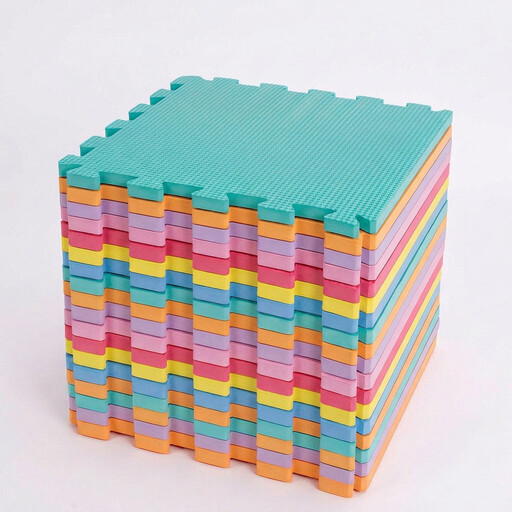
Why this product suits this profile: The larger pack is designed for playrooms, classrooms or spaces used for both play and fitness.
The pack contains 18 tiles and 27 edge pieces, as stated. This helps frequent users plan the coverage and finish before buying.
Colourful design, 18 square tiles, 27 edge pieces and detachable interlocking joints, according to the product description.
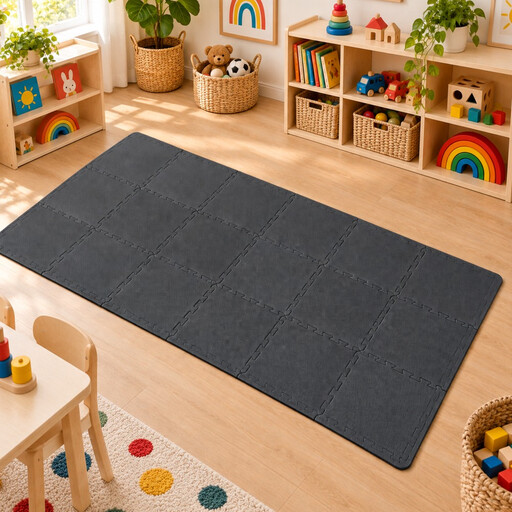
Why this product suits this profile: The black 18-piece set is suitable for creating a larger, coordinated surface in a playroom, gym or classroom.
The 3×6 layout and stated number of edge pieces make planning easier than relying on a vague size description.
18 tiles, black colour, interlocking system and edge pieces, according to the product description.
We’ve put together a comprehensive, regularly updated list of products that meet these strict selection criteria and fully comply with the safety regulations in force in the EU.
Place the tiles on a dry, level floor and first connect the pieces to create the size you need. Then fit the edge pieces. If you have a foldable floor mat or an interlocking mat, it is best to assemble only as many pieces as you need. When storing the mat, keep it dry and away from direct heat.
According to the product descriptions, the mat can simply be wiped clean. Use a soft cloth and a mild cleaning product. Harsh solvents, high heat and sharp objects can damage the surface.
It depends on the area you want to cover. A 12×12-inch tile measures approximately 30.5 × 30.5 cm. Eighteen tiles cover around 1.67 m². A larger room will need several sets. Measure the play area, including clearance around the edges, before you buy.
Its lifespan depends on how it is used, the floor beneath it, how it is cleaned and how it is stored. Regular checks are a good idea, especially if young children use it every day or if it is used for exercises that put a lot of pressure on one spot. Replace any pieces that are damaged, badly misshapen or no longer stay firmly connected.
The product information also lists these tiles for yoga, fitness and floor covering. For the activity you have in mind, make sure the area is large enough and the floor underneath is stable. Before using the mat regularly, check that it does not move, that it does not develop pressure marks and that it provides a stable surface to stand on.