What to look for when buying
First decide whether you want an oat base you can customise or a ready-made fruit mix. Then compare sugar figures on the same basis and check any ingredients that matter for your portion or diet.
| What to consider |
What to check |
Who it matters to |
| Total sugar |
Compare the ‘of which sugars’ figure per 100 g; for your own portion, also factor in the liquid and any other ingredients. |
If I want to stick to a set sugar limit in the evening, I need the actual figure, not just a claim on the pack. Total sugar content is the top priority for around 36% of consumers. |
| Fruit with no added sugar |
Read the ‘no added sugar’ claim alongside the ingredients list and the fruit mix’s sugar content. |
I want a ready-made fruit mix, as long as I can avoid added sweetening ingredients. This is a priority for around 29% of consumers. |
| Preparing it yourself |
Check whether it is plain oats or a mix with other ingredients, and how it is intended to be prepared. |
I want to choose the sweetness and consistency of my warm evening meal, and I’m happy to spend more time preparing it. This flexibility takes priority for around 21% of consumers. |
| Ingredients and allergens |
Check the ingredients list, allergen information and any required labelling on the specific pack. |
If a particular diet or an allergen determines my choice, the word ‘porridge’ on its own isn’t enough. This is the most important buying criterion for around 14% of consumers. |
Brands and retailers to consider
With these brands and retailers, it’s worth checking the specific variety or recipe. A brand name alone doesn’t tell you about sugar content, ingredients or allergens.
Kölln
Kölln offers both a base you can customise and fruity oat porridge mixes.
- According to Kölln, Feine Basis contains 74% wholegrain and is described as vegan and having ‘no added sugar’.
- According to Kölln, Feine Basis contains almonds and spelt. REWE lists 15 g of sugar per 100 g for its Fruit Oat Porridge, so check the information for the variety you choose.
Seitenbacher
Seitenbacher offers plain oats and ready-made fruit porridge mixes as different starting points.
- For porridge made from scratch, Seitenbacher suggests organic oats and water as possible ingredients.
- According to Seitenbacher’s nutrition information, its Fruit Porridge, described as having ‘no added sugar’, contains 19 g of sugar per 100 g. The manufacturer also says that preparing it with water may make it less creamy than using milk.
REWE Bio
REWE’s porridge range includes, among other options, a plain variety and a berry variety from REWE Bio.
- You can compare the plain and fruit varieties by looking at their respective ingredients and nutrition information.
- The labelling on the specific product will tell you whether it suits your sugar limit or ingredient requirements.
Brüggen
Brüggen is a relevant manufacturer of own-label products, with oats, muesli and porridge in its range.
- For an own-label product, you can assess the specific recipe by checking its ingredients list and nutrition information.
- The manufacturer’s name alone doesn’t identify a particular porridge recipe or tell you its sugar content.
EDEKA
EDEKA suggests a basic porridge recipe made with oats and milk as a starting point for preparing your own.
- When you cook it yourself, you can choose the other ingredients for your evening portion.
- For a ready-made product, check the ingredients and nutrition information on the specific pack instead.
Oat products to prepare yourself
This selection features plain oat products for a warm dish where you can choose the other ingredients and control the sweetness. With oat groats, check the product form and preparation instructions, especially if you’re expecting the consistency of porridge made with rolled oats.
 No image available
Kölln fine rolled oats, 500 g
For warm porridge where you choose the other ingredients and how sweet you want it.
View at Joybuy
 No image available
Alnatura organic fine rolled oats, 500 g
A base for homemade evening porridge, with the freedom to choose the liquid and other ingredients.
View at Joybuy
 No image available
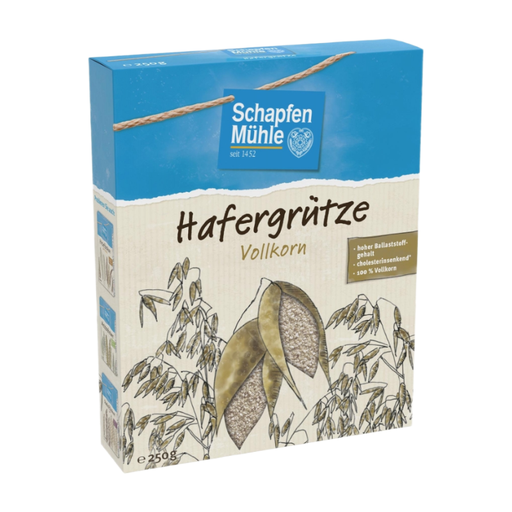
Schapfenmühle wholegrain oat groats, 250 g
For a warm oat dish prepared at home. If you’re after a particular porridge consistency, check the exact product form and preparation instructions before buying.
View at Joybuy
Frequently asked questions
Does ‘no added sugar’ mean the same as ‘low sugar’ for porridge?
No. ‘No added sugar’ doesn’t tell you how much sugar the porridge contains overall; fruit, for example, can contribute to its sugar content. So also check the ‘of which sugars’ figure in the nutrition information and compare products per 100 g.
How do I compare two fruit porridges with no added sugar?
First compare the ‘of which sugars’ figure per 100 g, then consider how much you plan to use. REWE lists 15 g of sugar per 100 g for Kölln Fruit Oat Porridge; Seitenbacher gives 19 g per 100 g for its Fruit Porridge. These figures apply to these recipes, not to every fruit mix from either brand.
How can I make less sweet porridge in the evening?
Start with plain oats or a neutral base, then choose the other ingredients yourself. Seitenbacher suggests water as an alternative to milk, but notes that the result may be less creamy and less flavourful.
Is vegan porridge also nut-free and gluten-free?
No. A vegan label doesn’t answer either of those questions. Kölln describes its Feine Basis as vegan, but lists almonds and spelt among the ingredients. Check the ingredients, allergen information and any required gluten-free labelling on the specific pack.


