
Lieferung heute & morgen

Qualitätsgarantie

Willkommens-Angebote freischalten: KOSTENLOSE Lieferung | Bis zu 80 % RABATT | Kostenlose 30-Tage-JoyPlus-Testphase
App herunterladen
An excavator toy should offer more than a yellow plastic shell. The key things to consider are whether the age recommendation is right, whether moving parts are safe and whether the toy suits your family’s everyday life. There are clear differences between a small toy excavator for the playroom, a detailed Bruder excavator and a battery-powered ride-on toy.
Common buying mistakes happen when product pictures promise more than the specifications deliver. These three points deserve particular attention:
The age recommendation is a useful first filter, but it doesn’t replace checking the warnings. For children aged 3 and over, check whether the toy includes detachable buckets, figures or accessories. The warning ‘not suitable for children under 36 months’ often relates to the risk of choking on small parts.
Look for CE marking, clear information from the manufacturer and available safety details. A ride-on excavator for the sandpit can also have pinch points around the arm, seat or rotating mechanism. Children should first get to know the moving parts under supervision.
A small plastic excavator measuring around 14 to 30 centimetres long is easier to store and suits a playroom. Larger models, such as the BRUDER 02483, measure approximately 63 × 20 × 28 cm and weigh around 1.6 kg, according to the product specifications. They need more space and may be harder for younger children to move.
For outdoor use, ABS plastic, metal components or sturdy plastic tyres are useful details to look for. It’s not just the material that matters, but also the construction:
A manual children’s excavator is straightforward: it doesn’t need batteries, and your child controls the arm, bucket or seat directly. A remote-controlled excavator or remote-controlled construction vehicle, on the other hand, may offer features such as forward and reverse movement, steering, lights or sound. These can add to playtime, but also mean there are more components to check.
For a battery-powered excavator, parents should check the charging time, battery type and what’s included. The remote-controlled construction vehicle mentioned here includes an integrated 3.7-volt-500-mAh battery; the remote control also needs two AA batteries. These details matter more when working out the actual running costs than general claims such as ‘fully equipped’.
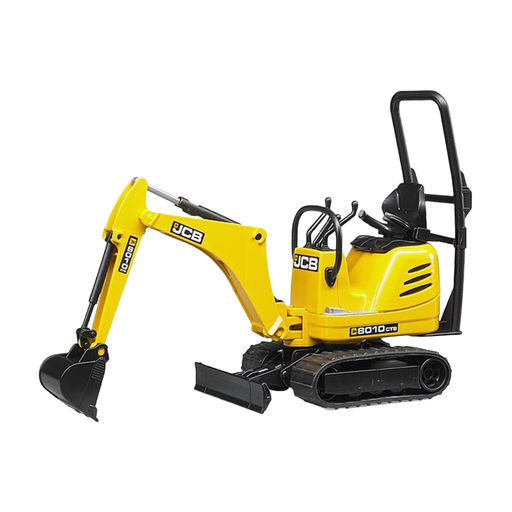
Why it suits this type of play: According to the product information, this compact manual excavator is suitable for children aged 3 and over and doesn’t need batteries. Measuring 13.5 × 6.3 × 13.5 cm, it fits into many playrooms and smaller play areas.
Manual operation means no charging time, replacement batteries or extra batteries for a remote control. Your child can control the moving parts directly.
Compact design, 360-degree rotating body and a movable boom with dozer blade.
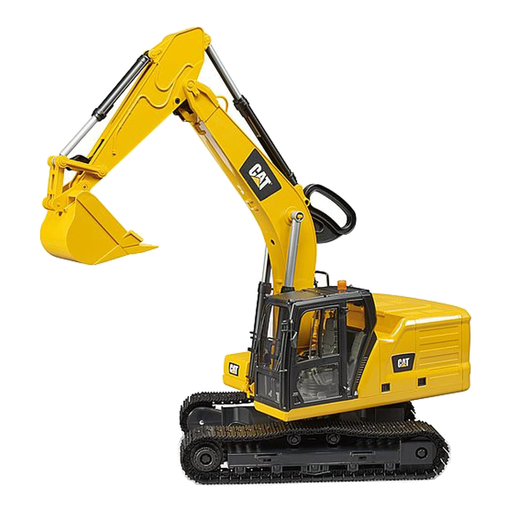
Why it suits this type of play: According to the product information, this 1:16 scale model is suitable for children aged 4 and over. It’s made for larger play areas and role play with bworld figures.
The age recommendation of 4 and over makes clear that its more complex mechanisms and small accessories set it apart from a basic excavator for children aged 3 and over.
Working excavator arm, detachable bucket, rotating cab and tracks for different surfaces.
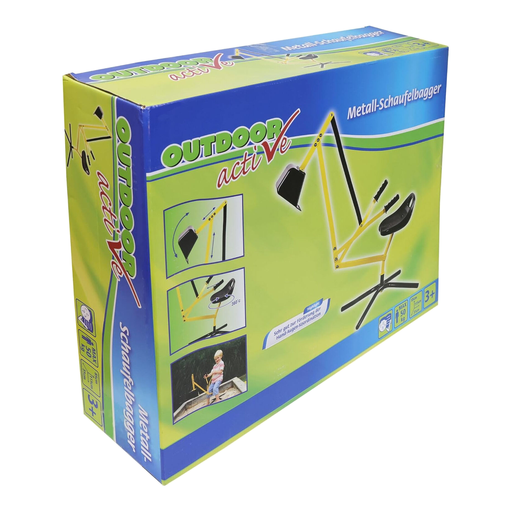
Why it suits this type of play: This ride-on excavator is designed for outdoor use and is suitable for children aged 3 and over, according to the product information. With a metal construction, rotating seat and dimensions of around 57.61 × 45.21 × 14 cm, it’s a good fit for a suitable sandpit area.
It’s designed for moving sand, rather than just looking the part. Before buying, though, check that you have enough space and that the moving parts are in good condition.
Metal construction, 360-degree rotating seat and manual operation with no batteries required.
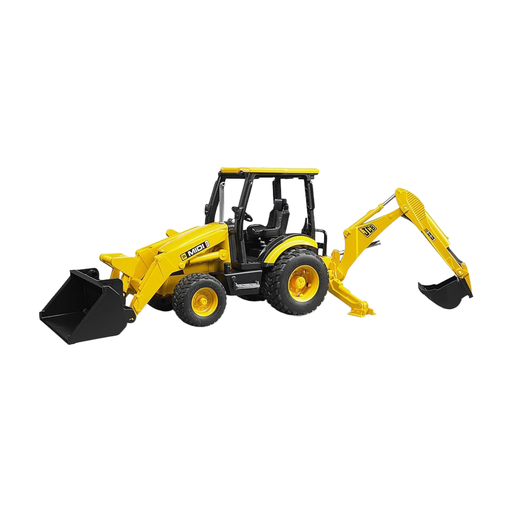
Why it suits this type of play: This construction vehicle toy combines a front loader and a rear excavator. It’s suitable for children aged 3 and over, according to the product information, measures 41.1 × 12.2 × 16.8 cm and works without batteries.
The functions are clearly stated: the front bucket and rear boom can both be operated with one hand. So it’s more than just a detailed-looking toy.
Two working attachments, folding supports, a pivoting axle and off-road tyres.
We’ve put together a complete, regularly updated list of products that meet these strict selection criteria and fully comply with the safety regulations in force in the EU.
A Playmobil excavator, such as the PLAYMOBIL Excavator, has a movable bucket arm, doesn’t need batteries and is made from 90 per cent plant-based materials, according to the product description. However, the set also contains small parts and has conflicting age information: it’s listed as suitable from 12 months, but also carries a warning for children under 4. Before buying, check the age recommendation and warnings on the packaging carefully.
If you’re looking for a construction toy with as many mechanical functions as possible, compare models with a rotating cab, detachable bucket or adjustable dozer blade. For use in a sandpit, models with electrical components are less straightforward than purely manual versions.
Choose models that the manufacturer explicitly recommends for children aged 3 and over, and make sure the warnings are appropriate for your child’s development. According to the product information available, the BRUDER 02427 and BRUDER 62003 are suitable from age 3. Small parts and moving components should still be used under supervision.
It depends on how it’s made. Sand, moisture and dirt can affect the remote control, motor and battery. Only use a remote-controlled model outdoors if the manufacturer’s instructions say it’s suitable. For regular digging in a sandpit, a manual excavator with easy-to-clean parts is usually simpler to use.
Its lifespan depends on the material, how much it’s used, how it’s stored and how well it’s cared for. After outdoor play, remove any sand and moisture. Regularly check the moving parts, tracks, wheels and bucket for cracks, loose connections or stiff mechanisms. Stop using an excavator toy if you notice any visible damage.