
Lieferung heute & morgen

Qualitätsgarantie

Willkommens-Angebote freischalten: KOSTENLOSE Lieferung | Bis zu 80 % RABATT | Kostenlose 30-Tage-JoyPlus-Testphase
App herunterladen
For many children, an excavator is one of the most versatile construction vehicles for the playroom or sandpit. But there are clear differences between a realistically designed model, a children’s excavator with a moving arm and a battery-powered vehicle. Not every toy is right for every age, surface or style of play.
If you focus only on colour, size or the number of features when buying, you can easily overlook important details. Three common pitfalls are particularly worth bearing in mind:
The manufacturer’s age guidance is an important starting point. Products for children aged 3+ may include small removable parts, such as buckets, figures or accessories. Be sure to read the relevant warnings before you buy.
For children aged 3 to 4, manually operated models with straightforward features are usually a good choice. An excavator with a moving arm or a rotating cab offers hands-on play without the need for batteries or a remote control. More complex building sets, such as a LEGO excavator set, require greater fine motor skills and the ability to build independently.
Plastic models are often lightweight and easy to clean. Metal components can give certain models a different feel, but they often add weight. The material isn’t the only thing that matters: the quality of the joints is important too.
A toy excavator used in the sandpit should be cleaned of sand and dirt after play and stored somewhere dry. It’s also a good idea to check the joints regularly.
For a child’s bedroom, look for compact dimensions, smooth-rolling wheels and a low weight. Outdoors, wide tyres, sturdy tracks or a robust seat are more important. A sandpit excavator should also be designed so that children can operate it safely using their hands or levers.
A remote-controlled excavator for children also needs batteries or a rechargeable battery. This means ongoing costs, charging time and a remote control that needs to be kept safe. For an electric ride-on excavator, you’ll also need to consider charging time, maximum load and whether it’s suitable for the surface where it will be used.
The models below cater to different needs, from a simple manual first toy to detailed construction play for older children.
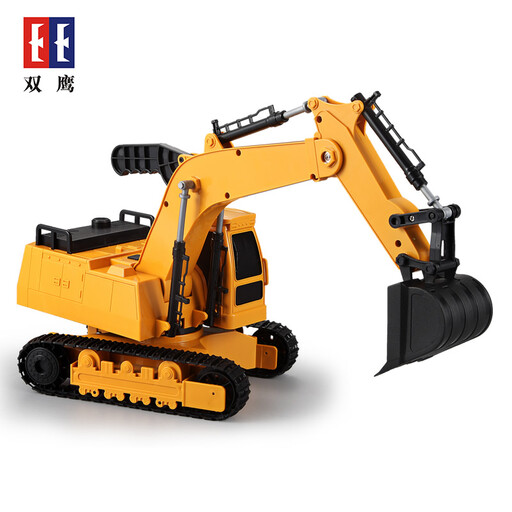
Why it suits this profile: This manual excavator is designed for children aged 3+ and offers several easy-to-understand functions without batteries. It’s ideal for first construction-site adventures in the playroom or a sheltered outdoor area.
It’s operated manually, so there are no battery costs or charging times. The moving arm and cab, which rotates through 360°, are easy to reach.
Rubberised tracks, a moving excavator arm and a manual design with no batteries.
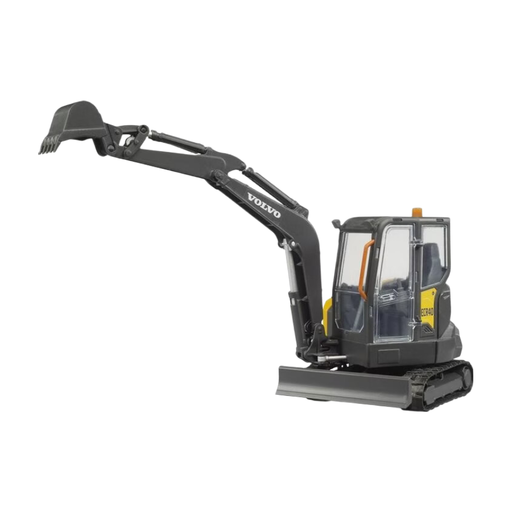
Why it suits this profile: This 1:16 scale model combines detailed design with features for realistic construction-site play. It’s suitable for children aged 3+ and can be used indoors or in the sandpit.
Its design focuses on manual functions rather than delicate electronics. The rotating excavator structure, angled boom and height-adjustable blade are all clearly described.
A structure that rotates through 360°, an opening cab door and a sturdy plastic chassis.
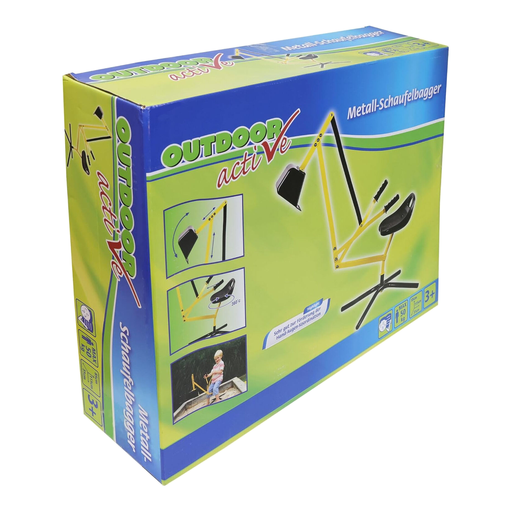
Why it suits this profile: This ride-on excavator is designed for outdoor use and for children aged 3+. It’s a good choice for families looking for a model children can actively operate in the sandpit.
According to the product information, the model is made of metal and arrives ready assembled. That means there’s no extra assembly before first use.
Rotating seat, an operable grab arm and stated dimensions of 57,61 × 45,21 × 14 cm.
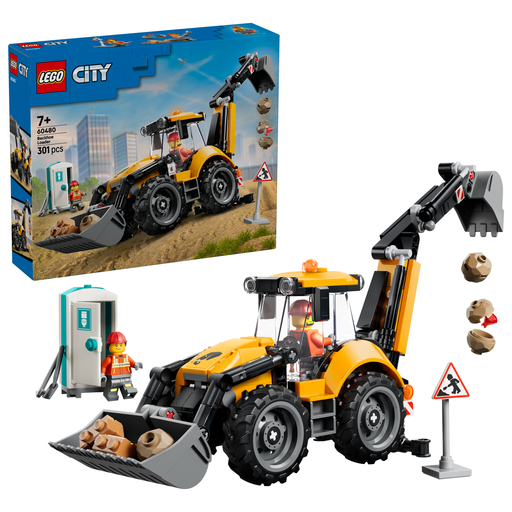
Why it suits this profile: This set is designed for children aged 7+ and combines the building process with construction-site role play afterwards.
The age guidance makes clear that this isn’t a toy for toddlers. The contents and the 301-piece count give you a clear idea of how much building is involved.
Working front bucket, rear excavator arm, stabiliser legs, two minifigures and extra construction-site accessories.
We’ve put together a complete, regularly updated list of products that meet these strict selection criteria and fully comply with the safety regulations in force in the EU.
Not every construction vehicle is a classic excavator. A toy wheel loader uses a front bucket and is ideal for loading and transport games. The Bruder 02430 Liebherr Wheel Loader L574, for example, features a tipping bucket, articulated steering and treaded tyres. It’s also listed as compatible with BRUDER figures for children aged 4+.
A Playmobil excavator is more focused on role play and building a world with interchangeable figures. Depending on the version, PLAYMOBIL models include a moving bucket, figures and other accessories. If you’re looking for a smaller-scale model to collect, the SIKU 3059 Weidemann Hoftrac Wheel Loader is made from metal and plastic and is built to a 1:32 scale.
Manually operated models with straightforward features are often a good choice for children aged 3+. Check the specific age guidance, any warnings about small parts and the recommendation for supervision. According to the product information, models such as the DOUBLE E Manual Excavator and the BRUDER Volvo Compact Excavator are designed for this age group.
Both materials can be suitable for outdoor use. Metal models are often heavier, while plastic ones are easier to carry and clean. What matters most is the quality of the moving parts, stability and the manufacturer’s care instructions. Remove any sand and let the toy dry after play.
Yes. Depending on the model, you’ll need to pay for batteries or recharge the battery. Parents should also consider the range, charging time and how easy the remote control is to use. A manual excavator is more straightforward and ready to use straight away, provided it doesn’t need assembling.