
Lieferung heute & morgen

Qualitätsgarantie

Willkommens-Angebote freischalten: KOSTENLOSE Lieferung | Bis zu 80 % RABATT | Kostenlose 30-Tage-JoyPlus-Testphase
App herunterladen
An exercise bike is an excellent way to train flexibly, regardless of the weather. But the market is crowded, and many machines don't live up to their advertising claims. Before you make a decision, it's crucial to understand the typical pitfalls that often only become apparent after a few weeks of use. This guide will help you separate the good from the bad and find a model that truly fits your needs.
Many buyers are swayed by marketing promises that disappoint in practice. Pay close attention to these three points to avoid a bad purchase.
To avoid the traps mentioned above, you should focus on objective, technical parameters. These three features are the foundation for a durable and effective piece of training equipment.
The braking system is the primary factor determining noise level, pedalling feel, and maintenance requirements.
The flywheel mass (the weight of the flywheel) is crucial for a smooth, joint-friendly pedal stroke. A heavier flywheel ensures smoother operation, especially at higher cadences.
An exercise bike must adapt to your body, not the other way around. Incorrect settings can lead to poor posture and pain.
Based on the criteria above, we have identified a few models that are well-suited for specific user profiles.
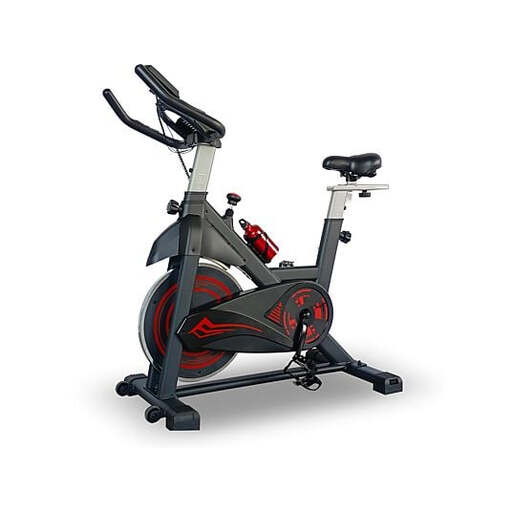
Why This Fits Their Persona: Ideal for users in apartments or families who need a reliable and extremely quiet machine for daily cardio training without disturbing housemates or neighbours.
Bypasses the noise trap with a magnetic brake system that operates at under 20 dB. The thick steel frame and 130 kg weight capacity prevent the stability illusion.
Stepless resistance adjustment from 0–100% for maximum training flexibility. The 6 kg flywheel ensures a smooth, consistent pedal stroke.
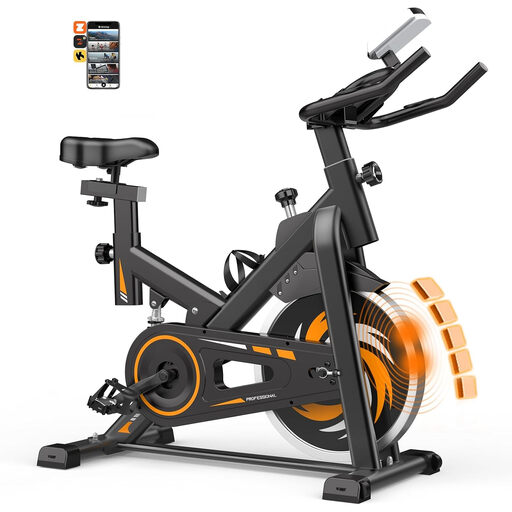
Why This Fits Their Persona: Suitable for ambitious home athletes who want to precisely monitor and improve their performance. The app connectivity and heart rate monitor enable goal-oriented training.
The high weight capacity of 150 kg is a clear indicator of a massive and stable construction. The magnetic brake system ensures quiet and smooth resistance without any jerking.
Integrated app functionality for workout analysis and control. The high maximum weight capacity also provides a safe training experience for heavier individuals.
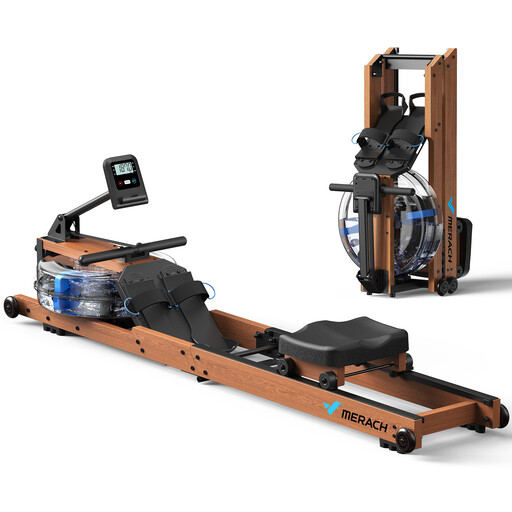
Why This Fits Their Persona: An alternative for those who prefer an effective full-body workout. Ideal for users with limited space who are looking for an aesthetic and functional machine.
The water resistance system is quiet and provides an extremely smooth pull, which avoids the resistance frustration. The solid wood construction with a 180 kg capacity guarantees maximum stability.
Engages up to 90% of muscle groups, according to the manufacturer. It can be folded and stored vertically to save space.
We have compiled a complete, up-to-date list of products that fully meet these strict selection criteria and German safety regulations.
1. How loud is an exercise bike with a magnetic brake, really? A high-quality home ergometer with a magnetic brake system is exceptionally quiet. The noise level is often comparable to the low hum of a modern refrigerator. Models like the Janus Lugia, for example, specify a noise level of under 20 decibels, which is quieter than a whisper. This makes them ideal for training at any time of day or night without disturbing others.
2. Do I need a flywheel mass of over 10 kg? Not necessarily. While a heavier flywheel generally promotes a smoother ride, its interaction with the braking system is what's crucial. A well-calibrated flywheel of 6 to 8 kg, combined with a precise magnetic brake system, offers a completely fluid and effective training experience for most users, from beginners to ambitious hobby athletes. Very heavy flywheels over 15 kg are typically found in professional-grade equipment.
3. How much space does an exercise bike need? The space requirement varies. Compact models have a footprint of about 100 cm x 50 cm, which is roughly half a square meter. You should also plan for some free space around the machine for safe use. For very small apartments, foldable models are a practical solution as they can be easily stored after your workout. Always measure the intended space carefully before buying.