
Lieferung heute & morgen

Qualitätsgarantie

Willkommens-Angebote freischalten: KOSTENLOSE Lieferung | Bis zu 80 % RABATT | Kostenlose 30-Tage-JoyPlus-Testphase
App herunterladen
An exercise bike can provide cardio, endurance and strength training regardless of the weather. At first glance, choosing one may seem straightforward, but product names and marketing claims often conceal important differences. It is not just the flywheel weight or display that matters, but how the resistance system, frame stability, ergonomics, weight capacity and space requirements work together.
A quiet exercise bike is particularly practical in flats or when training early in the morning. However, the description “quiet” is not automatically linked to a specific noise level. Buyers should check whether the supplier states a technical measurement and whether the drive uses a belt and non-contact magnetic resistance.
A figure such as under 20 dB according to the product information is more specific than a general claim such as “whisper-quiet”. Even so, the actual noise level also depends on the floor, assembly and state of maintenance.
Claims such as “0 to 100%” or “up to 45 kg resistance” cannot be directly compared between different machines. There is no standardised measurement method behind them. What matters more is whether the resistance can be adjusted precisely and whether the controls remain safely within reach during training.
An indoor exercise bike with magnetic resistance usually operates smoothly and without direct braking contact with the flywheel. For interval training, relaxed cycling and longer sessions, an adjustment with more gradual levels is often more practical than the highest possible marketing figure.
A stable frame alone does not make a bike suitable for every body size. Check the seat height, horizontal seat adjustment and handlebar position. An adjustable exercise bike allows for better adaptation to leg length and upper-body proportions. Without this flexibility, training can become uncomfortable and make regular use more difficult.
There should also be a sufficient margin between your own body weight and the maximum user weight. The stated upper limit must not be exceeded. In households with several users, always use the person with the highest body weight as the reference point.
For an exercise bike for cardio training, smooth pedalling and controllable resistance are key criteria. A magnetic braking system operates without direct frictional contact. This can reduce wear on the brake and contribute to smoother running. The flywheel affects the pedalling feel: a heavier weight can support more even rotation, but it does not replace a well-designed frame.
Look out for the following details:
A fitness bike for home use should be placed on a level, sufficiently firm surface. Dimensions, transport wheels and any folding function are important considerations in smaller rooms. Before buying, compare the product dimensions with the intended location. The bike also needs enough clearance for getting on and off.
The maximum weight capacity is a technical limit, not a measure of quality. What matters is whether it is suitable for the intended users. For example, the Janus Lugia is listed as having a steel frame with a material thickness of more than 2 mm and a maximum user weight of 130 kg. The YOSUDA model has different weight-capacity figures in the available product information: 136 kg in the name and 160 kg in the description. This discrepancy should be clarified directly on the product page before buying.
An LCD display can show time, speed, distance, calories or resistance. These values are useful for recording your workouts, but they are not automatically precise medical measurements. When it comes to heart-rate monitoring, buyers should check how the reading is taken and whether additional accessories or a compatible device are required.
An exercise bike with an app may offer additional workout records or equipment settings. However, Bluetooth, app compatibility and a smartphone holder are not the same thing. Check whether the app you want is actually supported and whether some functions may require payment.
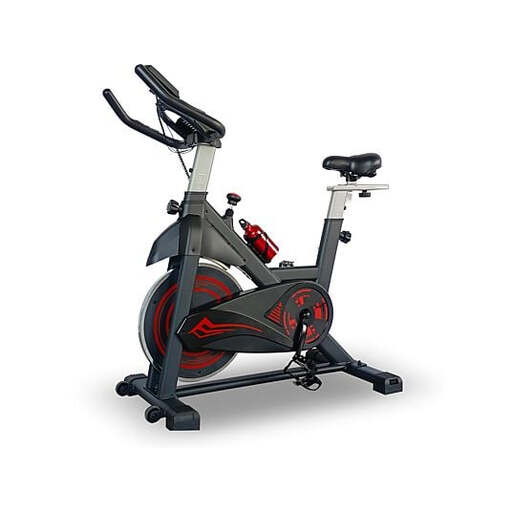
Why this product suits the profile: According to the product information, this model combines an LCD screen, adjustable seat and handlebars, and a folding function. This makes it suitable for beginners with limited space and varying training intensities.
The product information states magnetic resistance, a noise level below 20 dB and a maximum capacity of 130 kg. These specific figures make it easier to assess the product compared with general marketing claims.
6 kg flywheel, LCD display and a 70% pre-assembled structure according to the product description.
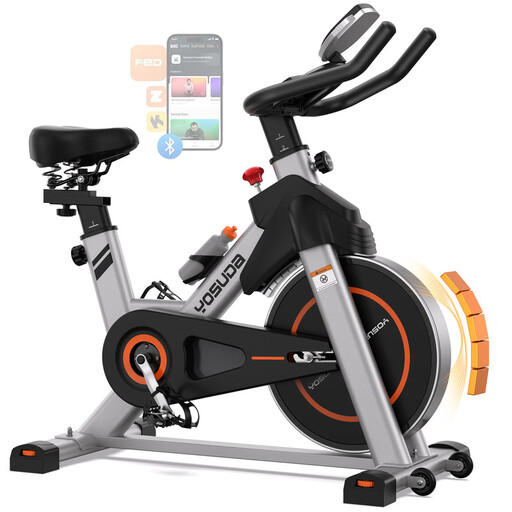
Why this product suits the profile: According to the product description, this indoor cycling bike features an 8 kg magnetic flywheel, a four-way adjustable seat, adjustable handlebars and Bluetooth app connectivity.
The description states magnetic resistance, belt drive and adjustable contact points. The differing maximum-load figures should be checked before buying.
8 kg flywheel, HD LCD display, Bluetooth connectivity and a two-year guarantee according to the product information.
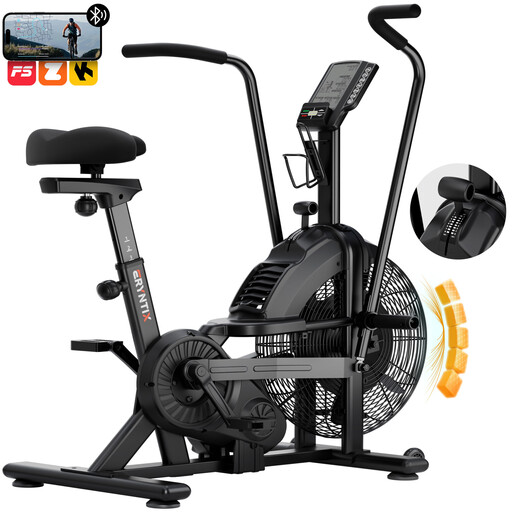
Why this product suits the profile: The product name is aimed at users looking for an air bike for full-body training while also considering magnetic resistance adjustment and LCD and app connectivity.
Before buying, check the noise level, footprint, weight capacity and the precise way the resistance works directly in the full product details.
The product name states air resistance, magnetic adjustment, an LCD display and app connectivity.
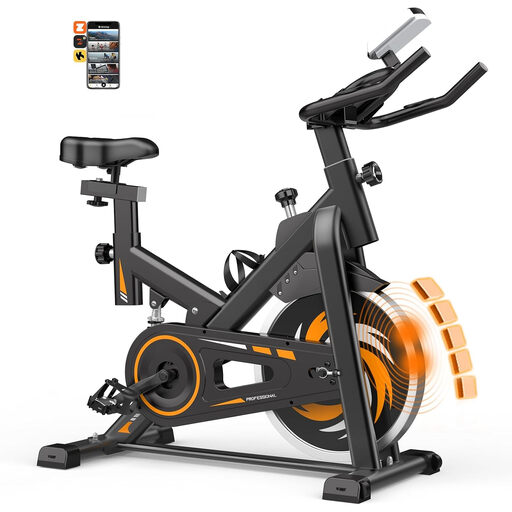
Why this product suits the profile: The product description states magnetic resistance, an app, an LCD monitor, heart-rate monitoring and a maximum capacity of 150 kg.
The stated features address common equipment pitfalls. Before buying, confirm the seat and handlebar adjustment, measurement method and app compatibility in the detailed product information.
Magnetic resistance, app connectivity, LCD monitor, heart-rate monitoring and a 150 kg weight capacity according to the product description.
We have put together a complete, regularly updated list of products that fully meet these strict selection criteria and the safety regulations applicable in the EU.
Place the machine on a level surface and use a suitable mat on delicate flooring. Check all screws after assembly. Before every longer session, adjust the seat and handlebars so that you can pedal in a controlled manner without uncomfortable pulling or strain.
The electricity costs of a traditional exercise bike are usually manageable, as the display and sensors require very little power. Models with app or Bluetooth connectivity may also require a smartphone or tablet. The greater ongoing effort typically involves cleaning, tightening screws and replacing worn small parts. A magnetic resistance system can operate without direct brake-pad contact by design, but belts, pedals and fastenings still require maintenance.
This depends on the product dimensions and the clearance needed when getting on. A model measuring approximately 50 × 117 × 90 cm needs more than just this footprint; you will also need clear space at the sides and in front of the saddle. A folding function and transport wheels can make storage easier.
There is no reliable one-size-fits-all answer. Lifespan depends on how often the bike is used, body weight, assembly, care and material quality. Check the guarantee terms, availability of spare parts and the guidance on maximum weight capacity. Regularly checking screws, pedals and moving parts can help support safe operation.
Magnetic resistance usually operates without direct frictional contact. Combined with a belt drive, this can result in low operating noise. However, the actual volume is also affected by the surface, assembly and pedalling motion. Specific manufacturer claims such as “under 20 dB” should be understood as product information and not treated as a guarantee for every home environment.