Artists working with lots of templates
If you keep reference images open alongside drawing and layout windows, start by checking the installed RAM, connections and requirements of the specific software you use.


Choose your computer based first on the software you actually use, then on installed RAM, SSD, display connections and available desk space. A mini PC keeps its footprint small, a Windows tower may offer more scope for future changes depending on the exact configuration, and a Mac mini is an option if your software and devices work with macOS. No form factor alone guarantees a print-ready board.
If you keep reference images open alongside drawing and layout windows, start by checking the installed RAM, connections and requirements of the specific software you use.
If you edit images and create page layouts, make sure your display and PDF output also meet the printer’s requirements. Adobe’s InDesign PDF export settings let you adjust file size and quality.
If desk space, a complete setup or the option to make changes later is important to you, compare the exact model number and configuration. Memory and other specifications can vary within the same product range.
A good fit if: desk space is limited and your software, display and input devices work with the specific configuration. GEEKOM lists 16 GB RAM and a 1 TB SSD for an A5 Pro configuration with Ryzen 5 7530U.
Consider: Check the ports, what’s included and the upgrade options for the exact variant; specifications can vary within a range.
A good fit if: a permanent workstation and a carefully chosen RAM or SSD configuration matter more than having the smallest form factor. Lenovo lists different memory configurations for the ThinkCentre Neo 50t Gen 5 under different product numbers.
Consider: A larger case doesn’t automatically mean good upgradeability. COMPUTER BILD rated this as limited on the HP OmniDesk Desktop AI M03 it tested; that verdict doesn’t apply to other models across the board.
A good fit if: your drawing software and peripherals support macOS. Apple lists various memory options for the Mac mini with M6 and support for multiple external displays under certain connection conditions.
Consider: Check the specifications of the exact offer, as well as how it connects to your displays and existing input devices.
| What you need | What to check before buying | Who it matters to most |
|---|---|---|
| Keeping several templates open | Compare the installed RAM with the requirements of the specific software version. Adobe recommends 16 GB or more for Photoshop 27.x on Windows. | If I keep references open alongside drawing and layout windows, I need suitable RAM and display connections. Around 33% of consumers put working with lots of templates at the top of their list. |
| Preparing boards for print | Check the requirements of the software you use and the available SSD space; confirm the printer’s specifications with them. Adobe notes that PDF export settings can affect file size and quality. | If designing and printing the board is my priority, I first check the software, file formats and submission requirements. Around 27% of consumers prioritise this workflow. |
| Fitting the computer and display into your workspace | Check the space available, the video outputs on the exact model and the monitor’s inputs. Adobe recommends at least 1920 × 1080 pixels for InDesign’s scalable interface. | If my workspace is limited, the computer needs to fit alongside the display and reference view. Around 20% of consumers prioritise desk space and display layout. |
| Specifications and future changes | Check the full model number, installed RAM, SSD, operating system and documented upgrade options. | If I want to use a particular configuration straight away or make changes later, I compare the full variant rather than just the product range name. Around 20% of consumers focus on configuration and upgradeability. |
RAM, SSD and operating system can vary between versions of the same range. Lenovo and MSI list different configurations across their respective product ranges.
Before buying, match the full model or product number to the installed specifications.
A differently equipped variant could mean you need to make changes later or buy additional components.
With a mini PC, the display, compatible connections and input devices need to work with the exact configuration; the form factor alone doesn’t take care of these.
Compare the ports on the computer you’ve chosen with your existing devices and check what’s included.
You may also need to budget for a monitor, compatible cables or input devices.
Storage space in your computer isn’t a substitute for a separate backup of your boards and reference files. Germany’s Federal Office for Information Security explains that up-to-date backups can help if your device fails, files are accidentally deleted or malware strikes.
Back up project files regularly to a separate storage device, and plan how you’ll restore them if needed.
You may need an additional storage device for a separate backup.
The A5 Pro 2026 Edition is a compact Windows option for a workstation with limited desk space.
The ThinkCentre Neo 50t Gen 5 is a tower range with several documented configurations.
The OmniDesk M03-0790ng is a documented Windows configuration with a larger amount of installed storage.
The PRO DP80 A14G range includes compact desktop configurations, so it’s worth checking the exact specifications.
The Mac mini with M6 is a space-saving macOS option if your software and devices are compatible with the operating system.
This selection includes compact SFF and mini PCs, as well as a tower for a permanent workstation. Compare the exact specifications with your software, displays and board output requirements.
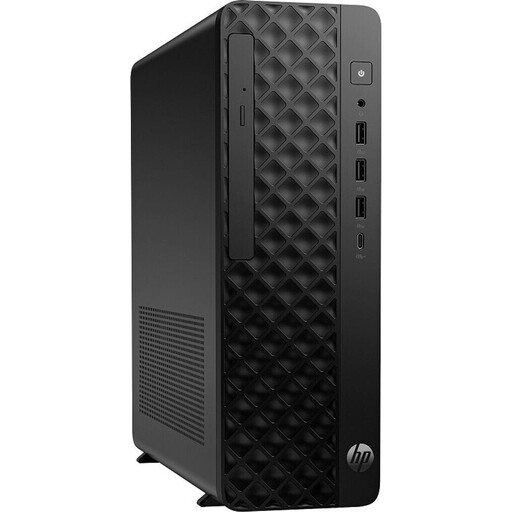 No image available
The SFF form factor is worth considering if you want a computer that takes up little space at a permanent workstation.
Specifications include Core Ultra 7 265K, 32 GB DDR5-5600 MHz, a 1 TB M.2 SSD, RTX A400 with 4 GB and Windows 11 Pro. Check that the video connections are compatible with your display.
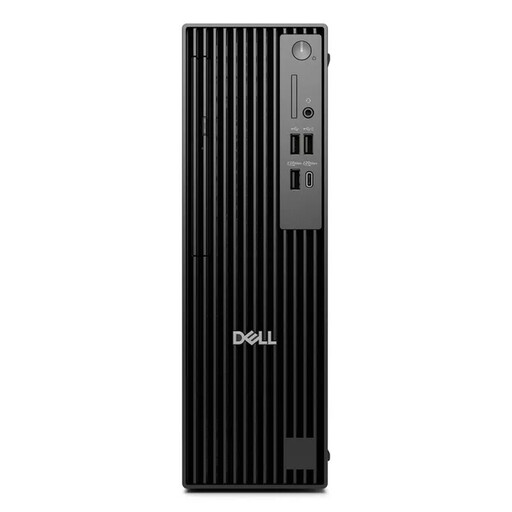 No image available
The Slim SFF form factor could be a good fit if you’re looking for a desktop for a permanent workstation with limited desk space.
The product name lists 32 GB DDR5 RAM, a 512 GB NVMe SSD, Intel Graphics and Windows 11 Pro. Check that the connections on the exact configuration work with your monitors.
 No image available
This tower is an option if you have room for a larger desktop case at your permanent workstation.
Specifications include Core Ultra 9-285K, 32 GB RAM, a 2 TB SSD, RTX 5080 and Windows 11. Check the display connections and software requirements against the exact configuration.
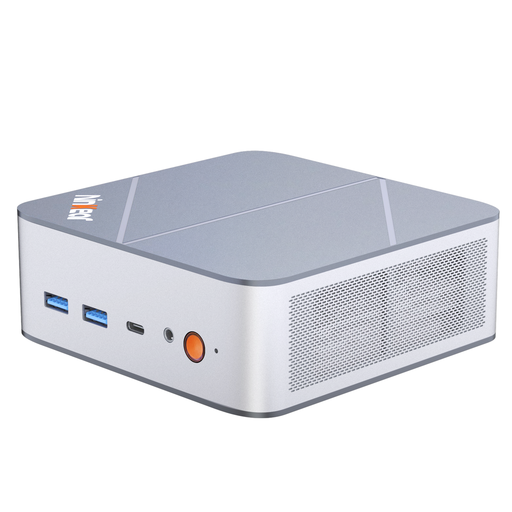 No image available
The compact form factor is one way to keep the computer’s footprint on your desk small.
The product name lists 16 GB DDR5 RAM, a 1 TB SSD, Windows 10/11, Wi-Fi 6 and dimensions of 130 × 127,5 × 52 mm. Check that the ports and operating system work with your displays and software.
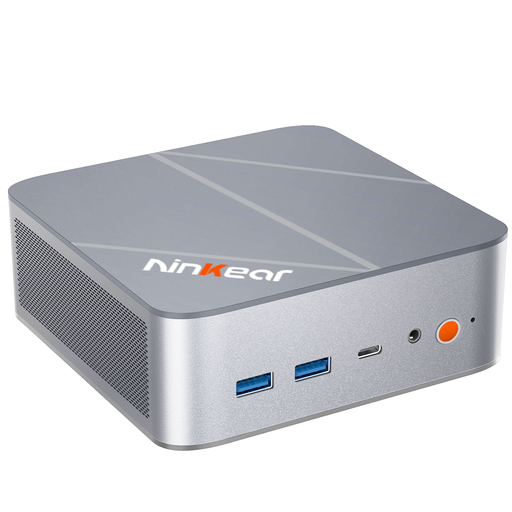 No image available
The mini PC form factor is worth considering if you have limited space for a computer at your workstation.
Specifications include 16 GB DDR4 RAM, a 1 TB SSD, USB 4.0, dual-band Wi-Fi 6 and dimensions of 130 × 127,5 × 52 mm. The product name states compatibility with Windows and Ubuntu; check the exact software version and the connections you need.
Make a note of the software and version, then compare their requirements with the operating system, installed RAM and available storage on the exact PC configuration. Adobe recommends 16 GB RAM or more for Photoshop 27.x on Windows, and 16 GB for InDesign 21.3 or later. These recommendations apply to the versions listed, not to every drawing programme across the board.
Agree the format and output requirements with the printer, then set up your PDF export accordingly. Adobe notes that InDesign export options can affect file size and quality.
Set up a separate backup in addition to your computer’s storage, for example on an external drive. Germany’s Federal Office for Information Security explains that up-to-date backups can help you restore files after a fault, accidental deletion or malware attack.
Just because an image is available online doesn’t automatically mean you can use it on an exhibition board. The German Patent and Trade Mark Office explains that drawings and photographs may be protected, and that licences govern usage rights. Check the rights and terms for each work you use; whether an exception applies depends on the specific material and how you use it.
No. In a consumer purchase in Germany, statutory rights relating to defects are claims against the seller; a warranty is a voluntary service provided under its own terms. For a specific offer, check who the seller is and what any additional warranty actually covers.