First, choose a desktop based on whether your software and specific layout and image projects are compatible with the operating system and specifications of the configuration you’re considering. A mini PC or Mac mini may suit you if space is limited, while a tower PC needs more room if you’re planning future upgrades. Check the display connections, storage and what’s included with each option. For print-ready colours and PDFs, you’ll also need a properly coordinated monitor and print workflow; the computer alone isn’t enough.
Who works on an exhibition catalogue?
Catalogue designers working with lots of images
If you’re editing image files and page layouts at the same time, the RAM, SSD and graphics support should suit the software and files you use. Adobe recommends 16 GB of RAM for the documented requirements of both InDesign and Photoshop.
People responsible for preparing files for print
Agree colour profiles, spot colours and PDF requirements with your printer. Adobe describes these settings as part of PDF export and preparing files for colour separation; a powerful computer can’t replace this consultation.
Designers with a small desk
If desk space is limited, check the connections for your display and existing devices as well as the size of the case. With a Mac mini, you’ll also need to check whether you need to buy a display separately.
What should you look for when buying?
Start by comparing the operating system and software version, then check the specifications for your files and the complete workstation. Adobe recommends 16 GB of RAM for the documented requirements of both InDesign and Photoshop. This doesn’t tell you how quickly your particular catalogue will be processed.
| What you need |
What to check before buying |
Who it matters to |
| Working on layouts and images at the same time |
Operating system and requirements for the software versions you use; RAM and available SSD storage on the specific configuration. |
If I’m working on layouts and image files at the same time, the specifications need to suit my software and projects. Around 31% of consumers put working on several tasks at once first. |
| Colour and preparing files for print |
Agree the PDF/X specification, bleed, colour profile and spot colours with your printer. |
If my printer requires specific colour and PDF settings, my output process needs to meet them. Around 23% of consumers prioritise submitting a print-ready catalogue. |
| Space and connections |
Check the display connections and other ports against your existing devices; check what’s included with the exact version. |
When space is limited and I already have devices, I want a computer that fits neatly into my workspace. Around 16% of consumers put limited desk space and suitable connections first. |
| Upgradability and data backup |
Check the upgrade options for the specific model and plan a separate way to back up project files. |
As my image archive grows, I want to plan for upgrades and keep separate copies of important files. Around 15% of consumers prioritise upgradability and protecting their project files. |
| Complete workstation |
Check which extras you’ll need, such as a display and input devices, as well as the RAM and SSD specifications of the exact version. |
When I’m putting together a complete workstation, I need to factor in any missing devices and suitable configurations. Around 15% of consumers look first at the total cost of a workstation that’s ready to use. |
Desktop PC buying pitfalls
-
Comparing only the minimum requirements for one application
Minimum requirements don’t tell you what it’s like to work on layouts and images at the same time using your particular files.
Check the requirements for all the software you use and the available storage on the specific configuration.
-
Assuming a fast PC will deliver print-accurate colours
Colour profiles, spot colours and PDF requirements also depend on the printing process; computer performance alone doesn’t determine them.
Agree profiles, spot colours and PDF requirements with your printer before preparing the final files.
-
Assuming a mini PC is a complete workstation
The display, input devices and connections can vary depending on the model and version.
Check the full model or configuration number against your display and existing devices, and confirm what’s included.
-
Treating extra internal storage as a replacement for backups
Project files can still be affected if the computer develops a fault or files are deleted accidentally, even when they’re stored on an internal SSD.
Set up separate, regular backups and check that you can restore them. The Federal Office for Information Security explains the benefits of data backups in the event of a fault or data loss.
Key brands at a glance
Lenovo
ThinkCentre neo 50q Gen 5 is a compact Windows PC to consider if desk space is limited and the right configuration matters.
- Lenovo lists Windows 11 Home, 24 GB RAM and a 512 GB SSD for version 13B9CTO1WWDE1.
- These manufacturer specifications don’t demonstrate a particular image-editing speed and don’t apply to every ThinkCentre model.
Apple
Mac mini is a compact macOS desktop for compatible workflows, with a display selected separately.
- Apple lists Mac mini M4 configurations starting with 16 GB of unified memory and a 256 GB SSD.
- The published specifications refer to the M4 model; displays are sold separately.
HP
Z2 Tower G9 is an example of a tower PC to consider if local storage and potential upgrades are important.
- For version 8T1K0EA#ABD, HP lists 32 GB RAM, a 1 TB SSD and an NVIDIA T1000; the manufacturer also highlights its upgradability.
- The specifications given are for one specific version. A separate graphics card alone doesn’t demonstrate an advantage for catalogue layout.
Dell
Dell Pro Micro is a compact Windows option with a choice of configurations.
- Dell offers a range of processor, operating system and RAM options for the QCM1250 model.
- Specifications and what’s included depend on the configuration you select.
ASUS
NUC 15 Pro+ is a compact, configurable PC to consider if you need to check support for several displays.
- ASUS lists a 0.7-litre case, tool-free upgrades and support for up to four 4K displays.
- Claims about speed and noise during catalogue work aren’t independent performance tests.
Joybuy products for catalogue work
These desktop PCs include Windows tower PCs and a Mac mini for layout and image work. Before you decide, compare each configuration, its connections and footprint, and how well it fits your software workflow.
 No image available
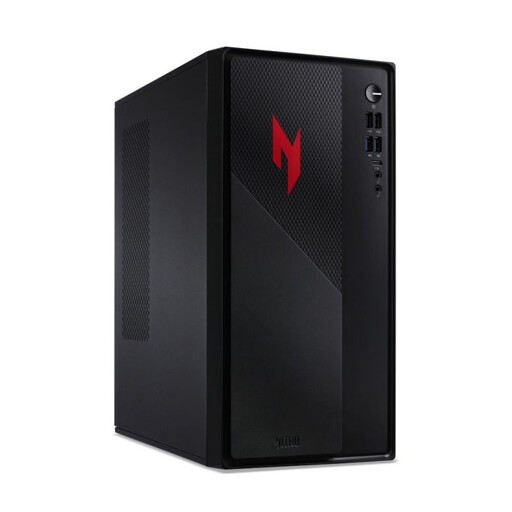
Acer Nitro 20 N20-100 desktop PC, i5, 32 GB RAM, 1 TB SSD and HDD, RTX 5060
Could be worth considering if you’re looking for a Windows tower PC with listed specifications for image and layout files.
Windows 11 Home; 32 GB RAM; 1 TB SSD and 1 TB HDD; RTX 5060. The product description recommends leaving at least 10 cm of clearance on all sides for ventilation.
View at Joybuy
 No image available
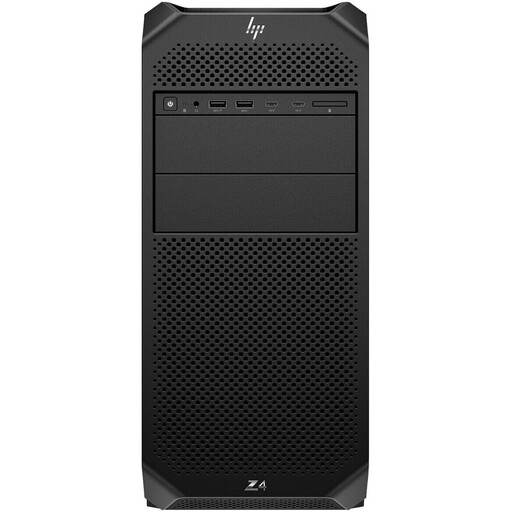
HP Workstation Z4 G5, 4U tower, Xeon W3-2535
Worth considering if you’re looking at a Windows tower PC with listed expansion slots and plenty of RAM.
Windows 11 Pro; 64 GB RAM; 1 TB NVMe SSD; RTX 4000 Ada. The product description lists three PCIe x16 and two PCIe x4 slots. As a tower PC, it needs a suitable space and at least 10 cm of clearance for ventilation.
View at Joybuy
 No image available
HP Z1 Tower G1i, Core Ultra 9 285, 64 GB RAM, 1 TB SSD
Could be an option if you’re looking for a Windows workstation tower with a specified amount of RAM and internal SSD storage.
Windows 11 Pro; Core Ultra 9 285 with 24 cores; 64 GB DDR5-5600-MHz RAM; 1 TB M.2 SSD; Intel Graphics. The product description lists DisplayPort, HDMI and USB-C. At least 10 cm of clearance on all sides is recommended for ventilation.
View at Joybuy
 No image available
Apple Mac mini MHQN4ZD/A_CTO, M5 Pro, 24 GB, 512 GB SSD
Could suit you if your software is compatible with macOS and you’re planning on a compact computer with a display to check separately.
M5 Pro; 24 GB unified memory; 512 GB SSD; Thunderbolt 5 and HDMI. The product description states that it supports up to three external displays. A display, keyboard and mouse are included only if they’re specifically listed for this version.
View at Joybuy
 No image available
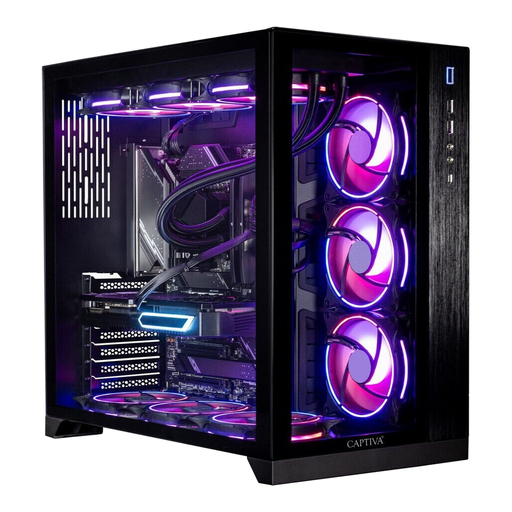
Captiva PC Highend Gaming R90-463, R7 7800X3D, 64 GB RAM, 2 TB SSD
Could be useful for comparing options for image and layout projects if you’re considering a Windows tower PC with specified storage and a dedicated graphics card.
Windows 11 Home; 64 GB RAM; 2 TB M.2 SSD; RTX 5070 Ti with 16 GB of graphics memory. The product description lists DisplayPort and HDMI. The case needs a level surface and clear space for ventilation; remove any GPU transit protection before switching it on.
View at Joybuy
Frequently asked questions
Which specifications should I check first?
Start with the operating system and the requirements of the specific software you use. Adobe recommends 16 GB of RAM for the documented requirements of both InDesign and Photoshop. Also check the available SSD storage and connections for your display. These specifications don’t guarantee a particular processing speed for your files.
Is a powerful computer enough to ensure accurate colours in a printed catalogue?
No. Agree the output profile, spot colours, PDF/X specification and bleed with your printer. Adobe describes these settings as part of the colour and PDF workflow.
How can I protect my work files during the project?
As well as keeping files on your computer, make regular backups and check that you can restore them. The Federal Office for Information Security explains why separate copies can help if your computer develops a fault or data is lost.
Is a manufacturer’s warranty the same as statutory consumer rights?
No. The Verbraucherzentrale distinguishes statutory rights relating to faulty goods from a voluntary warranty with its own terms and conditions. When buying, check who your contracting party is and which warranty conditions apply to the specific version.


