
Lieferung heute & morgen

Qualitätsgarantie

Willkommens-Angebote freischalten: KOSTENLOSE Lieferung | Bis zu 80 % RABATT | Kostenlose 30-Tage-JoyPlus-Testphase
App herunterladen
It's a familiar scenario: you leave the house in the morning with a lightweight bag for just the essentials, only to find yourself needing more space after work for an impromptu shopping trip or an extra jacket. An expandable bag offers a functional solution. It combines a compact format for daily use with the ability to create additional volume when needed.
This article serves as a guide. We will outline objective criteria to help you choose a suitable bag and present a selection of models with different features to simplify your decision-making process.
A bag's functionality depends on specific features. Three key aspects are capacity, material, and carrying comfort.
The core feature is its variable capacity. Pay attention to the volume in both its standard and expanded states. Common expansion mechanisms include zippers that release a folded compartment or drawstrings that adjust the bag's shape. A foldable bag that can be compressed to a minimal packed size offers even more flexibility, as it takes up hardly any space when not in use and can be carried as a secondary bag for travel or shopping.
For a bag for travel and daily use, the material is crucial. Modern synthetic fibres like high-strength nylon offer an excellent balance of tear resistance and low weight. A lightweight bag enhances comfort, especially when fully loaded. Many models, from the ultra-lightweight backpack to the crossbody bag, feature a water-repellent coating. This protects the contents from light rain showers but should not be confused with being fully waterproof. The bag's own weight is also a key factor—models under 100 grams are particularly practical.
Carrying comfort is largely determined by the strap design. Wide, padded, or specially woven shoulder straps distribute weight more evenly and prevent them from digging in, even during extended wear. Adjustable straps allow for a custom fit for different body types and carrying styles, such as a shoulder bag or worn across the body (crossbody). A well-designed interior with multiple compartments also helps you stay organised and quickly access important items like keys or your smartphone.
Based on the criteria mentioned, we have compiled a selection of models that cater to different needs.

Why it stands out: This model is notable for its extremely low weight and foldability. It can be stowed in a small, integrated pouch and unfolded into a spacious shoulder bag when needed.
Advantages:
Who is it for? Ideal for those who need an ultra-lightweight, space-saving secondary bag for spontaneous shopping, travel, or as an emergency backup in the car or another backpack.
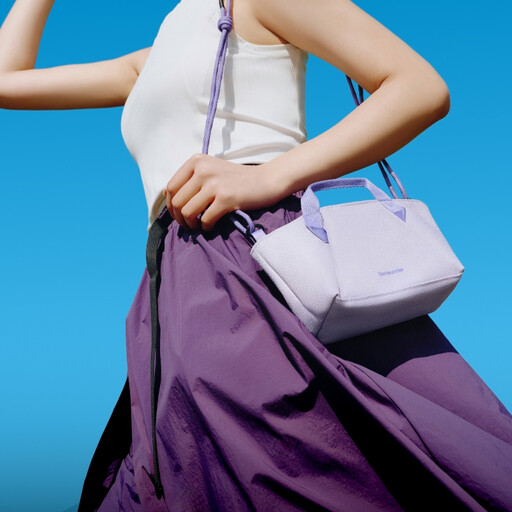
Why it stands out: This crossbody bag combines a minimalist design with a clever expansion feature that triples its volume. The material is also treated to resist oil, stains, and water.
Advantages:
Who is it for? Perfect for daily commutes and urban users who need a small, discreet bag for essentials but appreciate the option for more storage space.
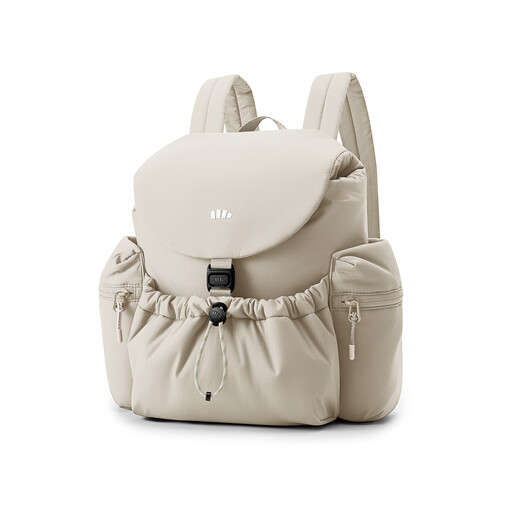
Why it stands out: This model is a compact ultra-lightweight backpack with a thoughtful compartment layout and water-repellent properties, making it a practical companion for everyday life and light outdoor activities.
Advantages:
Who is it for? Suitable for those who prefer the ergonomics of a backpack and are looking for an organised, lightweight solution for the daily commute, shopping, or day trips.
The models presented cover specific use cases. If you haven't found the right model for your individual needs yet, you can find more alternatives in our broader selection.
Discover more designs and features in our modern women's handbag category.
A bag is considered expandable if its volume can be increased via an integrated mechanism. This is often done by opening a wrap-around zipper that releases an extra segment of fabric, or through a flexible design with a drawstring that allows the bag's shape and size to be adjusted.
Most expandable bags are not fully waterproof, but rather water-repellent. This means the material has a coating that causes water to bead off, protecting the contents from light rain or splashes. They are generally not designed for protection during heavy or prolonged rain. Look for manufacturer specifications like "water-repellent" or specific protection levels.
Care depends on the material. For most lightweight synthetic fabrics, like those used in the Beneunder bag, surface cleaning is recommended. Wipe away dirt with a damp cloth and let the bag air dry. Machine washing, as well as the use of harsh detergents or high heat, should be avoided to preserve the material's coating and the bag's shape.