
Lieferung heute & morgen

Qualitätsgarantie

Willkommens-Angebote freischalten: KOSTENLOSE Lieferung | Bis zu 80 % RABATT | Kostenlose 30-Tage-JoyPlus-Testphase
App herunterladen
A new dining table is more than just a piece of furniture; it's the centrepiece for shared meals, conversations, and social gatherings. However, the search for the right dining table for 4-6 people can quickly become overwhelming. Many models look appealing online but prove to be impractical in daily life. This guide will help you identify the crucial features and avoid marketing traps.
Before you make a decision, you should be aware of the typical weaknesses that often only become apparent after the purchase.
To avoid a bad buy, focus on objective, measurable criteria. These three aspects are crucial for the longevity and functionality of your new dining table.
The shape of the table influences not only the look but also the dynamic of the room.
The choice of material determines the design and the maintenance effort. The wood and metal table combination is particularly popular and practical.
The construction of the base is central to the table's stability.
Instead of making generic recommendations, we have identified models that meet specific requirements and avoid the pitfalls mentioned earlier.
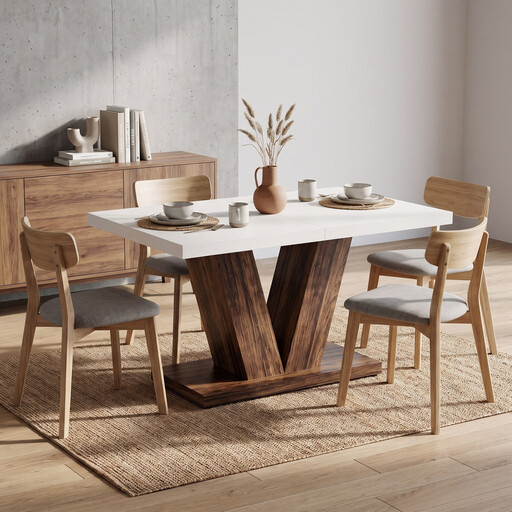
Why this model fits: With its compact 120 cm size, this table is a functional solution for a first apartment or smaller kitchens. It comfortably seats four people and its simple design blends into various interior styles.
The stable, triangular pedestal base counteracts the problem of wobbling. The 4 cm thick engineered wood tabletop is easier to clean and more resistant to stains than unsealed solid wood.
The robust base structure provides high stability with a specified maximum load capacity of 100 kg, which is not a given in this price range.
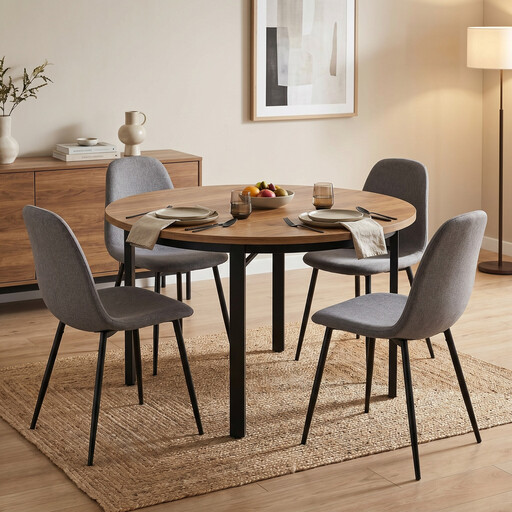
Why this model fits: The combination of a round shape, wood-look finish, and striking metal legs makes this table a statement piece in modern homes. It combines rustic charm with a clean, industrial aesthetic.
The solid metal legs with adjustable foot caps ensure stability, even on uneven floors in older buildings. The MDF tabletop, described as water-resistant, prevents stains and water rings.
The easy-care, water-resistant tabletop and robust legs make the table suitable for everyday use without compromising on design.
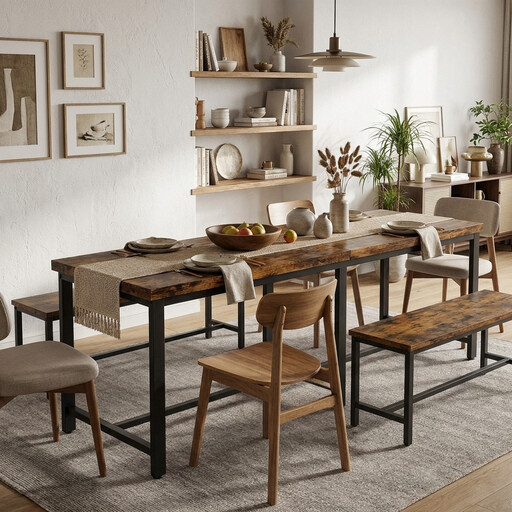
Why this model fits: With a length of 200 cm, this table offers generous space for 6 to 8 people. It is ideal for family meals, homework, and social evenings with friends without feeling cramped.
This table solves the problem of size miscalculation by providing ample space for everyone. The sturdy metal frame and 3.5 cm thick tabletop ensure the necessary stability for hectic family life.
The extra-long 200 cm tabletop offers maximum flexibility for large gatherings. The surface, described as scratch-resistant, is designed for daily use.
If you're looking for a wider selection of tables curated based on objective criteria like material and stability, you can find more models here.
As a rule of thumb, add at least 80 cm to each side of the table that will be used (e.g., for a 180 cm x 90 cm table). This space is needed to comfortably push back chairs and stand up. For a table of this size, a free floor area of about 3.40 m x 2.50 m would be ideal.
Both shapes have their advantages. A round dining table can make a room feel larger because it has no hard edges and makes it easier to walk past. A small, rectangular table can be pushed against a wall to save space when not in use. The optimal choice ultimately depends on the individual layout of your room.
Care is generally straightforward. The metal frame can be wiped with a dry or slightly damp cloth. For the coated engineered wood tabletop, a soft, damp cloth is sufficient, with a mild cleaner if necessary. Avoid abrasive cleaners and always place hot pots or pans on coasters or trivets to protect the surface.