For a large archive that stays mostly at your desk, an external desktop HDD could be a good choice. If you often carry project folders with you or work directly from them, a portable SSD is a suitable alternative. Choose the capacity based on your existing folders and expected growth, and plan a separate backup that you can restore from: a single drive won’t protect you from data loss.
Which type of storage is right for you?
Those managing large project archives
If you store lots of recordings and large project folders mainly at a fixed workstation, the capacity of the specific model and a separate backup should take priority over maximum portability. Seagate lists models of up to 28 TB in its Expansion Desktop range; this figure does not apply to every model.
Teams responsible for backups
If files need to be easy to find and restore after a device failure, a tested backup and recovery process should be part of your archiving plan. The German Federal Office for Information Security (BSI) notes that the lifespan of storage media cannot be predicted precisely.
Project teams working on the move
If you carry large folders between computers or work locations, consider the connection, file system and transfer speed you need together. Toshiba lists NTFS as the pre-formatted file system for the Canvio Basics described here; Samsung and Kingston specify that their maximum SSD speeds depend on compatible devices and connections.
What should you look for when choosing?
Start by working out how much space you need and how you’ll restore your files. Then you can decide whether desktop storage or transferring files on the move matters more.
External desktop HDD
A good choice if: Your archive stays mostly at your desk and needs to hold lots of large folders.
The trade-off: You’ll need a power connection to use it, and should check the capacity of the specific model. Seagate lists models of up to 28 TB in its Expansion Desktop range.
Portable USB HDD
A good choice if: You occasionally take folders with you and prefer USB-powered storage.
The trade-off: Compare the specific capacity with the size of your growing archive. Toshiba lists a 4 TB model of the Canvio Basics described here, which needs reformatting for the macOS versions listed.
Portable SSD
A good choice if: You often transfer large project files or work with them on the move.
The trade-off: The claimed speeds of up to 2,000 MB/s for the Samsung T9 and Kingston XS2000 depend on compatible devices and connections. Samsung also specifies a suitable cable and enabled UASP mode as requirements.
| Priority |
What to check before buying |
Who it matters most to |
| Space for a growing archive |
Work out the size of your existing folders, allow for expected growth and compare the total with the capacity of the specific model. |
If my archive is growing, I want to allow enough space for both existing and new folders. Around 33% of consumers name archive capacity as their top purchasing priority. |
| Restorable backups |
Plan a separate backup destination and test whether you can restore folders by trying a selection of files. The BSI stresses that you must be able to restore your data. |
If recordings need to remain available after a fault or accidental deletion, a restorable copy is essential. Around 27% of consumers put data backup first. |
| Protecting confidential recordings |
Assess how sensitive the contents are and check how encryption, access rights and recovery will be managed in your workflow. |
If recordings contain confidential or personal information and leave their usual storage location, I want to be able to restrict access. Around 20% of consumers give protecting recordings their highest priority. |
| Speed and compatibility |
Compare the connections on your computers and cables, as well as the capacity and file system of the specific model. Samsung’s maximum T9 speed depends, among other things, on a compatible host device, suitable cables and UASP mode being enabled. |
If I often transfer large project folders between devices, the drive and computer need to work together. Around 20% of consumers see transferring files on the move as their main purchasing priority. |
Common mistakes when choosing an archive drive
-
Confusing the range’s largest capacity with the capacity of a specific model
Seagate’s claim of up to 28 TB applies to the Expansion Desktop range, not to every individual model.
Compare the storage space you’re using and expect to need with the capacity explicitly listed for the specific model.
If the drive is too small, you may need to buy another one sooner.
-
Relying on the archive drive as your only backup
Storage media can fail, and files can be deleted by mistake. The BSI notes that you must be able to restore your backup as well.
Plan a separate backup destination and test restoring a selection of folders.
-
Assuming every computer will deliver an SSD’s advertised maximum speed
Samsung’s claim of up to 2,000 MB/s for the T9 depends on requirements for the host device, cable and UASP mode.
Check the USB capabilities of the devices involved, and don’t assume the maximum figure is a guaranteed speed for every file transfer.
-
Taking confidential recordings with you unprotected
The BSI describes encryption as a way to protect data on lost or stolen portable storage media.
Assess how sensitive the data is and, if necessary, set up suitable encryption with controlled access and a way to restore your files.
Key brands to consider
Seagate
The Expansion Desktop range is worth considering for archives that stay mainly at a fixed workstation.
- Seagate lists models of up to 28 TB; a power supply and USB cable are required for use.
- The maximum capacity doesn’t apply to every model, so check the capacity of the specific one you’re considering.
Toshiba
The Canvio Basics described for EMEA is a portable, USB-powered HDD.
- Toshiba lists a 4 TB model that doesn’t need a separate power supply.
- Toshiba lists NTFS as the pre-formatted file system; reformatting is required for the macOS versions specified.
Samsung
The portable T9 SSD range is designed for frequent transfers of large project files.
- Samsung lists models with capacities of 1, 2 and 4 TB.
- The claimed speed of up to 2,000 MB/s depends on a compatible host device, suitable cables and UASP mode being enabled; it isn’t a guaranteed speed on every computer.
Kingston
The portable XS2000 SSD is designed for mobile access and file transfers.
- Kingston lists capacities from 500 GB to 4 TB, USB 3.2 Gen 2x2 and speeds of up to 2,000 MB/s; a removable protective sleeve is included.
- Check that the specific capacity and the connections on your computers suit your archive and workflow.
Western Digital
The My Book is a desktop HDD option for larger collections of folders.
- Western Digital lists a specific 8 TB model for Germany.
- When choosing, consider the model’s capacity and whether it suits your planned desktop setup.
Joybuy drives for mobile and desktop archives
The following Joybuy products are external HDDs: portable models for transferring files and a desktop model for an archive that stays mostly in one place.
 No image available
WD Elements Portable 5TB USB-C
For large project folders that you need to take between work locations. This portable HDD is listed with 5 TB capacity, USB-C and USB 3.2 Gen 1, and is powered via USB.
View at Joybuy
No image available
WD Elements Portable 4TB USB-C
For large folders you want to keep accessible on the move. This portable HDD is listed with 4 TB capacity, USB-C and USB 3.2 Gen 1; according to the product description, it’s a 2.5-inch drive powered via USB.
View at Joybuy
 No image available
WD Elements Desktop 8TB, USB 3.0
For an archive that stays mostly at your desk. This desktop HDD is listed with 8 TB capacity, a 3.5-inch form factor and USB 3.0, and requires an external power supply. According to the product description, it comes pre-formatted as NTFS; reformatting is required for use with macOS. Important files should also be backed up to a second storage device.
View at Joybuy
 No image available
WD Elements Portable 2TB USB-C
For mobile access to folders that fit within the specific capacity. This portable HDD is listed with 2 TB capacity, USB-C, USB 3.2 Gen 1 and exFAT; according to the product description, it supports Windows and macOS.
View at Joybuy
 No image available
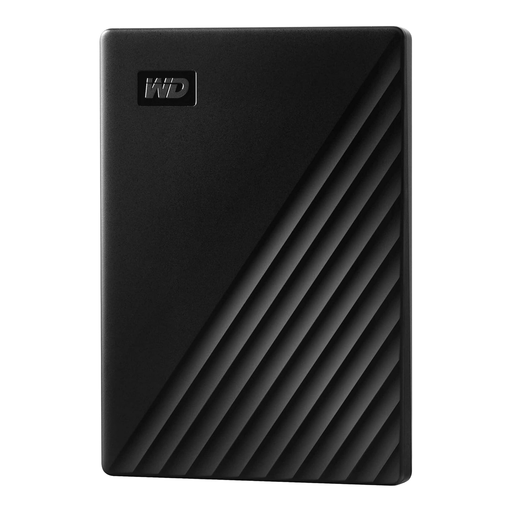
WD My Passport 2 TB
For storing files on the move, if 2 TB is enough for your folders. The product description lists a 2.5-inch form factor, password protection and automatic backups; check how these features fit into your workflow. Whatever you choose, plan to keep important files on a second storage device too.
View at Joybuy
Frequently asked questions about archiving
Is a single external drive enough for archiving?
Not if you need to access your files after a fault or loss. Plan a separate backup and check that you can restore files from it. The German Federal Office for Information Security notes that the lifespan of storage media cannot be predicted precisely and that you must be able to restore your data.
What should I consider when connecting an external hard drive to a Mac?
Check the file system of the specific model before transferring files to it. Toshiba lists NTFS as the pre-formatted file system for the Canvio Basics described here, and says reformatting is required for the macOS versions listed on the product page. This doesn’t automatically apply to all drives.
Can I simply store meeting recordings indefinitely in Germany?
Having enough storage space doesn’t in itself determine whether a recording is permitted or how long it may be kept. The Conference of Independent Data Protection Supervisory Authorities of the Federation and the Länder says that, for video conferences, you should check the legal basis for recording and further processing. The specific assessment depends, among other things, on the purpose and the people involved.


