Producers with lots of project versions
If you want to keep recordings, exports and earlier edits, allow room for complete project folders and future growth. Ableton explains how audio files used in a project can be collected into a project folder.


If you often open projects or samples directly from an external drive, or move between workstations, a portable SSD is an obvious choice. Check, though, that your computer and cable support the connection needed for the advertised performance. An HDD may also suit an archive kept at a fixed workstation. The key is to have enough room for complete project folders and a separate backup of important recordings.
If you want to keep recordings, exports and earlier edits, allow room for complete project folders and future growth. Ableton explains how audio files used in a project can be collected into a project folder.
If you regularly open projects or large sample libraries from an external drive, check the connection between the drive and your computer. A working copy on this drive is no substitute for a separate backup; the Verbraucherzentrale explains backup strategies for important data.
If you want to continue working on a project on another computer, the drive and connection need to be right, as do the copied audio files and file system. Check in advance that the project folders are complete and can be opened on both systems.
A good fit if: you often work with projects or samples, copy large folders or take the drive between workstations.
Keep in mind: Peak performance figures depend on having a compatible host connection and suitable cable. The drive alone is not a separate backup.
A good fit if: you mainly want to store project versions and take the drive with you occasionally.
Keep in mind: Check that it’s suitable for your active DAW projects, and confirm the connection and file system for the specific model.
A good fit if: the archive will usually stay at the same workstation and you want to store complete projects, exports and older versions.
Keep in mind: Check whether the model needs a separate power supply and whether there’s a power socket where you plan to use it.
Ableton explains how audio files used in a project can be collected into a project folder. The Verbraucherzentrale and the German Federal Office for Information Security treat separate backups as a distinct task when it comes to important recordings.
| What to consider | What to check when buying | Who it matters most to |
|---|---|---|
| Room for projects and versions | Check the capacity of the specific model against complete project folders, older versions and planned growth; remember to allow for referenced audio files. | If I want to keep recordings, exports and earlier versions, the capacity must cover the complete project folder, with room to grow. Around 36% of consumers put this storage need first. |
| Separate backup | Plan for additional storage or a different place to keep a copy; check that you can actually restore an older file. | If I want to carry on working after my working drive is damaged or lost, I need a copy stored separately. Around 29% of consumers say recovery is their main reason for buying. |
| Access while working | Check that the drive, computer and cable are compatible; review the manufacturer’s conditions for its stated peak figures and consider your own DAW project and samples. | If I regularly use sessions or samples directly from an external drive, access in my own workflow matters. Around 21% of consumers say access while working is their top priority. |
| Using the drive with multiple computers | Check the connections and file system of the specific model against the operating systems you plan to use; allow for any reformatting required before saving files. | If I want to continue working on a project on another computer, the files and file system need to be accessible there. Around 14% of consumers say switching between devices is their main reason for buying. |
Versions stored on the same drive can be lost along with that drive.
Keep an additional copy separately and test that you can open an older version of the project.
In Ableton Live, a Set file can refer to files used in the project. “Collect All and Save” copies the audio files used into the project folder, but not plug-ins.
Use your DAW’s collect or export function, copy the complete project folder and try opening a copy. You’ll need the appropriate plug-ins installed separately on another computer.
Samsung quotes up to 2,000 MB/s sequentially for the T9, subject to conditions including a compatible USB 3.2 Gen 2x2 host, a suitable cable and UASP.
Check the connections on your devices rather than choosing a drive solely by its highest MB/s figure. If you’ll mainly use it for an archive that stays in one place, you could also consider an HDD.
The documented Seagate desktop model STKP8000400 needs a separate power supply. The documented portable Toshiba Canvio Basics USB-C is USB-powered and, according to Toshiba, needs reformatting for macOS.
Check the exact model number against your workstation and the computers you use.
A desktop model may need a power socket. Back up any existing files elsewhere before reformatting a drive.
The portable T9 is designed for frequent transfers; the T7 Shield is another portable SSD range.
Kingston says the portable XS1000 and XS2000 differ in areas including connection standard and available capacities.
The Canvio Basics USB-C is a portable, USB-powered HDD range with models of up to 4 TB.
Expansion Desktop is a desktop external HDD range for larger file archives.
Crucial lists the portable X10 Pro as an SSD option in 1, 2 and 4 TB models.
This selection includes portable HDDs and SSDs for storing music project files or using them on the move. Compare the capacity and explicitly listed connections for each model with your workflow.
 No image available
A portable HDD option if you want to store project versions and take files between workstations.
Capacity: 5 TB. USB-C.
Important recordings also need a separate backup.
 No image available
A portable HDD option for project folders and earlier versions if you want to take files between computers.
Capacity: 2 TB. Listed features include USB-C, USB 3.2 Gen 1, 2.5-inch and exFAT.
Important recordings also need a separate backup.
 No image available
A portable SSD option if you want to take project files between devices.
Capacity: 256 GB. The product name lists M.2 SATA and USB 3.1.
Important recordings also need a separate backup.
 No image available
A portable SSD option if you want to store active projects and older versions, or transfer files regularly.
Capacity: 1 TB. Listed connections include USB Type-C and USB 3.2 Gen 2 (3.1 Gen 2).
Important recordings also need a separate backup.
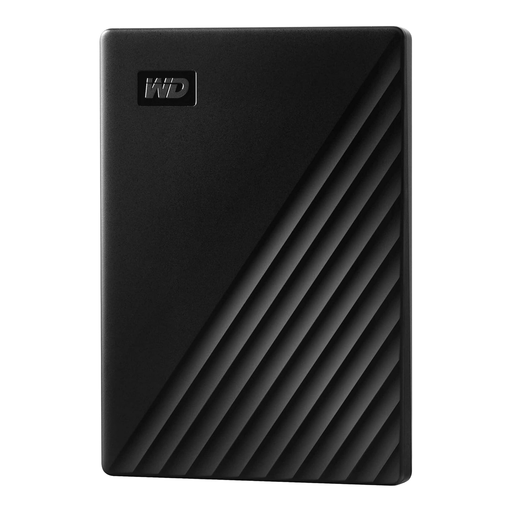 No image available
A portable HDD option if you want to take project versions and recordings with you.
Capacity: 2 TB. Described as a portable 2.5-inch drive with a USB connection.
Important recordings also need a separate backup.
No, not if you want to recover your recordings after that drive is lost or damaged. Keep an additional backup separately and test that you can retrieve an older file.
In Ableton Live, “Collect All and Save” copies the audio files used into the project folder; you should then copy the complete folder, including its subfolders. Plug-ins aren’t copied, so they’ll need to be installed separately on the other computer. For other DAWs, check their own project or export function.
It depends on the file system of the specific model and the computers you use. Ableton lists NTFS for Windows and APFS for newer versions of macOS, and notes ExFAT as a format compatible with Windows. According to Toshiba, the documented Toshiba Canvio Basics USB-C comes formatted as NTFS for Windows and needs reformatting for macOS. Back up any existing files before reformatting.
The seller is responsible for your statutory consumer rights; a manufacturer’s warranty is separate and is subject to its own terms. The Verbraucherzentrale explains the difference in its information dated 28 September 2026. A warranty for the drive doesn’t guarantee that your recordings can be recovered.