What to consider when choosing
First, consider whether the archive will mostly stay in the studio or be taken elsewhere regularly. Then think about the size of your collection, access from all the computers you need to use, and protecting confidential versions.
Portable HDD for an archive that mostly stays in one place
A good fit if: scripts and project files mostly stay in the studio and are only copied occasionally.
The trade-off: An HDD may suit an archive that stays in one place; frequent travel and fast transfers point more towards an SSD. An HDD still needs a separate backup.
Portable SSD for frequent transfers
A good fit if: the drive regularly moves between workstations or rehearsal spaces, or you often copy larger project folders.
The trade-off: High quoted sequential speeds are only useful if your computer and cable support the right USB mode; speed is no substitute for a second archive copy.
| Priority |
What to check before buying |
Who it matters most to |
| Restorable archive |
Work out the size of your archive and any additional versions; plan a separate backup destination and a restore test. |
If I want to recover important versions after a failure or accidental deletion, I’ll plan for a separate copy as well as the archive. Around 33% of consumers put recoverability first. |
| Access from all computers |
Check operating systems, connections and file system compatibility; test read and write access before moving files. |
Anyone editing scripts on Windows and Mac workstations needs working write access on every computer they use. Around 27% of consumers prioritise computer compatibility. |
| Regular travel |
Consider how often you’ll travel with the drive and copy folders; check which USB modes your computers and cables support. |
If I often take project folders between the studio and other work locations, I want to choose transfer speeds and connections that suit my devices. Around 20% of consumers prioritise mobile transfers. |
| Confidential drafts |
Set access permissions for the team; check encryption and secure key recovery. |
If you don’t want every team member to be able to open every draft, agree permissions and key management in advance. Around 20% of consumers prioritise access protection. |
Joybuy products for a script archive
This selection includes portable HDDs for an archive that mostly stays in the studio and portable SSDs for more frequent transfers.
 No image available
WD Elements Portable, 2 TB
For an archive that mostly stays in one place, if 2 TB is enough for your existing collection and additional versions.
2 TB; exFAT; USB-C; USB 3.2 Gen 1; 2.5 inches.
Plan for a separate backup and a restore test. Before copying, check the usage rights for the relevant plays.
View at Joybuy
 No image available
Samsung Portable SSD T7, 1 TB, Grey
For frequent transfers between workstations, provided the connections and cables on the computers you use support the transfer speed you want.
1 TB; USB 3.2 Gen 2; maximum sequential speeds of up to 1.050 MB/s for reading and 1.000 MB/s for writing.
According to Samsung, these maximum speeds require a suitable host, compatible cables and UASP. You’ll need to set up the optional password protection; a separate backup is still essential.
View at Joybuy
 No image available
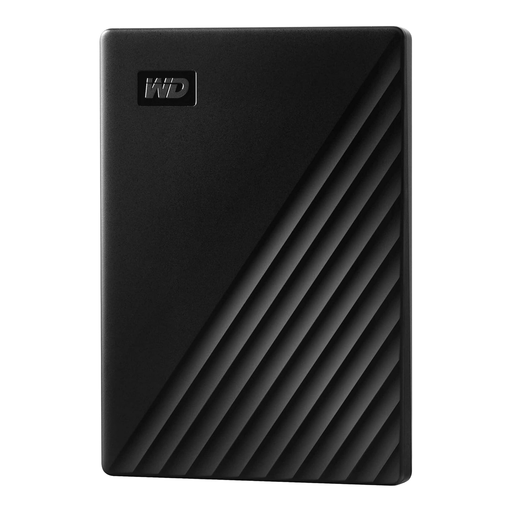
WD My Passport, 2 TB
For a portable archive, if 2 TB is enough for your collection and password protection is relevant to the access you need.
2 TB; 256-bit AES hardware encryption and password protection; automatic backup scheduling.
Password protection and automatic backups need to be set up using the specified software. You should still plan for a separate backup and a restore test.
View at Joybuy
 No image available
WD My Passport, 5 TB
For a larger archive, if the stated capacity is enough for the storage space you need.
5 TB; USB 3.0; 256-bit AES hardware encryption and password protection; NTFS for Windows.
Check the file system and computers you’ll be using before sharing the drive. Plan for a separate backup and a restore test.
View at Joybuy
 No image available
Samsung Portable SSD T7, 2 TB, Titanium Grey
For more frequent transfers between workstations, if 2 TB is enough for your archive and project folders.
2 TB; USB 3.2 Gen 2; maximum sequential speeds of up to 1.050 MB/s for reading and 1.000 MB/s for writing; USB-C to USB-C and USB-C to USB-A cables.
According to Samsung, these maximum speeds require a suitable host, compatible cables and UASP. Optional password encryption needs to be set up; it’s no substitute for a separate backup.
View at Joybuy
Frequently asked questions
Is one external hard drive enough for a theatre script archive?
Not if you need to be able to restore scripts after a drive failure, accidental deletion or damage to the studio. Keep a separate backup and use a test file to check that you can restore a version. Germany’s Federal Office for Information Security also lists damage to the place where data is stored as a risk.
How do we set up a drive for Windows and Mac?
First, check the connections, file system and write access on all the computers you need to use. Apple lists exFAT as a formatting option for drives over 32 GB that will be used with Windows, and warns that formatting erases existing files. Toshiba lists NTFS as the default for Canvio Basics.
What should we plan for alongside the drive?
Plan for a separate backup destination, someone to take responsibility for new script versions, and occasional restore tests. That way, you won’t just have a copy—you’ll also know whether you can open a script version again.
Do theatre scripts need to be encrypted on a shared drive?
Start by deciding who can open which versions. If the files contain personal data, safeguards should reflect the specific risks; Germany’s Federal Commissioner for Data Protection and Freedom of Information describes this risk-based approach. Germany’s Federal Office for Information Security describes encryption as protection against data being read by others, for example if a portable storage device is lost.
Can we freely archive purchased plays digitally for the whole studio?
Section 53 of the German Copyright Act (UrhG) does not provide blanket permission. It sets conditions for making copies and, in particular, restricts the distribution of those copies. Check who is allowed to make and access copies of the specific plays, scripts and materials under the relevant usage rights.


