For large design archives, usable capacity for complete project folders and older versions should take priority over a high peak speed. Choose a speed that matches your computer’s connection, plan for a separate backup and check which file system you need for Mac, Windows or Time Machine.
What matters for different users
Design archive with lots of projects
If you keep numerous completed projects, including source files and versions, measure how much storage you currently use and allow for the fact that not all of a drive’s stated capacity is available for files. Crucial Germany highlights this difference.
Designer who regularly hands over projects
If you often transfer large folders between devices, check whether your computer, connection and cable support the SSD you choose. Kingston Technology notes that the XS2000 has limitations when used with a Mac.
Mobile designer with important client data
If you take project files between work locations, consider the enclosure’s protection alongside separate backups. For personal data, you should also assess appropriate safeguards in line with the risks involved; Germany’s Federal Office for Information Security also emphasises the importance of being able to restore data.
What to look for when buying
First, measure complete project folders, including source files and versions. Then check that the connection, file system and portability requirements suit the way you work.
| What matters |
What to check before buying |
Who it matters most to |
| Space for projects and versions |
Measure folder sizes in advance and allow for source files and any versions you need to keep. According to Crucial Germany, not all of a drive’s stated capacity is available for file storage. |
If I want to keep complete projects, including older versions, the storage space I actually need matters most. Around 36% of consumers put capacity first. |
| Recoverability and access protection |
Plan for a separate backup and regular restore tests; for client data, assess safeguards in line with the risks involved. Germany’s Federal Office for Information Security points out that the lifespan of storage media cannot be predicted precisely. |
If a design must not be my only copy and client data needs protecting, I want to plan for recovery and access protection together. Around 29% of consumers give this priority. |
| Connection and usable speed |
Check the USB protocol and cable used by the specific computer. Kingston Technology states that USB 3.2 Gen 2x2 is required for the XS2000 to reach its advertised peak performance, and notes that performance is lower on a Mac. |
If I often transfer large folders between my devices, I want to know whether my computer actually supports the interface. Around 21% of consumers prioritise connection and speed. |
| Protection in transit |
Check the protection ratings for the exact model variant you want; enclosure protection is no substitute for another copy or for recovering deleted data. Samsung gives the 4 TB T7 Shield an IP65 rating. |
If I take my SSD with me often, a stated enclosure protection rating matters to me. Around 14% of consumers put durability in transit first. |
Common mistakes to avoid
-
Keeping your archive on just one external SSD
The lifespan of storage media cannot be predicted precisely. A single SSD cannot protect important designs from losing your only copy of the files. Germany’s Federal Office for Information Security also stresses that backed-up data must be recoverable.
Keep important designs in a separate backup location as well, and test a sample to make sure complete project folders can be restored.
Another backup location and time for restore checks should be part of your archive plan.
-
Choosing an advertised peak speed without a compatible host connection
Transfer speeds also depend on your computer’s connection and the cable. Kingston Technology notes that the XS2000 does not reach its advertised performance on a Mac.
Check your computer’s supported USB protocol and the cable you use before choosing a drive based on its speed rating.
-
Reformatting a drive without backing up its files
Formatting deletes existing files. The best file systems also differ for shared project drives and Time Machine volumes, as Apple Support explains.
Decide in advance whether you need an archive that can be read by multiple systems or a Time Machine destination, and back up any existing data before reformatting.
Before formatting, allow time and, if needed, extra storage space for a copy of your files.
Notable SSD brands
Samsung
For the 4 TB T7 Shield, Samsung lists USB 3.2 Gen 2, IP65 and sequential read speeds of up to 1.050 MB/s. These figures apply to this specific model and are based on the manufacturer’s specifications.
- According to Samsung, enclosure protection and password protection with AES-256 hardware encryption may be useful if you transport the drive frequently or have particular security requirements.
- The stated enclosure protection is no substitute for keeping a separate backup of your project files.
Kingston
Kingston lists capacities of up to 4 TB and sequential transfer speeds of up to 2.000 MB/s over USB 3.2 Gen 2x2 for the XS2000.
- This interface may be useful for frequent large transfers, provided the host you use supports it.
- Kingston notes that the XS2000 does not reach its advertised speed on a Mac, and that the host and cable can limit transfer rates.
SanDisk
For the 4 TB USB4 version of the Extreme PRO, model SDSSDE82-4T00-G25, SanDisk lists peak sequential speeds of up to 3.800 MB/s for reading and 3.700 MB/s for writing.
- These figures may matter if you transfer files frequently and your computer and connection are compatible with the USB4 version.
- These are manufacturer peak figures for this specific version, not measured archive performance. An older connection will not necessarily deliver the advertised maximum speed.
Crucial
Crucial lists 1, 2 and 4 TB versions of the X10 Pro, with IP55 and maximum sequential speeds of up to 2.100 MB/s for reading and 2.000 MB/s for writing.
- The listed model versions may be worth considering when comparing drives for large project archives.
- Crucial describes these speeds as maximum sequential device performance under test conditions; the host and formatting can affect real-world use.
Joybuy products for design archives
The following Joybuy products are external SSDs with capacities of 1 TB or 2 TB and different connection specifications, as stated in their product names. Match the space you need and the interface to your project folders and computer.
 No image available
Samsung Portable SSD T7, 1 TB, Grey
If your archive fits within the stated capacity, this model could work as external storage.
The product name specifies 1 TB, USB Type-C and USB 3.2 Gen 2.
View at Joybuy
 No image available
Samsung SSD T7, 2 TB, Indigo Blue
If your project folders need more space, compare the stated 2 TB capacity with the size of your measured archive.
The product name specifies a 2 TB external SSD.
View at Joybuy
 No image available
KIOXIA Exceria Plus G2 Portable SSD, 2 TB
If your archive fits within the stated capacity, this model could work as external storage.
The product name specifies a portable SSD with 2 TB of storage.
View at Joybuy
 No image available
MOVESPEED YSPSRX20M-1TTG Portable SSD, 1 TB
If you’re looking for external storage with a stated capacity of 1 TB, compare this model with the space your archive needs.
The product name specifies USB 3.2.
View at Joybuy
 No image available
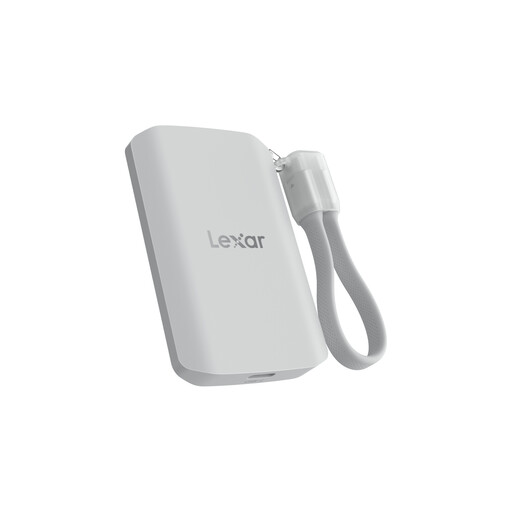
Lexar ES5 Portable SSD, 1 TB
For mobile use, compare the stated enclosure ratings with the conditions you encounter in your day-to-day work.
The product name specifies USB 3.2 Gen 2x2, IP65 and read and write speeds of up to 2.000 MB/s. According to the product information, the device is not designed to be submerged or exposed to high-pressure water for extended periods.
View at Joybuy
Frequently asked questions about external SSDs for design archives
Can I use the same SSD for project files on Mac and Windows?
Yes, as long as you use a file system that works with both. Apple lists exFAT for shared volumes. Back up any existing files before formatting, as formatting deletes them. As Apple Support explains, a shared file volume is not automatically suitable as a Time Machine backup volume.
Can I also use an exFAT archive as a Time Machine destination on a Mac?
A shared exFAT archive is not automatically suitable as a Time Machine destination. Apple Support recommends APFS or APFS (Encrypted) for Time Machine volumes, and explains how to create separate volumes if you also want to store other files on the same physical drive.
How can I back up older design versions on Windows?
Windows File History can back up versions of files and folders to an external drive or network storage. Microsoft Support recommends adding folders outside the libraries included by default; check that your project folders are included and test that you can restore them.
Is a particular type of hardware encryption always required for client data on an SSD in Germany?
The guidance from Germany’s Federal Commissioner for Data Protection and Freedom of Information does not impose a blanket requirement to use a particular SSD model or a particular type of hardware encryption. If you process personal data as a controller or processor, you must take appropriate technical and organisational measures in line with the risks involved; encryption should be assessed as one possible measure.
What should I do with an SSD I no longer need in Germany?
Take a redundant SSD to a separate collection point for electrical and electronic waste. Germany’s Federal Environment Agency describes municipal collection points that generally accept this type of waste free of charge. Before handing it in, decide how you want to deal with any project or personal data still stored on it.


