Which features matter for large design files?
Start by working out the capacity you need and how much desk space you have. Then check that your computer and cable can support the speed you’re after, and plan a separate backup for important files.
| What you need |
What to look for |
Especially important if |
| Space for projects and versions |
Add up your active and archived files, and allow for growth. The full advertised capacity won’t be available for storing files. |
If I want to keep large designs and older versions, I’ll choose a capacity that suits my project collection. Around 25 % of consumers put having enough space for projects and versions first. |
| Desk space and cable management |
Check the drive’s dimensions, port position and cable length against the available space and the position of your computer. |
If there’s little free space on my desk, I need a drive that can be positioned without pulling on the cable. Around 25 % of consumers prioritise a small footprint and practical cable management. |
| Speed when transferring large files |
Check that your computer’s port and cable support the stated standard. A manufacturer’s maximum speed isn’t a guarantee of the speed you’ll get with every file or application. |
If I regularly copy large project folders, I want to know whether my computer can actually use the faster interface. Around 20 % of consumers put transfer speed first. |
| Ability to recover files |
Plan for a separate backup drive and check that you can restore important files from it. |
If my designs would be difficult to replace, I want another copy in case of a fault or accidental deletion. Around 15 % of consumers prioritise being able to recover their files. |
| Using the drive with different systems |
Before formatting, decide whether you want to transfer files between Mac and Windows or use Time Machine. Apple lists ExFAT as a format option for drives over 32 GB, and APFS or APFS (Encrypted) as its preferred formats for Time Machine volumes. |
If I want to use the same drive with Mac and Windows, I need a format that suits the way I’ll use it. Around 15 % of consumers put compatibility with different operating systems first. |
External SSDs for small workspaces at Joybuy
This selection ranges from compact USB 3.2 Gen 2 drives to models suited to frequent large transfers. Check that the connection and cable are compatible with your computer.
 No image available
Samsung Portable SSD T7, 1 TB, Grey
A compact Gen 2 option for storing projects when desk space is limited.
1 TB; USB 3.2 Gen 2.
View at Joybuy
 No image available
Samsung Portable SSD T7, 2 TB, Indigo Blue
The 2-TB version is worth considering if you need more room for your projects and want a compact Gen 2 drive.
2 TB; USB 3.2 Gen 2.
View at Joybuy
 No image available
KIOXIA Exceria Plus G2 Portable SSD, 2 TB
A 2-TB option for keeping project files and versions together on a portable drive.
2 TB.
Before focusing on a peak speed, check the performance specifications for your computer’s port.
View at Joybuy
 No image available
MOVESPEED Portable SSD, 1 TB, Model YSPSRX20M-1TTG
A Gen 2x2 option for frequent large transfers, provided your computer and cable support the standard.
1 TB; USB 3.2; the product name quotes speeds of up to 2.060 MB/s.
View at Joybuy
 No image available
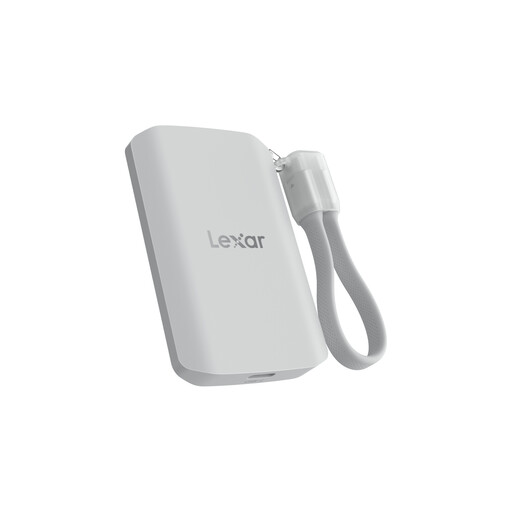
Lexar ES5 Portable SSD, 1 TB, USB 3.2 Gen 2x2
A good option for frequent large transfers if your computer supports Gen 2x2.
The product specifications quote speeds of up to 2.000 MB/s for reading and writing, as well as an IP65 rating. According to the product description, performance may be lower on systems without USB 3.2 Gen 2x2; IP65 does not mean the drive can be submerged.
View at Joybuy
External SSDs for design files: your questions answered
Is a USB-C port enough to get the advertised speed?
No. USB-C alone doesn’t determine the data rate you can use. Kingston requires a USB 3.2 Gen 2x2 host and a suitable cable for the XS2000; according to the USB Implementers Forum, compatible USB devices operate at the lowest speed supported by both devices.
How do I set up an SSD for Mac and Windows?
For transferring files between systems, Apple lists ExFAT as a format option for drives over 32 GB. Back up your files before formatting, as this deletes existing data. If you also want to use the SSD as a Time Machine destination, set aside a suitable volume for this; Apple recommends APFS or APFS (Encrypted), and a Windows-formatted volume can’t be used as a Time Machine destination.
Is an external SSD enough as the only copy of my designs?
No, not if you need to restore files after a fault or accidental deletion. The Federal Office for Information Security recommends keeping backups and checking that you can restore files from them.
What should I know about the warranty on an SSD with an IP65 rating?
Check the warranty terms for the specific model. Despite the T7 Shield’s IP65 rating, Samsung excludes damage caused by liquids and dust from its warranty.
Can I put a used external SSD in household rubbish in Germany?
No. The German Environment Agency says electrical appliances must not be put in household rubbish. Dispose of the SSD separately as waste electrical equipment, and find out where your local council’s collection point is.


