Which buying criteria matter?
First, decide whether the drive will hold active files or mainly serve as an archive or separate backup. Then check its file system and connections.
| What matters |
What to look for when buying |
Who it matters most to |
| Being able to restore complete projects |
Allow enough capacity for separate copies; use your DAW’s media collection function and test-open a copy of the project. |
If I need to be able to restore sessions in full later, I plan to keep a separate copy. Around 31% of consumers put recoverability first. |
| File system and compatibility |
Decide which operating systems you’ll use and what the drive is for; back up existing data before reformatting, and check the project folder on the destination computer. |
When moving between Mac and Windows, I want to check file system and DAW compatibility separately. Around 25% of consumers prioritise compatibility with their computer and file system. |
| Access to active sessions and samples |
Compare the USB modes supported by your computer, drive and cable rather than relying solely on an advertised transfer speed. |
If I regularly use samples directly from the drive, fast access matters to me. Around 25% of consumers prioritise access to active files. |
| Capacity for growing archives |
Check the size of complete project folders and how much they’re expected to grow; allow extra space for separate copies too. |
For a growing archive, total capacity matters more to me than instant access. Around 19% of consumers put archive capacity first. |
Joybuy products for music projects
This selection includes external SSDs for active projects and samples, as well as drives for large archives or separate backup copies.
 No image available
Samsung Portable SSD T7 4TB, USB Type-C 3.2 Gen 2, Titanium Grey
For active projects and large sessions, if your computer supports USB 3.2 Gen 2.
Capacity: 4 TB; connection: USB Type-C 3.2 Gen 2.
View on Joybuy
 No image available
Samsung T9 1TB, USB 3.2 Gen. 2x2
For frequent transfers, provided your computer and cable support USB 3.2 Gen 2x2.
Capacity: 1 TB; interface: USB 3.2 Gen. 2x2.
View on Joybuy
 No image available
WD Elements Portable 6TB USB-C
For a large project archive; if you access it frequently, bear in mind the difference between an HDD and an SSD.
Capacity: 6 TB; connection: USB-C.
View on Joybuy
 No image available
WD Elements 2TB Portable External Hard Drive, USB-C, USB 3.2 Gen 1, 2.5", exFAT
For project files you transfer between Windows and macOS computers; also check that your DAW can open the files.
Capacity: 2 TB; file system: exFAT; connection: USB-C, USB 3.2 Gen 1; form factor: 2.5 inches.
View on Joybuy
 No image available
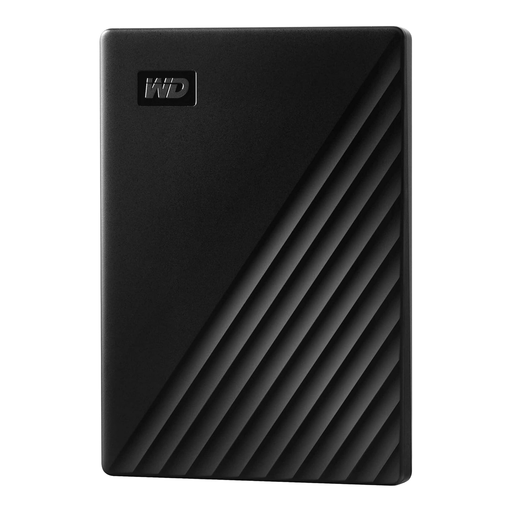
WD My Passport External Hard Drive 2 TB
For a separate project copy; the product description mentions automatic backups and password protection.
Capacity: 2 TB. Scheduling a backup does not replace checking that all DAW media has been copied.
View on Joybuy
Frequently asked questions
Can I store WAV, FLAC and MP3 files together on one drive?
For storage, the main thing is whether the file system is compatible with your computer and supports the file sizes you need. Whether your DAW can import those files is a separate matter: Ableton Live outlines different levels of support and limitations for WAV, FLAC and MP3. Microsoft states that FAT32 has a maximum file size of 4 GiB.
How do I transfer a session without losing samples?
In Ableton Live, ‘Collect All and Save’ copies the media you use into the project folder, but not plug-ins. Steinberg describes the ‘Back up Project’ function in Cubase Pro 15; media from VST Sound archives is excluded. Then copy the entire folder and check it on the destination computer.
Should I use exFAT for Mac and Windows, or APFS for Time Machine?
Apple lists exFAT as a Windows-compatible format. For a Time Machine backup, Apple recommends APFS or APFS (Encrypted); Time Machine cannot use a drive formatted for Windows as a backup drive straight away. Back up any existing data before reformatting, as Apple warns that it will be erased.
What rights and markings should I be aware of when buying in Germany?
According to the consumer advice article published in August 2026, for a consumer purchase the seller is responsible for ensuring the goods are free from defects when delivered for two years. This is different from a voluntary manufacturer’s guarantee. The German Federal Network Agency checks electronic devices as part of its market surveillance, including their CE marking, traceability and manufacturer details. This does not mean that users of external drives have to register them, nor does it provide blanket confirmation that a particular offer complies with the rules.


