Producers with ongoing projects
If you regularly work directly from an external drive, consider its speed and the connections available on your computer.


If you regularly work on projects directly from a drive, an external SSD is an obvious choice. An HDD may be better suited to large archives that you rarely access, when maximum data rates are not a priority. CHIP describes the HDDs it tested as slower than external SSDs. Whatever type of drive you use, you’ll need a separate, tested copy to restore your files. The Federal Office for Information Security (BSI) recommends keeping it separate.
If you regularly work directly from an external drive, consider its speed and the connections available on your computer.
If you want to back up projects without cloud storage, you’ll need complete copies and a reliable way to restore them.
If you rarely open many of your projects, storage capacity may matter more than speed when you’re working.
These figures relate to consumers choosing an external drive for music projects without cloud storage. First, work out whether you want to work directly from the drive, mainly archive projects or move between computers.
| Priority | What to check when buying | Who is this especially important to? |
|---|---|---|
| Restorable backup | Keep your working copy and backup separate; allow enough capacity for the copies you plan to make. | If I want to back up my sessions without the cloud, I need a complete copy that I can restore. Around 26% of consumers put having a restorable backup first. |
| Working on active projects | Check the USB versions supported by your computer and drive, and make sure you have the right cable. | If I often open projects directly from an external drive, a smooth workflow matters to me. Around 26% of consumers mainly look for a drive they can use for active work. |
| Archiving completed projects | Consider the size of your existing project folders and how much you expect them to grow. | If I mostly keep sessions for safekeeping and rarely open them, I want to allow enough space for my archive. Around 21% of consumers prioritise storage for completed projects. |
| Using projects across computers | Check the file system and the computer you plan to use; back up existing data before formatting. | If I want to use a session on both Mac and Windows, the copy needs to work on both computers. Around 16% of consumers prioritise using a drive across computers. |
| Protecting confidential projects | Know the difference between encryption and password protection, and plan how you’ll access the drive later. | If I take sensitive sessions with me or pass on a drive, I want to control access to the data stored on it. Around 11% of consumers prioritise protection against unauthorised access. |
If your only copy of a project fails, there’ll be nothing to restore from. Keeping a copy in the same place won’t protect you against every kind of damage either.
Plan for a separate copy and test that you can restore your files from it. The BSI recommends disconnecting backup media from the computer when it isn’t being used for a backup.
For the Samsung T7 Shield, the manufacturer’s stated top speeds require a compatible host device and cable, as well as UASP being enabled.
Check the connection between your computer, cable and drive before relying on an advertised top speed.
A project may refer to audio files outside its folder. Cubase’s documented backup function does not include copy-protected VST sound content.
Use the appropriate archive or consolidation feature in your DAW, then open the copy separately from the original to check it works.
Missing files can mean extra time spent searching for them or making them available again.
Formatting deletes the files on the volume concerned.
Back up your existing data, check which computers you need to use, and only then choose a file system.
The portable T7 Shield SSD is one option for work files you take with you regularly.
The Expansion Portable range offers an HDD option for extra storage and local copies.
The My Passport Ultra range includes portable HDD options for archives.
The X9 Pro is a portable SSD option for work files.
The Extreme Portable SSD is another portable option for taking files with you.
Depending on the variant, these drives are suited to storing large or rarely accessed projects locally, as well as accessing active sessions directly. A single drive is no substitute for a separate backup copy.
 No image available
An option for large project collections that are mainly kept in storage.
5 TB storage capacity; USB-C.
 No image available
A possible choice for storing projects locally if you want to use the exFAT drive variant.
2 TB; USB-C; USB 3.2 Gen 1; 2.5-inch; exFAT.
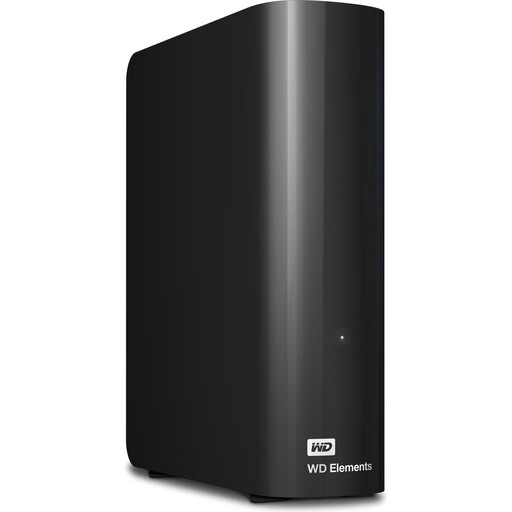 No image available
A desktop option for large project archives at a fixed workstation.
6 TB; USB 3.0; 3.5-inch; NTFS. The product description states that a power adapter is required.
 No image available
A portable SSD for projects you want to open directly from the drive regularly.
2 TB; USB 3.2 Gen 2; stated sequential top speeds of 1.050 MB/s read and 1.000 MB/s write. The product description states that USB-C-to-C and USB-C-to-A cables are included.
 No image available
A portable SSD option for projects you regularly work on directly from the drive.
2 TB; USB Type-C; USB 3.2 Gen 2. The product specifications list sequential top speeds of 1.050 MB/s read and 1.000 MB/s write, along with USB-C-to-C and USB-C-to-A cables.
Not necessarily. Cubase projects may refer to media outside the project folder; its documented archive function copies external audio files into the project folder. The documented Cubase backup function does not include copy-protected VST sound content. Check which function is right for your DAW and open the copy to test it.
Apple Support explains how to format an external drive for use with Mac and Windows, and recommends exFAT for drives over 32 GB. Back up any existing files elsewhere first, as formatting will delete them.
The BSI recommends disconnecting backup media from the computer when it isn’t being used for a backup. Keeping a physical copy separately can also help if the place where your computer is stored is damaged. Also check that you can actually restore your files.
For a consumer purchase in Germany, your statutory rights relating to faulty goods are against the seller, not automatically the manufacturer. The Verbraucherzentrale states that new goods are generally covered for two years from handover, and distinguishes these rights from a voluntary guarantee. The circumstances of the specific purchase will determine what applies.
No. The German Federal Government lists municipal recycling centres as a disposal route for electrical appliances and explains changes to returns that came into force on 1 January 2026. Before handing over or disposing of a drive, erase any stored data using a suitable method; moving it to the recycle bin is not enough.