People who actively work on projects
If you regularly open and edit large design projects directly from external storage, connection type and working speed should matter more than archive capacity alone.


If you often open and edit large design projects directly from an external drive, an external SSD is likely to be the better choice, provided its connection is supported by your computer and cable. An HDD may suit large project folders that you rarely edit, as well as backups where speed is not a priority; PC-WELT lists HDDs as an option for non-time-critical backups. In either case, allow for enough usable storage, choose a suitable file system and keep a separate backup.
If you regularly open and edit large design projects directly from external storage, connection type and working speed should matter more than archive capacity alone.
If you keep lots of completed project folders and can wait while files transfer, consider capacity, where the drive will sit and how you’ll keep a separate backup.
If you transfer folders between Mac and Windows, or use multiple devices, check the file system and available connections before copying your files over.
First decide whether you’ll regularly work on projects directly from the drive or mainly use it for storage. If you’re considering an HDD, also think about whether a portable model or a drive for a permanent workspace would better suit your routine.
This table groups the buying decisions by what matters most when choosing an external drive for large design projects and project folders.
| Priority | What to check before buying | Who should pay particular attention? |
|---|---|---|
| Active project work | USB data rates supported by your computer, cable and drive; treat manufacturers’ figures as maximum or test results. | If I regularly open, save and transfer large project files, a smooth workflow matters to me. Around 36 % of consumers put smooth working with active project folders first. |
| Space for a project archive | Compare your current storage needs with expected growth; for desktop HDDs, also allow space for the power supply. | If I’m accumulating lots of completed folders and versions, I want to make sure I have enough space for my archive. Around 29 % of consumers prioritise capacity for growing project archives. |
| Separate backup | Decide where to keep a separate copy and how to restore files from it; check encryption options for confidential files. | If I don’t want important projects stored only on my working drive, I need a separate copy that I can restore. Around 21 % of consumers prioritise protecting their project files against loss. |
| Using multiple computers | Check the connections and supported USB data rates on all your devices, as well as the pre-formatted file system; plan to format the drive before using it if needed. | If I use the same project folders on different computers, I want to transfer files without file system incompatibilities or connection issues. Around 14 % of consumers prioritise sharing files across devices. |
Manufacturers’ figures are based on specific test conditions. The connection is also limited by the capabilities supported by your computer, cable and drive.
Before buying, check the USB capabilities of all the devices involved. Don’t assume maximum speeds are guaranteed when working with every project folder.
Extra storage doesn’t automatically give you a second, recoverable copy. An archive drive, however large, won’t protect you from data loss on its own.
Keep your working files and backups separate, and check that you can restore important folders from your backup.
The Toshiba Canvio Basics model covered here is formatted as NTFS out of the box. Formatting erases any files already stored on the drive.
Before copying your files over, check the connections and make sure the drive can be written to on all the computers you plan to use. Back up your files before formatting a drive.
The Portable SSD T7 Shield is documented as a portable SSD, including a 4-TB version.
The X9 Pro CT4000X9PROSSD9 is a 4 TB portable SSD.
The Canvio Basics HDTB540EK3CA is a 4 TB portable HDD.
The Expansion Desktop HDD range is designed for storing large amounts of data in one place, rather than for portable use.
This selection includes portable SSDs for active file transfers and portable HDDs for large project folders that you’re less likely to edit regularly.
 No image available
This portable SSD is worth considering if you regularly open and transfer large files.
1 TB; USB-C; USB 3.2 Gen 2.
 No image available
This portable SSD is an option if you regularly work with project files directly from external storage.
2 TB.
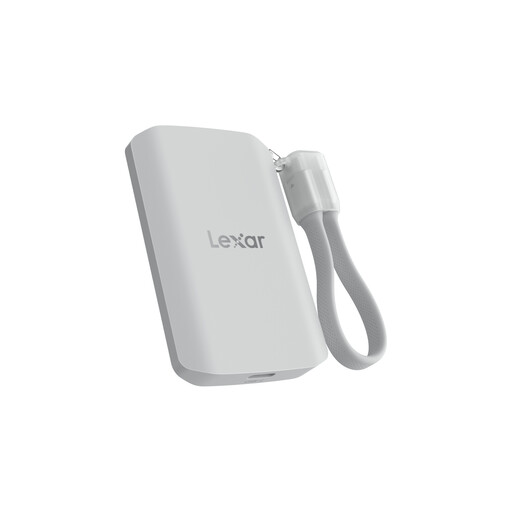 No image available
USB 3.2 Gen 2x2 is a feature to consider for active file transfers. Check that your computer supports this connection too.
1 TB; USB 3.2 Gen 2x2; quoted read and write speeds of up to 2.000 MB/s.
The product description notes that performance may be lower on devices without USB 3.2 Gen 2x2.
 No image available
This portable HDD may suit large project folders if you don’t need to work on them directly very often.
6 TB; USB-C.
No image available
This portable HDD is an option for project folders you take with you or store away, if transfer times aren’t a priority.
4 TB; USB-C.
Check the file system first. Toshiba says the Canvio Basics model covered here uses NTFS; you may need to reformat it to use it with macOS. Apple lists exFAT as a formatting option for drives over 32 GB that are used with both Mac and Windows. Back up any files you need first, as formatting erases the data on the drive.
Don’t use the drive you work from as your only backup too. Keep a separate copy and check that you can restore important files from it. Germany’s Federal Office for Information Security lists faults, theft and damage to buildings, among other things, as possible causes of data loss.
In Germany, statutory consumer rights apply against the seller; these are separate from a manufacturer’s warranty, which is subject to its own terms. The Verbraucherzentrale says that for purchases made from 31 July 2026, the statutory guarantee period is extended if you choose a repair rather than a replacement for a fault that occurs within the first two years. This does not mean that every purchase automatically comes with a three-year period.
No. According to the German Environment Agency, electrical and electronic waste must be collected separately and must not be put in household rubbish. The agency lists local collection points and retailers as some of the return options.