First, choose enough storage for your photos and planned backup versions. Then make sure the connection is compatible with your computer and backup software. A compact USB SSD can be enough for regular photo backups; faster speeds are most useful if you often transfer large files and have a compatible connection. However, an SSD kept on the same desk is not a second copy stored separately. Germany’s Federal Office for Information Security recommends checking that you can restore your files and keeping backups elsewhere in case something happens at your location.
Who is this selection for?
Keep your photos safe
You want a local copy you can restore, rather than just extra storage space. Set up a regular backup routine and try restoring individual photos. Germany’s Federal Office for Information Security recommends making sure you can restore your data.
A growing photo collection
Your photo library is growing, and you want to choose a capacity based on the files you already have and the backup versions you plan to keep. For a complete Mac backup with Time Machine, Apple recommends a drive with at least twice the storage capacity of your Mac.
Limited space and different connections
You have a small desk or use devices with different USB ports. So, consider the case dimensions, cable and connection together. Kingston lists the XS1000 as having a case measuring 69.54 × 32.58 × 13.5 mm.
What should you look for when buying?
Compact USB 3.2 Gen 2 SSD
A good fit if: You mainly back up photos regularly, have limited desk space, and your computer and cable support the connection.
Consider: Kingston lists the XS1000 in 1 or 2 TB capacities and says it comes with a short USB-C to USB-A cable and adapter. Check that the cable length and plug suit your workspace.
Faster USB 3.2 Gen 2x2 SSD
A good fit if: You often transfer large photo archives and your computer and connection support USB 3.2 Gen 2x2.
Consider: Samsung lists speeds of up to 2,000 MB/s for the T9. Without a compatible host, you can’t expect a corresponding time saving.
SSD with a stated level of case protection
A good fit if: You often carry your SSD around, or there’s a specific risk of dust or splashes in your workspace.
Consider: Samsung lists the T7 Shield as IP65 rated, but excludes liquid and dust damage from its warranty. It’s still a good idea to keep another copy elsewhere.
| Priority |
What to check when buying |
Who is this important to? |
| Restoring your files |
Decide what to back up and how often, check that the backup has completed, and try restoring individual photos. Keep another copy elsewhere in case something happens to your whole location. Germany’s Federal Office for Information Security recommends making sure you can back up and restore your data. |
When I set up a backup, I want to be able to retrieve individual photos later. Around 33% of consumers would put the ability to restore files first. |
| Capacity |
Consider the size of your photo folders, how much they’re likely to grow and the backup versions you plan to keep. For a complete Mac backup with Time Machine, Apple recommends at least twice the storage capacity of your Mac; this is not a general requirement for individual photo folders. |
With a growing collection, I want enough space for my existing photos and planned versions. Around 27% of consumers would prioritise having enough capacity. |
| Connection and desk space |
Check your USB ports, the cables and adapters included, and where you want to position the drive. Kingston lists USB-A connection options for the XS1000; Samsung lists USB-C to C and USB-C to A cables for the T9. |
If the SSD needs to work with my devices and fit on my small desk, the plug, cable and case size all matter. Around 20% of consumers would consider the connection and space needed first. |
| Protection and storage |
Check the protection rating and warranty terms separately for the specific model. Samsung lists the T7 Shield as IP65 rated, but excludes liquid and dust damage from its warranty. |
If I carry my SSD around or there’s a specific risk in my workspace, protecting the drive matters to me. Around 13% of consumers would put this first. |
| Speed when transferring large files |
Check that your computer and cable support the model’s USB standard. Kingston lists read speeds of up to 1,050 MB/s for the XS1000; Samsung lists speeds of up to 2,000 MB/s for the T9 with Gen 2x2. These are manufacturers’ maximum figures, not a guaranteed backup time. |
If I often transfer large amounts of photo data, I want to know whether my connection supports the speed. Around 7% of consumers would prioritise transfer speed. |
Common photo backup mistakes
-
Relying on the SSD as your only backup
If your computer and SSD are in the same place, an incident at that location could affect both copies. A backup is only useful if you can restore your files from it.
Keep another copy elsewhere and regularly check that you can restore individual photos.
-
Comparing advertised MB/s figures alone
Manufacturers’ maximum Gen 2x2 speeds require a compatible host. Without that connection, you can’t expect a corresponding time saving.
First, check your computer’s connection and your backup needs. Then decide whether a faster model would make a difference for frequent large transfers.
-
Assuming the stated capacity is all available for use
Formatting and other uses take up some of the stated capacity. An SSD that’s too small may not have room for your backed-up files or planned versions.
Check the size of your photo folders and allow for expected growth before choosing a capacity.
-
Assuming an IP rating guarantees protection against damage
Samsung lists the T7 Shield as IP65 rated, but notes that liquid and dust damage are not covered by the warranty.
Check the protection rating and warranty terms separately for the exact model, and keep an additional copy of important photos.
Brands to consider
Kingston
The XS1000 is a compact option for photo backups and different USB connections. According to the manufacturer, the XS2000 is better suited to large transfers over Gen 2x2.
- Kingston lists the XS1000 in 1 or 2 TB capacities, with a compact design and USB-A connection options.
- The 2,000 MB/s and IP55 specifications apply to the XS2000 with its protective sleeve, not the XS1000.
Samsung
The T9 is a Gen 2x2 option for frequent large transfers, while the T7 Shield also has a stated protection rating.
- Samsung lists speeds of up to 2,000 MB/s and two cable types for the T9. The company lists the T7 Shield as IP65 rated.
- Samsung explicitly states that liquid and dust damage to the T7 Shield are not covered by the warranty.
Crucial
The X10 Pro is a compact Gen 2x2 option for frequent large transfers when used with a compatible host.
- Crucial lists read speeds of up to 2,100 MB/s and write speeds of up to 2,000 MB/s for the X10 Pro, along with a case measuring 65 × 50 mm. These are manufacturer figures under the stated test and connection conditions.
- According to Crucial, the highest Gen 2x2 performance requires a compatible USB-C host.
SanDisk
The Extreme PRO Portable SSD is a Gen 2x2 option if you want a stated level of case protection as well as speed.
- For the 1 TB version, model SDSSDE81-1T00-G25, SanDisk lists speeds of up to 2,000 MB/s and an IP65 rating.
- These specifications apply to the version listed and do not establish that it’s suitable as your only photo backup or describe other Extreme models.
Joybuy products
This selection includes external SSDs with 1 TB or 2 TB of capacity for storing photos locally. Check that the capacity and connection suit your computer and backup plan.
 No image available
KEXIN external SSD, 1 TB
For local photo storage with 1 TB of capacity, provided the USB-C connection is compatible with your computer.
USB-C; up to 500 MB/s.
View at Joybuy
 No image available
KIOXIA Exceria Plus G2 Portable SSD, 2 TB
The 2 TB version could suit a larger photo collection, if you’ve worked out how much space you need based on your files and planned backup versions.
Storage capacity: 2 TB.
View at Joybuy
 No image available
Samsung Portable SSD T7, 2 TB, Indigo Blue
For a local 2 TB photo collection, if this capacity suits your current library and backup plan.
Storage capacity: 2 TB.
View at Joybuy
 No image available
Samsung Portable SSD T9, 1 TB
For frequent large transfers, provided your computer and connection support USB 3.2 Gen 2x2.
USB 3.2 Gen 2x2; read and write speeds of up to 2,000 MB/s. According to Samsung, maximum speeds require a compatible connection.
View at Joybuy
 No image available
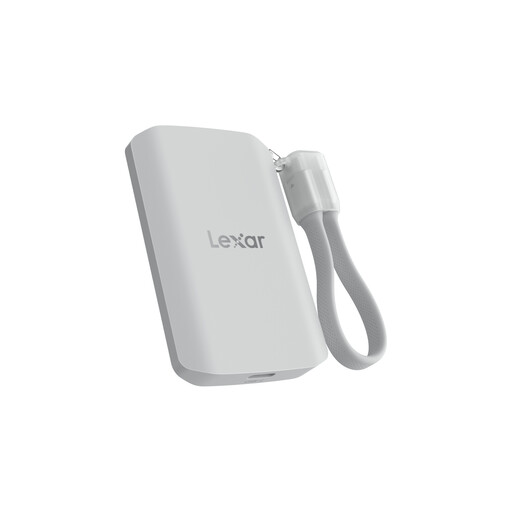
Lexar ES5 Portable SSD, 1 TB
A 1 TB external SSD for storing photos locally. Before use, check that the listed features are compatible with your device.
USB 3.2 Gen 2x2; read and write speeds of up to 2,000 MB/s; IP65 and MagSafe support. Automatic backups through the Lexar app do not support iCloud backups.
View at Joybuy
Frequently asked questions
How do I back up photos on Windows or a Mac?
On Windows, File History can back up the Pictures library to an external drive, among other things. Check separately for photo folders outside the libraries it covers. On a Mac, Time Machine can back up photos to an external drive. Afterwards, try restoring individual files to check that you can retrieve your photos.
Is an SSD kept on the same desk enough?
It can provide a local copy, but it won’t reliably protect you from damage affecting both your computer and SSD at the same location. In that case, it’s a good idea to keep another copy elsewhere. You should also check regularly that you can restore your files.
How large should an SSD be for Time Machine?
There’s no general minimum capacity for photo folders alone. If you’re backing up your Mac with Time Machine, Apple recommends a drive with at least twice the storage capacity of your Mac. It also recommends using the backup volume exclusively for Time Machine.
What does a manufacturer’s warranty offer in addition to your statutory rights?
When you buy from a trader in the EU, you’re generally entitled to a minimum two-year legal guarantee from the seller. A voluntary manufacturer’s warranty has its own terms and doesn’t replace these rights. Nor does it promise to restore lost photos. Your Europe, the European Union’s information portal, explains the difference.
Am I legally required to encrypt private photos on an SSD?
For data processing carried out exclusively for personal or family purposes, Germany’s Federal Commissioner for Data Protection and Freedom of Information describes an exemption from the GDPR. This does not create a general legal encryption requirement for this private use. The rules may differ for work photos or if you publish images of other people. Either way, encryption can be useful if your SSD is lost.


