Choose a capacity that can hold complete project folders, including the versions you want to keep. Then check the ports and file systems on your computers. Faster transfers matter most when you regularly move large files and have a compatible connection. A single SSD is no substitute for a separate backup: the Federal Office for Information Security recommends testing whether you can restore your files, too.
Which option is right for you?
Portfolios with multiple versions
If you keep several edits of each project, work out how much space you need based on your own folders and the versions you want to retain. Also plan for a separate backup. The Federal Office for Information Security points out that restoring files is not something you can take for granted.
Regular transfers of large image files
If you regularly move large project folders between your workstation and an SSD, first check which USB connection your computer and cable support. A manufacturer’s maximum speeds won’t necessarily reflect what you’ll get with your own setup.
Working on the move or across different devices
If you take an SSD to meetings or work with both Mac and Windows, check the protection offered by the specific model and make sure you can write to it on all the devices you need. Apple Support explains that macOS can read NTFS drives, but can’t edit them without an additional solution.
What should you look for when buying?
Start by deciding which versions of your projects you want to keep. You can then choose the capacity, connections and backup approach that suit your workflow.
| What matters |
What to look for when buying |
Who will find this especially important? |
| Space for projects and versions |
Check the size of your complete project folders and include every version you want to keep. |
If I want to keep several edits of each project, I don’t want to leave a version behind because I’m short of storage when copying files. Around 28% of consumers make space for complete projects and versions their top priority. |
| Transfer speeds for large files |
Compare the USB interfaces supported by the SSD, computer and cable. A manufacturer’s maximum speed won’t automatically be the speed you get with your setup. |
If I regularly move large image folders, I want to avoid unnecessary waiting. Around 22% of consumers prioritise frequent transfers of large files. |
| A backup you can restore |
Keep a separate copy and check that you can restore the project files you need from it. The Federal Office for Information Security recommends testing your restore process, too. |
If I can’t afford to lose a project version, I don’t want to rely on just one usable copy. Around 22% of consumers prioritise a backup they can restore. |
| Write access across multiple devices |
Check the file system, cable and ports on every computer you need to use before relying on the SSD as a portable project drive. |
If I need to edit the same folders on Mac and Windows, I need write access on both devices. Around 17% of consumers prioritise access across devices. |
| Privacy when you’re out and about |
If your image files are confidential, check which encryption option suits your workflow and how you’ll manage the key. A feature listed for a model isn’t necessarily set up for you. |
If I take confidential images with me, I want to make it harder for anyone to access them if I lose the SSD. Around 11% of consumers prioritise protecting files they carry with them. |
Which mistakes should you avoid?
-
Keeping your only portfolio copy on a rugged SSD
Dust or splash protection on a particular model won’t prevent accidental deletion or the loss of your only usable copy. The Federal Office for Information Security recommends factoring in both backups and data recovery.
Keep your working copy separate from your backup, and test that you can restore a project version.
A separate backup requires extra storage and maintenance.
-
Choosing a higher MB/s rating without checking your computer
Samsung quotes speeds of up to 2,000 MB/s for the T9. This requires, among other things, a host device and cable that support USB 3.2 Gen 2x2. You can’t expect to reach the maximum speed with every connection.
Check which interface your computer and cable support before comparing SSDs by their maximum speeds.
-
Formatting for Mac and Windows without backing up your files
Apple points out that formatting deletes the files on the affected volume. Check that the file system is suitable and that your project versions are safe before you proceed.
Back up any files you need somewhere else before formatting a drive.
Key brands at a glance
Samsung
The T7 Shield and T9 are different options for portable copies and frequent transfers of large files. The right choice depends on the model and the connection your setup supports.
- For the 2 TB T7 Shield, Samsung quotes read speeds of up to 1,050 MB/s, IP65 protection and password protection with AES-256 hardware encryption.
- Samsung quotes speeds of up to 2,000 MB/s for the T9. This maximum requires, among other things, USB 3.2 Gen 2x2 support from the host device and cable.
Kingston
The XS1000 is a USB 3.2 Gen 2 option, while the XS2000 is designed for setups with a compatible USB 3.2 Gen 2x2 connection.
- Kingston lists 1 TB and 2 TB versions of the XS1000, along with a USB-C to USB-A cable and an adapter.
- Kingston quotes speeds of up to 2,000 MB/s for the XS2000 and IP55 protection with a removable rubber sleeve. Actual speeds and device compatibility depend on your setup.
Crucial
The X9 Pro could be a compact option for image projects and working on location, provided its specific connection and protection features meet your needs.
- Crucial quotes read and write speeds of up to 1,050 MB/s for the X9 Pro, along with IP55 protection.
- Crucial describes this as maximum sequential performance under test conditions and advises against submerging the model.
SanDisk
The Extreme Portable SSD is a mobile USB 3.2 Gen 2 option with protection features that vary by model.
- For the relevant version of the Extreme Portable SSD, SanDisk quotes read speeds of up to 1,050 MB/s, write speeds of up to 1,000 MB/s and IP65 protection.
- These specifications apply to the named version and shouldn’t automatically be assumed to apply to other Extreme or Extreme PRO models.
Joybuy products for mobile image storage
This selection includes portable SSDs with USB 3.2 Gen 2 or USB 3.2 Gen 2x2, in a range of capacities for image and project files.
 No image available
KIOXIA Exceria Plus G2 Portable SSD 2 TB
With 2 TB of storage, there’s room for multiple versions of your projects on a portable SSD.
USB 3.2 Gen 2; maximum sequential speeds of up to 1,050 MB/s read and 1,000 MB/s write.
The description lists AES-256 hardware encryption with password protection, and compatibility with Windows, macOS, iPadOS and Android.
USB-C to USB-A and USB-C to USB-C cables are listed as included.
View at Joybuy
 No image available
MOVESPEED Portable SSD YSPSRX20M-1TTG, 1 TB
USB 3.2 Gen 2x2 is specified for frequent transfers of large files; your host device must support the connection, too.
The product specifications list read speeds of up to 2,060 MB/s and write speeds of up to 1,800 MB/s.
The description mentions magnetic attachment to an iPhone for ProRes recording, and compatibility with Windows, macOS, Android and iPhone.
View at Joybuy
 No image available
Samsung Portable SSD T7, 4 TB, Titanium Grey
The stated 4 TB capacity gives you room for large project folders and several saved versions.
USB 3.2 Gen 2; maximum sequential speeds of up to 1,050 MB/s read and 1,000 MB/s write.
The description lists AES-256 hardware encryption. The password feature needs to be set up with Samsung Magician.
The description lists USB-C to USB-C and USB-C to USB-A cables, and drop resistance of up to 2 m.
View at Joybuy
 No image available
Samsung T9 Portable SSD, 1 TB
USB 3.2 Gen 2x2 is specified for frequent transfers of large project folders. Check that your computer and cable support this connection.
The product specifications list read and write speeds of up to 2,000 MB/s.
The description lists USB-C to USB-C and USB-C to USB-A cables, and compatibility with Mac, PC and smartphones.
The description lists protection against drops from heights of up to 3 m.
View at Joybuy
 No image available
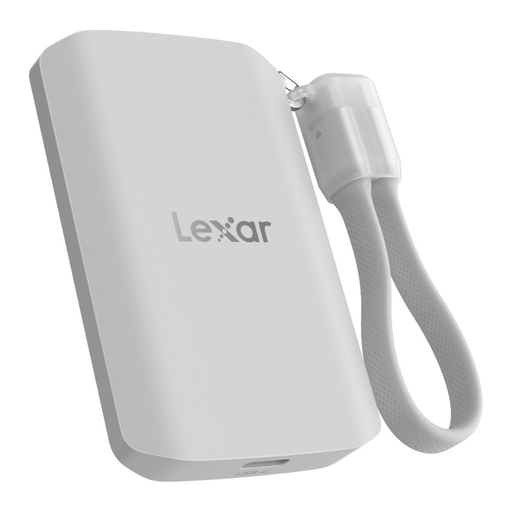
Lexar ES5 Portable SSD, 1 TB
USB 3.2 Gen 2x2 and IP65 protection are specified for portable image storage. Check that your host device supports the interface.
The product specifications list read and write speeds of up to 2,000 MB/s, plus drop resistance of up to 3 m.
The description mentions MagSafe attachment and automatic media backup through the Lexar app. The app doesn’t support iCloud backup.
View at Joybuy
Frequently asked questions
Is copying files to a single external SSD enough for a backup?
For irreplaceable images, don’t rely on just one usable copy. Keep an additional, separate backup and test that you can restore the files you need. The Federal Office for Information Security points out that successful recovery isn’t something you can take for granted.
What should I check before using a drive with Mac and Windows?
First check the file system and make sure you can write to the drive on both devices. Apple Support lists exFAT as a Windows-compatible format for drives formatted accordingly. Reformatting deletes existing files, so back them up somewhere else first.
When is a particularly fast SSD worth it?
It’s most useful if you regularly copy large folders and your computer and cable support the required interface. For the T9’s maximum sequential speeds, Samsung specifies USB 3.2 Gen 2x2 support from the host device and cable. Without that connection, you can’t assume you’ll get the benefit of the quoted maximum speed.
What else should I plan for before buying?
Consider another storage solution if you need a separate backup of your projects. Also check whether the specific model comes with the cables you need. Kingston lists a USB-C to USB-A cable and an adapter for the XS1000.


