Students using different computers
If you copy files on a shared computer and want to open them later on another device, first check the connections, cables and file system.


For study files on a shared computer, choose an external SSD with a connection, cable and file system that work with the device you plan to use. For everyday documents, a high advertised peak speed alone isn’t a compelling reason to buy. If you’ll be carrying confidential files, consider access protection and signing out at the workstation, and keep another copy of important files somewhere separate. It’s also important to check whether the computer’s operator allows external storage devices.
If you copy files on a shared computer and want to open them later on another device, first check the connections, cables and file system.
If you’re carrying files that you don’t want others to see on a shared computer, or if your SSD is lost, consider access protection and how you handle open sessions.
If you’re carrying notes and revised versions, keep another copy of important files somewhere separate and check that you can open them.
First, check whether the shared computer allows external storage devices and whether the connection, cable and file system are compatible. Then consider your storage needs, data privacy and how much any speed differences matter for the way you’ll use the drive.
| Consideration | What to check before buying | Who should consider this? |
|---|---|---|
| Connection and file system | Check for USB-A or USB-C, whether USB devices are allowed, the cable and the file system. Apple notes that formatting deletes files. | If I move notes between different computers and my own device, I want to know whether the connection, cable and format will work. Around 28% of consumers put compatibility first. |
| Privacy | Check whether you can use your chosen access protection on an approved computer; an unlocked session needs to be considered separately. | If I open personal files on a shared computer, I want to protect them from access by others. Around 22% of consumers prioritise the privacy of their files. |
| Separate backup | Decide where to keep a second copy and check that you can open important files from it. | If I’m carrying revised notes, I don’t want my portable SSD to be the only copy of my work. Around 22% of consumers prioritise keeping a separate backup. |
| Suitable capacity | Consider the size of your existing folders and any additional files you plan to store; don’t assume the stated capacity is exactly the amount of usable space. | If I’m carrying course materials and older versions together, I need enough room for the files I actually have. Around 17% of consumers prioritise getting the right capacity. |
| Transfer speed | Compare the USB specifications of the computer, SSD and cable; consider peak speeds only in the conditions specified for them. | If I often copy large files, I want to know whether the connection at the workstation can make use of the advertised speed advantage. Around 11% of consumers put transfer speed first. |
Transporting files and keeping an independent backup serve different purposes. Germany’s Federal Office for Information Security also recommends checking whether backed-up data can be restored.
Keep a second copy in another suitable place and check that you can open the files from it.
An advertised peak speed doesn’t tell you how fast transfers will be on a shared computer. For the T9’s peak speed of up to 2,000 MB/s, Samsung specifies, among other things, a Gen 2x2-capable host, a suitable cable and UASP enabled.
First check the computer’s connection, as well as the size and frequency of your transfers.
Apple notes that formatting a storage device deletes all the files stored on it.
Choose the file system you need before you first add files, if possible. Back up any existing files before formatting an SSD.
Germany’s Federal Commissioner for Data Protection and Freedom of Information notes that files may be decrypted on a device that is switched on or unlocked.
As well as protecting stored data, plan how you’ll sign out and end your session at a shared workstation.
The XS1000 is a compact Gen 2 option; the XS2000 requires a suitably equipped computer to use Gen 2x2.
The T9 is designed for compatible Gen 2x2 connections; the T7 Shield may be worth considering if its stated casing protection is useful when you’re carrying it around.
The X9 is a USB-C Gen 2 option; the X10 Pro is relevant if you can actually use a Gen 2x2 connection.
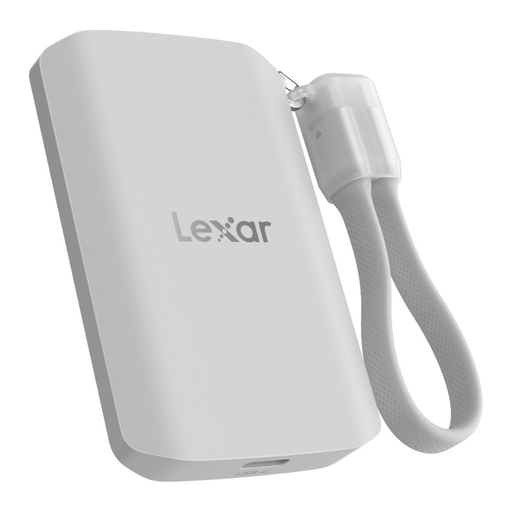
The Pocket SSD #32192 is a compact USB-C option with a built-in cable holder for easy carrying.
This selection includes external SSDs for carrying study files, including compact Gen 2 models and options with a Gen 2x2 interface. The right choice for you will depend mainly on the connection, cable, file system and how much storage you actually need.
 No image available
If you use different computers, the described USB-C to USB-A cable with adapter may help you connect the drive; still check whether USB storage devices are allowed on the shared computer.
USB 3.1 Type-C; up to 500 MB/s according to the product title.
 No image available
The described USB-C to USB-C and USB-C to USB-A cables are useful when switching between computers. According to the description, the optional password protection needs to be set up using Samsung software.
1 TB; USB 3.2 Gen 2.
 No image available
If you often transfer large files, check whether your computer and cable support the described Gen 2x2 connection; suitable interfaces are needed to achieve the stated peak speed.
1 TB; USB 3.2; up to 2,060 MB/s according to the product title.
 No image available
The described cable types can make it easier to connect to different computers. According to Samsung, the peak speed requires a Gen 2x2-capable host, a suitable cable and UASP enabled.
USB 3.2 Gen 2x2; read and write speeds of up to 2,000 MB/s according to the product title.
 No image available
For carrying the drive around, the description lists a cable holder. Check the connection on your device: the description notes that performance will be lower on Macs and other systems without USB 3.2 Gen 2x2.
USB 3.2 Gen 2x2; read and write speeds of up to 2,000 MB/s; IP65 according to the product title.
Yes, as long as both computers allow external storage devices and the connections are compatible. Apple describes exFAT as suitable for use with Windows and Mac, and specifically recommends it for storage devices over 32 GB. Back up any existing files before formatting, as formatting deletes them.
Not in every situation: according to Germany’s Federal Commissioner for Data Protection and Freedom of Information, files may be decrypted on a device that is switched on or unlocked. So make sure you also plan how to end your session on the shared computer.
Check that the files you need are there and that you can open them. For Windows, Microsoft recommends safely removing external drives before unplugging them to help prevent data loss.
Not necessarily: an advertised peak speed only matters if your transfers can benefit from it and your connection meets the necessary requirements. For the T9’s peak speed, Samsung specifies, among other things, Gen 2x2 support on the host and cable, as well as UASP enabled.