By the Joybuy Product Recommendation Officer, July 10, 2026
A functional extractor hood is a core component of any kitchen. It prevents cooking vapours, grease particles, and odours from spreading throughout your home, ensuring a more pleasant indoor environment. However, with the vast array of designs, operating modes, and technical specifications, choosing the right model can be a challenge. This guide offers objective guidance to help you make an informed decision and find an extractor hood that is precisely tailored to your kitchen layout and needs.
Before you decide on a model, several fundamental criteria should be considered. These will help you narrow down the selection to the appliances most relevant to you.
1. The Right Design for Your Kitchen's Architecture
The design of the hood is largely determined by your kitchen's layout. Each type has specific installation requirements and advantages.
- Under-cabinet hoods: These compact models are mounted underneath a wall cabinet or shelf. A 60 cm under-cabinet hood is a common solution for smaller kitchenettes and fitted kitchens where space must be used optimally.
- Wall-mounted hoods: These are attached directly to the wall above the hob and are available in various designs. An angled head-free hood offers more freedom of movement while cooking, while a classic wall-mounted hood in black can make a modern design statement.
- Island hoods: Designed for kitchen islands in open-plan living spaces, these hoods are installed to hang freely from the ceiling. A recirculating island hood is often the more practical choice here, as it avoids the need to run an exhaust duct through the ceiling.
- Portable and Tabletop Extractors: These flexible solutions, also known as tabletop extractors for the kitchen, require no permanent installation. They are placed directly next to the hob and are suitable for rental apartments, temporary cooking setups, or for use with tabletop grills and fondues.
The choice between an extraction and recirculation hood is one of the most critical decisions and depends on the structural conditions of your home.
- Extraction mode: The hood draws in cooking fumes and ducts them outside through a pipe system. This method is highly effective at removing moisture and odours. However, it requires a wall opening and is often not feasible in many rental properties.
- Recirculation mode: In this mode, the extracted air is purified through filters (grease and activated charcoal filters) and then released back into the room. This option is easier to install as no structural changes are necessary. However, the activated charcoal filters must be replaced regularly to ensure effective odour neutralisation.
3. Technical Specs: Performance, Noise Level, and Efficiency
Objective performance data helps to compare the functionality of different models.
- Extraction Rate (in m?/h): Indicates how much air the hood can circulate per hour. A rule of thumb is that the hood should exchange the kitchen's air volume 6 to 12 times per hour.
- Noise Level (in dB): A quiet angled hood or island hood is particularly advantageous in open-plan kitchens. Levels around 50-60 dB on a medium setting are considered relatively quiet.
- Energy Efficiency: A high Energy Efficiency Class of A+ or better reduces electricity consumption and lowers operating costs in the long run.
Here, we present a selection of models that cater to different requirements and kitchen concepts. The selection is based on objective product features and functionalities.
Ciarra Slimline 60 cm Under-Cabinet Hood
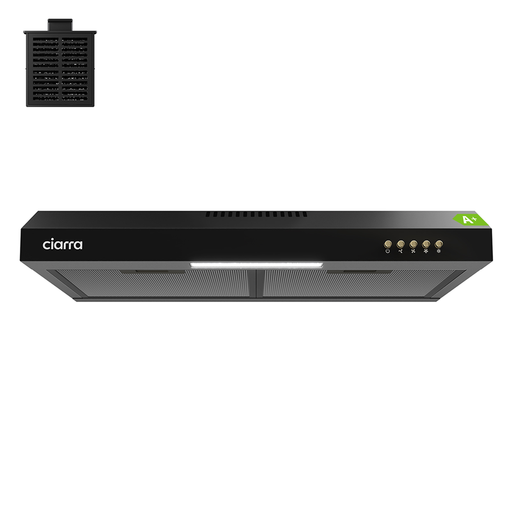
- Why it stands out: With its extremely slim design (85 mm height), this model is specifically designed for kitchens with limited space or low wall cabinets.
- Pros:
- Flexible Installation: Can be used in both extraction and recirculation mode.
- Compact Dimensions: With a width of 60 cm, it fits into standard kitchen units.
- Washable Grease Filter: The multi-layer metal grease filter can be cleaned, making replacement unnecessary.
- Efficient Operation: Achieves Energy Efficiency Class A+ with an annual energy consumption of 11 kWh/a according to the manufacturer.
- Best for: Ideal for users in small fitted kitchens, apartments, or rental properties who are looking for a discreet and space-saving solution.
Ciarra 60 cm Wall-Mounted Hood with Black Glass Panel
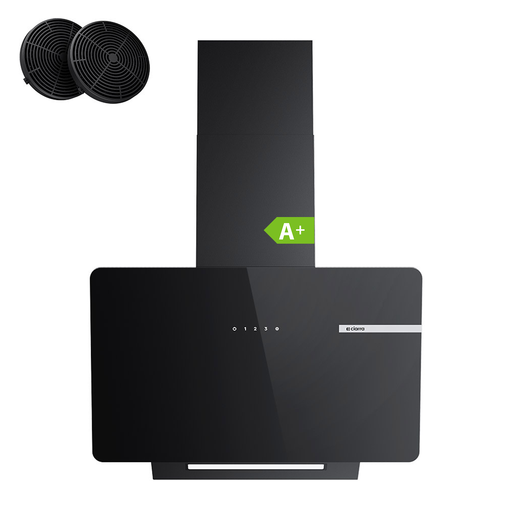
- Why it stands out: The angled design (for head clearance) and the black glass front give this wall-mounted hood a modern aesthetic and prevent you from bumping your head.
- Pros:
- High Extraction Rate: With up to 580 m?/h (manufacturer's specification), it is also suitable for more intensive cooking sessions.
- Sensor Touch Controls: The smooth control panel allows for easy operation and cleaning.
- Dual Mode: Suitable for extraction and recirculation, offering flexibility during installation.
- Energy Efficiency Class A+: Combines high performance with low energy consumption.
- Best for: A great choice for design-conscious users with modern kitchens who value head clearance and powerful extraction performance.
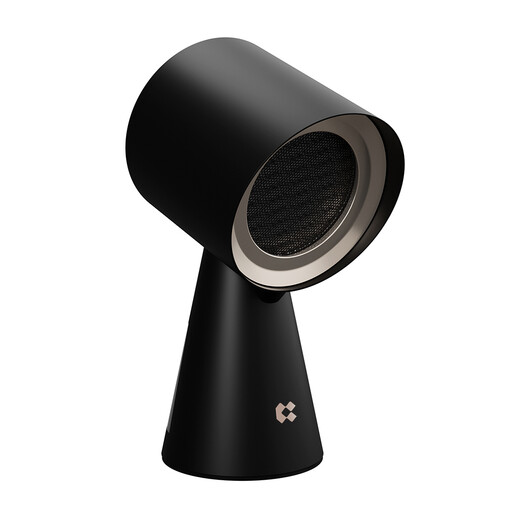
- Why it stands out: As a freestanding unit, this portable extractor hood offers maximum flexibility without any installation work.
- Pros:
- No Installation Required: The device operates exclusively in recirculation mode and can be placed anywhere.
- Compact and Portable: With a net weight of 1.5 kg, it is easy to transport and store.
- Specialised Use: Designed for use with electric grills, fondues, or portable hobs on the dining table or balcony.
- Multi-Layer Filtration: A system of aluminium and polymer filters captures grease and odour particles.
- Best for: Perfect for renters, students, RV users, or for social cooking events where food is prepared directly at the table.
Ciarra 41 cm Hanging Island Hood with Smart Control
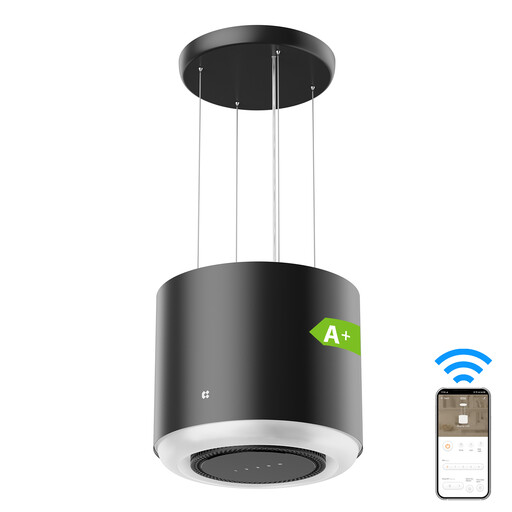
- Why it stands out: This recirculating island hood combines the function of an extractor with the design of a modern pendant light and is controllable via an app.
- Pros:
- Smart Extractor Hood: Integrated Wi-Fi connectivity allows for control of power levels and lighting via a smartphone app.
- Designed for Kitchen Islands: The free-hanging, cylindrical design is a focal point in open-plan kitchens.
- Powerful Recirculation: Offers an extraction rate of up to 514 m?/h (manufacturer's specification) in boost mode.
- Adjustable LED Lighting: The lighting can be set to two brightness levels to perfectly illuminate the cooking surface.
- Best for: For owners of modern, open-plan kitchens with an island who are looking for an aesthetically sophisticated and technologically advanced ventilation solution.
Looking for a Different Style?
The colour and material of an extractor hood significantly contribute to the overall impression of the kitchen. Models in dark tones are particularly popular as they blend seamlessly into modern kitchen designs. If you are specifically looking for such a finish, you can find a wider selection here.
? Explore more models in the Black Extractor Hoods category
Frequently Asked Questions (FAQ)
1. What is the difference between extraction and recirculation in an extractor hood? With an extraction hood, the captured air, including moisture and odours, is ducted outside through a channel. This requires a wall opening. A recirculation hood filters the air through a grease filter and an activated charcoal filter, then returns the purified air to the room. Recirculation hoods are easier to install, but the charcoal filters must be replaced regularly.
2. How loud should an extractor hood be? The noise level is measured in decibels (dB). A value below 60 dB at a normal operating speed is generally considered comfortable, especially in open-plan kitchens. Very quiet models can achieve levels around 50 dB. Pay attention to the manufacturer's specifications for the different power levels.
3. How often does the filter in an extractor hood need to be cleaned or replaced? The metal grease filter should be cleaned every 2 to 4 weeks, depending on the intensity of your cooking. Most metal filters are dishwasher-safe. For recirculation hoods, the activated charcoal filter, which traps odours, must be replaced every 3 to 6 months as its absorption capacity is limited. Some newer models use regenerable charcoal filters.


