
Lieferung heute & morgen

Qualitätsgarantie

Willkommens-Angebote freischalten: KOSTENLOSE Lieferung | Bis zu 80 % RABATT | Kostenlose 30-Tage-JoyPlus-Testphase
App herunterladen
An extractor hood should reliably remove cooking vapours, grease particles and odours from the immediate cooking area. However, many households focus first on design or a high extraction rate when buying. This can mean overlooking important details such as installation height, filter costs and the actual operating mode.
Three common purchasing and marketing pitfalls are particularly relevant:
A 60 cm extractor hood is often suitable for a hob of the same width. For wider hobs or households that regularly cook with several pans, a 90 cm extractor hood can cover more of the cooking area. The key factor is not just the width of the casing, but also the position of the hob beneath the hood.
Several designs are available:
The minimum clearances specified by the manufacturer must be observed. The product information for the models featured, for example, specifies 65 cm above an electric hob and 75 cm above a gas hob. For a specific installation, always follow the relevant installation instructions.
With an extraction hood, cooking vapours are channelled outside through a duct. The kitchen therefore needs a suitable connection through the wall or building. The duct diameter, length and number of bends all affect airflow.
A recirculating extractor hood passes the air through grease and activated carbon filters before returning it to the room. It does not require a hole through the wall, so it is often better suited to rented properties or kitchens without an extraction connection. However, recirculation does not remove water vapour from the room. Regular ventilation after cooking is therefore recommended.
Also check whether the activated carbon filter is included. CBCF003 filters are listed for the 60 cm Ciarra model and the 90 cm CBCB9102-B model. With other appliances, filters may either be available separately or intended as optional accessories.
Extraction rate is measured in m³/h. A higher figure can be useful when frying intensively or in open-plan kitchens, but it is only meaningful when combined with suitable ducting. A 650 m³/h extractor hood should therefore not automatically be considered suitable for every kitchen.
Noise levels also deserve attention. According to the product data, some models reach a maximum of around 59 to 65 dB, while others are rated at approximately 68 dB. For open-plan kitchens or homes with adjoining living areas, this difference may be noticeable in everyday use.
The energy efficiency rating and annual consumption help you estimate running costs. Ratings such as A+++, A++, A+, B, C or D should be checked directly against the energy label for the specific appliance. The Ciarra 60 cm Wi-Fi extractor hood, for example, is listed at 12 kWh per year, while the Ciarra stainless-steel hood CBCS6201 is stated as using 9 kWh per year. These figures are based on the applicable testing procedure and should not be equated with the actual costs incurred by every household.
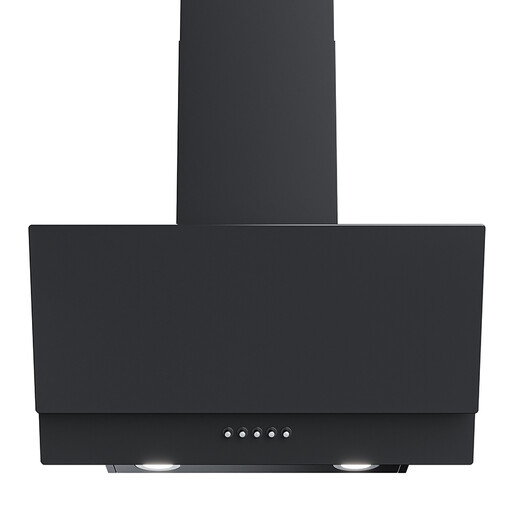
Why this product suits this profile: This 60 cm wall-mounted hood combines recirculation and extraction modes and comes with an activated carbon filter, installation materials and chimney components. This can make initial planning easier.
It is not limited to extraction mode. The stated airflow of 300 m³/h and the five layers of the aluminium grease filter are clearly specified.
LED lighting, push-button controls, dishwasher-safe grease filter and energy efficiency class B according to the product information.
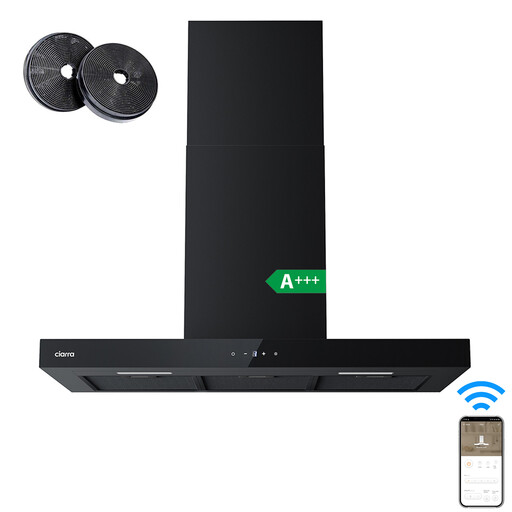
Why this product suits this profile: This 90 cm wall-mounted hood is designed for wider cooking areas and offers Wi-Fi, app and touch controls. The booster function complements the four standard power levels.
Alongside app control, the data sheet specifies a maximum noise level of 59 dB, two CBCF003 activated carbon filters and washable aluminium grease filters.
650 m³/h stated airflow, energy efficiency class A+++ and LED lighting according to the product description.
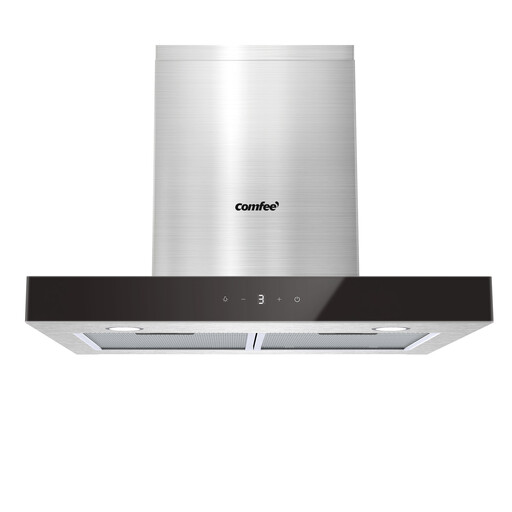
Why this product suits this profile: This 60 cm model is an appealing option for households that cook frequently and want touch and gesture controls alongside four power levels.
The filter technology is clearly described: a removable, dishwasher-safe aluminium filter with five layers. Both recirculation and extraction modes are supported.
650 m³/h, 59 dB, LED lighting plus gesture and touch controls according to the manufacturer's specifications.
The metal grease filter should be cleaned approximately every two to four weeks, depending on how often it is used. With recirculation mode, activated carbon filters generally need to be replaced more frequently; for the Ciarra CBCB9102-B model, two to four months is given as a guideline. The actual service life depends on how often you cook and the type of food you prepare.
Always disconnect the power supply before carrying out any maintenance. Avoid naked flames and flambéing beneath the hood, as grease deposits can pose a fire risk. If the extractor hood is operated at the same time as a room-air-dependent heating appliance, ensure an adequate supply of fresh air. The electrical appliance should be installed according to the instructions and, where necessary, by a qualified professional.
We have put together a complete, regularly updated list of products that fully meet these strict selection criteria and the safety regulations applicable in the EU.
For a 60 cm hob, a 60 cm extractor hood is often chosen. For wider hobs or several cooking zones, a 90 cm hood can provide greater coverage. The hood should also be positioned centrally above the hob.
Extraction vents odours and moisture outside, but requires a suitable wall connection. Recirculation is more flexible in rented properties and does not require a hole through the wall. However, it involves regular activated carbon filter costs, and the kitchen needs to be ventilated after cooking.
Running costs depend on annual consumption, how long the appliance is used and the electricity tariff. An appliance using 12 kWh per year would cost approximately 4.20 euros per year in electricity at an assumed tariff of 0.35 euros per kWh. Filter replacement, cleaning and any installation costs are not included.