
Lieferung heute & morgen

Qualitätsgarantie

Willkommens-Angebote freischalten: KOSTENLOSE Lieferung | Bis zu 80 % RABATT | Kostenlose 30-Tage-JoyPlus-Testphase
App herunterladen
An extractor hood should remove cooking vapours, grease particles and odours from the cooking area as effectively as possible. In practice, however, choosing the right model is about more than high extraction rates. Its dimensions, installation type, operating mode and filter maintenance all need to suit your kitchen and cooking habits.
An extractor hood with 650 m³/h might sound powerful at first. However, the stated maximum is usually only reached on the highest setting or in booster mode. In everyday use, factors such as airflow, room size, ducting and noise levels also matter. With a recirculating extractor hood, the air is not vented outside; instead, it passes through grease and activated carbon filters.
An extraction hood needs a suitable opening in the wall and a compatible exhaust duct. It can vent cooking vapours outside, but this may not be possible in every rented home or kitchen layout. A recirculating extractor hood is more flexible to install. To reduce odours, it needs a suitable activated carbon filter, which must be replaced regularly.
Also check whether the filter is included. Some models are supplied without an activated carbon filter, which is sold separately.
A 60 cm extractor hood is often suitable for standard hobs. If you have a wider hob, a 90 cm extractor hood may be a better choice, as it can cover more of the cooking area. What matters is the actual width of the hob and the hood’s position above it, not just how it looks against your kitchen units.
Before you buy, check the installation width, appliance depth, chimney height and fixing points. The installation height must also comply with the instructions and suit your hob. For example, several models specify a clearance of 65 cm above an electric hob and 75 cm above a gas hob. Always follow the relevant manufacturer’s instructions and local installation requirements.
Extraction rate is measured in m³/h. Models rated at around 200 to 400 m³/h may be enough for smaller kitchens and moderate cooking. If you often fry food, have an open-plan kitchen or cook intensively, a higher setting may be more suitable.
Noise level is measured in dB. A lower figure is generally more comfortable, but should always be considered alongside the extraction setting. So a “quiet extractor hood” will not necessarily be quiet in every operating mode.
Washable aluminium or multi-layer grease filters should be cleaned every two to four weeks, depending on use. Grease build-up can reduce extraction performance and increase the risk of fire. Activated carbon filters in recirculating hoods should be replaced as instructed by the manufacturer, taking your usage into account.
An energy-efficient extractor hood may have a favourable energy efficiency rating and low annual consumption. Compare the specific energy label and stated annual consumption. Extra features such as LED lighting, touch controls or Wi-Fi can add convenience, but are not essential for basic extraction.
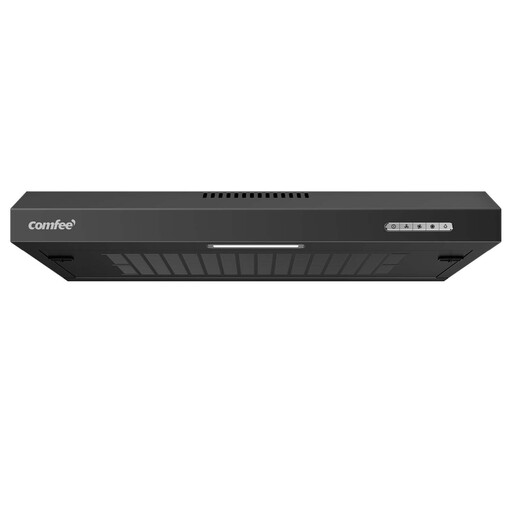
Why this product suits this profile: This 60 cm under-cabinet hood is designed for smaller kitchens and straightforward operation. It has three speed settings and LED lighting, and can be used in both recirculation and extraction modes.
The operating modes are clearly distinguished. Recirculation requires a suitable filter, while extraction does not need this additional filter.
60 cm format, three speed settings, LED lighting and stainless steel housing, according to the product description.
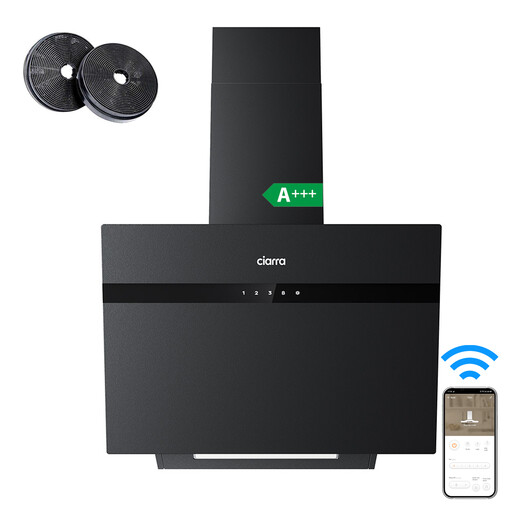
Why this product suits this profile: Its angled design in matt glass is made for modern kitchens. Wi-Fi and app control, dimmable LED lighting and two operating modes complete its range of features.
The stated maximum extraction rate of 650 m³/h is complemented by three settings and a booster function. The maximum noise level is listed as 58 dB.
A+++ according to the product information, maximum extraction rate of 650 m³/h, app connectivity and two LED brightness settings.
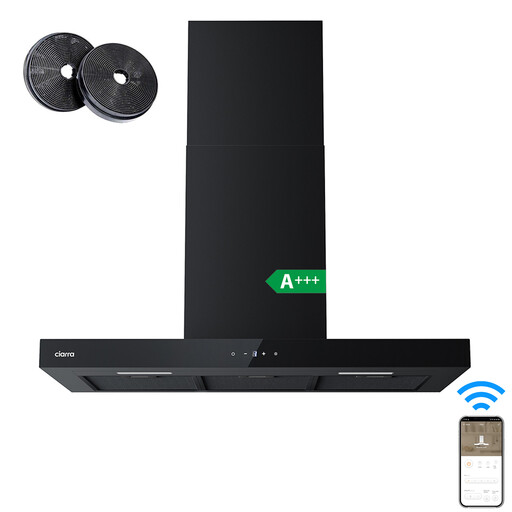
Why this product suits this profile: This 90 cm wall-mounted hood is designed for larger hobs and frequent cooking. It has four speed settings, a booster function, Wi-Fi and app control, and both recirculation and extraction options.
The 90 cm width covers a larger area. The product specifications state an extraction rate of 650 m³/h, a maximum noise level of 59 dB and washable aluminium grease filters.
Four speed settings, booster function, 1.5 m exhaust duct according to the product description, and an A+++ energy efficiency rating as stated.
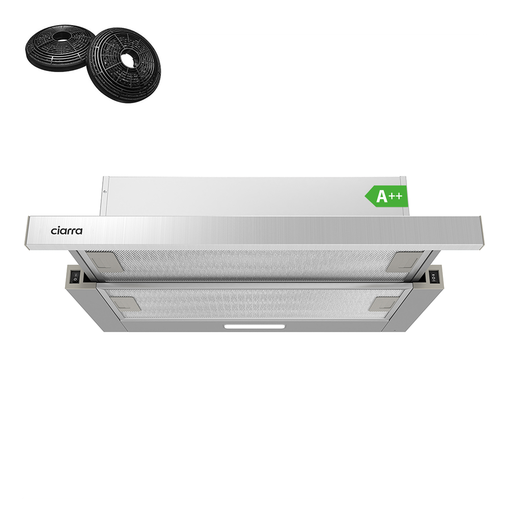
Why this product suits this profile: This pull-out 60 cm under-cabinet hood takes up little space and supports both recirculation and extraction. Its design suits rented homes and kitchens with limited room beneath wall cabinets.
Its extraction rate of up to 370 m³/h and maximum noise level of 61 dB are clearly stated. The grease filters are washable.
Telescopic pull-out design, built-in LED, activated carbon filter included and A++ energy efficiency rating according to the product details.
We’ve put together a complete, regularly updated list of products that meet these strict selection criteria and fully comply with the safety regulations in force in the EU.
It depends on your kitchen. An extraction hood vents air outside, but needs a suitable duct. Recirculation is more flexible and often easier to arrange in rented homes, but its activated carbon filters need to be replaced regularly.
If you use your hood regularly, it’s a good idea to clean the filter every two to four weeks. Frequent frying or deep-frying may mean you need to clean it more often. Follow the manufacturer’s care instructions.
Consumption depends on the energy efficiency rating, annual consumption, speed setting and how long you use the hood for. Compare the stated kWh per year, and use the highest setting only when it’s needed for the cooking you’re doing.