
Lieferung heute & morgen

Qualitätsgarantie

Willkommens-Angebote freischalten: KOSTENLOSE Lieferung | Bis zu 80 % RABATT | Kostenlose 30-Tage-JoyPlus-Testphase
App herunterladen
An extractor hood should reliably remove cooking vapour, grease particles and odours from the cooking area. However, choosing the right model involves more than just design and a high extraction rate. The key factors are the correct width, the available ventilation setup, the noise level in the relevant operating mode, and the ongoing effort required for filter replacement and cleaning.
Figures such as 650 m³/h usually refer to a specific test or intensive setting. In everyday use, a lower setting is often selected. Long, narrow or convoluted ventilation ducts can also reduce the actual extraction performance. Therefore, as well as checking the maximum figure, look at the extraction rate for each setting, the connection diameter and the installation instructions.
An extractor hood with external extraction directs polluted air outside through a duct. This requires a suitable wall vent or existing extraction connection. With a recirculating extractor hood, the air is passed through a grease filter and usually an activated carbon filter before being returned to the room.
Recirculation is often suitable for rented properties or kitchens without an external connection. However, the activated carbon filter must be replaced regularly. An extractor hood with an activated carbon filter therefore involves ongoing running costs that should be considered when purchasing.
Touch controls, Wi-Fi and app control can make operation easier. However, they do not change the fact that metal grease filters need to be cleaned regularly. Grease deposits can affect extraction performance and may pose a safety risk if they build up heavily. Disconnect the appliance from the mains before cleaning or changing the filter.
A 60 cm extractor hood fits many standard hobs and kitchen units. For a wider hob or more intensive use, a 90 cm extractor hood may be a sensible choice, as it covers the cooking area more generously. The hood should be at least as wide as the hob; for certain installation situations, the manufacturer’s specifications are decisive.
A low extraction rate is not automatically sufficient for small kitchens, as cooking habits and room volume also play a role. Frequent users and keen home cooks should look for several power settings as well as an intensive or booster setting.
Noise levels are given in dB. Figures should always be considered together with the corresponding power setting. A model described as a “quiet extractor hood” may be pleasantly quiet on a low setting but considerably louder at maximum power. Wherever possible, therefore, compare specific figures such as 52 dB on a low setting or 59 dB at the manufacturer’s stated maximum.
The energy efficiency class, annual energy consumption and lighting performance provide an indication of ongoing electricity costs. According to the product information, an A+++ extractor hood may have low annual consumption. However, the specific rating should always be checked on the current energy label for the model in question.
Also look out for:
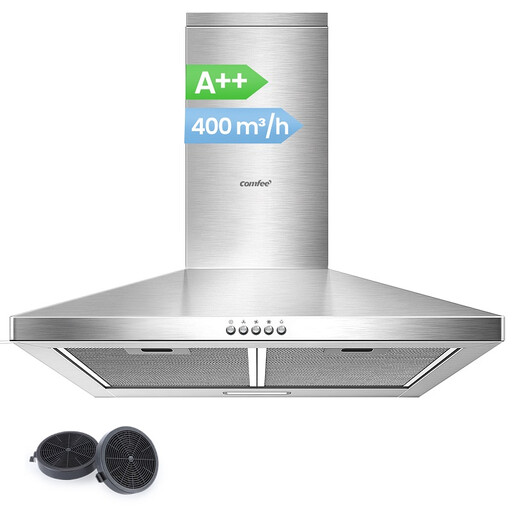
Why this product suits the profile: The 60 cm design, mechanical buttons and 400 m³/h extraction rate provide straightforward standard equipment for small to medium-sized kitchens.
It is designed for both external extraction and recirculation; according to the product information, an activated carbon filter is included. This means the hood can also be planned for kitchens without an existing external connection.
A++ according to the product information, a five-layer aluminium grease filter and height-adjustable chimney.
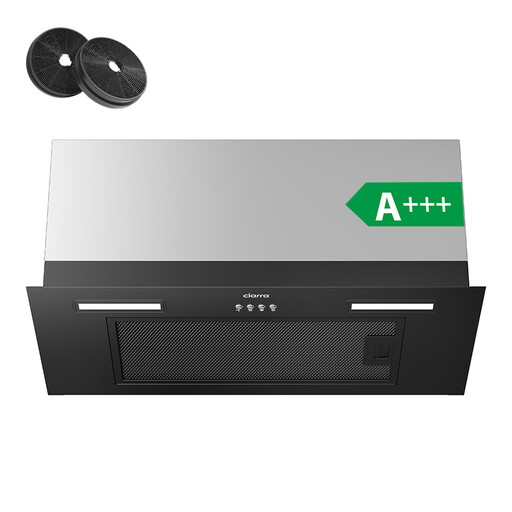
Why this product suits the profile: The integrated design, with a width of 599 mm, fits many 60 cm kitchen cabinets, provided the specific recess has been checked.
The product data lists both external extraction and recirculation. Recirculation requires two CBCF003 activated carbon filters; according to the specifications, the duct is not included for external extraction.
A+++ and 9 kWh/a according to the product information, up to 650 m³/h and a stated 24-month warranty.
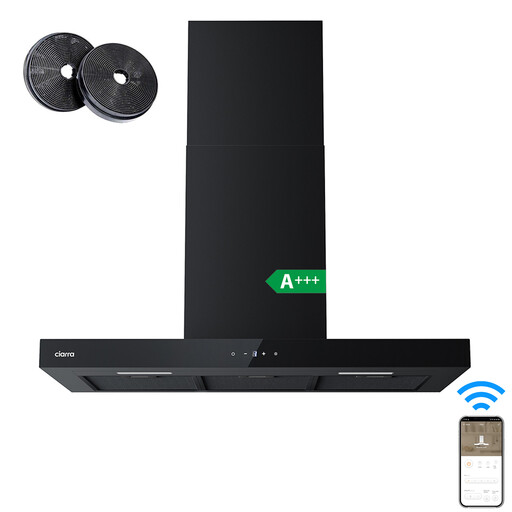
Why this product suits the profile: The 90 cm wall-mounted hood is designed for larger hobs and households that want to use several power settings, a booster and app control.
As well as Wi-Fi control, it offers clear filter and operating specifications: washable aluminium grease filters, plus recirculation with CBCF003 filters or external extraction.
Maximum extraction rate of 650 m³/h, four speeds with booster and a maximum stated noise level of 59 dB according to the product data.
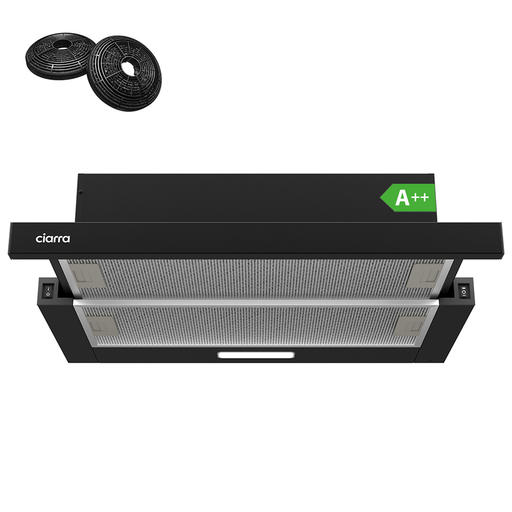
Why this product suits the profile: The pull-out design, with a width of 60 cm, takes up relatively little space and can be partially pushed in when not in use.
The specifications list both ventilation modes and include an extraction duct as well as CBCF002 activated carbon filters. Before buying, however, check that the cabinet can accommodate the telescopic depth.
Up to 370 m³/h, A++ according to the product information, two washable aluminium filters and integrated LED lighting.
We have put together a complete, regularly updated list of products that fully meet these strict selection criteria and the safety regulations applicable in the EU.
Installation should be carried out in accordance with the operating instructions and by a suitably qualified person. Observe the specified distances from the hob; different minimum distances may apply to gas and electric hobs. For external extraction, the duct routing, backdraught flap and wall vent must be compatible.
If the hood is operated at the same time as a room-air-dependent heating appliance, ensure there is an adequate supply of fresh air. Otherwise, negative pressure may develop. The specific situation should be clarified with a specialist contractor or the responsible chimney sweep.
Clean metal grease filters according to usage, usually around every two to four weeks. In recirculation mode, activated carbon filters generally need to be replaced at regular intervals. The manufacturer’s instructions and your actual cooking frequency are the decisive factors.
A recirculating extractor hood is often practical when there is no extraction duct or structural alterations are not permitted. A washable grease filter and suitable activated carbon filters are important. If an existing, approved external extraction option is available, external extraction may also be suitable because it directs air straight outside.
This depends on the room size, hob width, design and extraction ducting. Maximum performance alone is not enough for a meaningful comparison. Check the extraction rate at each setting and make sure the hood adequately covers the cooking area. For frequent frying, several settings and a booster function can be useful.
Choose a model with clear energy consumption information and use the lowest suitable power setting. Regularly cleaned grease filters help maintain consistent operation. With recirculation, factor the cost and replacement intervals of activated carbon filters into your purchasing decision.