
Lieferung heute & morgen

Qualitätsgarantie

Willkommens-Angebote freischalten: KOSTENLOSE Lieferung | Bis zu 80 % RABATT | Kostenlose 30-Tage-JoyPlus-Testphase
App herunterladen
A suitable eye make-up remover should thoroughly dissolve mascara, eyeliner and eyeshadow without putting unnecessary strain on the delicate eye area. If you have sensitive skin, wear contact lenses or use waterproof make-up, it is well worth taking a closer look at the formulation, application and manufacturer’s instructions.
Not every product labelled as “gentle” or “for sensitive eyes” automatically suits every need. The following tips will help you interpret marketing claims and choose the right cleanser for you.
Terms like gentle eye make-up remover, “mild” or “for sensitive skin” alone tell you very little about the actual ingredients. So check the packaging for details such as fragrance-free, alcohol-free, ophthalmologically tested or suitable for contact lens wearers. These descriptions refer to specific product features, but they do not replace an individual tolerance test.
Waterproof mascara and long-lasting eyeliner often adhere more strongly to lashes and lids. Depending on the formulation, a simple facial cleanser or a light micellar water may not be sufficient. If you then rub vigorously, you can mechanically irritate the skin. A two-phase eye make-up remover or a cleansing milk can be more practical for these textures.
A make-up remover without rubbing or rinsing can be convenient when you are on the go or at the end of the day. However, residues of pigments, oils or surfactants can remain. If you have sensitive skin, pay attention to how your skin feels after use, and if necessary, follow up with water or a suitable facial cleanser.
For light everyday make-up, a liquid eye make-up remover or micellar water is often sufficient. For waterproof mascara, oil-based or two-phase formulations are usually more effective, as they can first dissolve the decorative products. A cleansing balm is applied to dry skin, emulsified with water and then rinsed off.
The key is specific labelling: “Removes waterproof make-up” should be explicitly stated in the product description. A general cleansing claim is not sufficient proof.
If you wear contact lenses, look for a product that is specifically marked as suitable for contact lens wearers. Statements like “ophthalmologically tested” or “eye doctor tested” refer to the product’s testing and are not a blanket guarantee for every individual.
For sensitive skin, a fragrance-free, alcohol-free or a short INCI list can be important selection criteria. Fragrances and certain plant extracts are not inherently problematic, but they can play a role if you have a personal sensitivity.
Apply enough product to a soft cotton pad or a reusable make-up pad. Place it on your closed eyelid for a few seconds, then gently wipe outwards. This method reduces mechanical pressure.
If the product comes into contact with your eye, rinse with water as per the safety instructions. If irritation persists, stop using the product and seek medical advice if necessary.
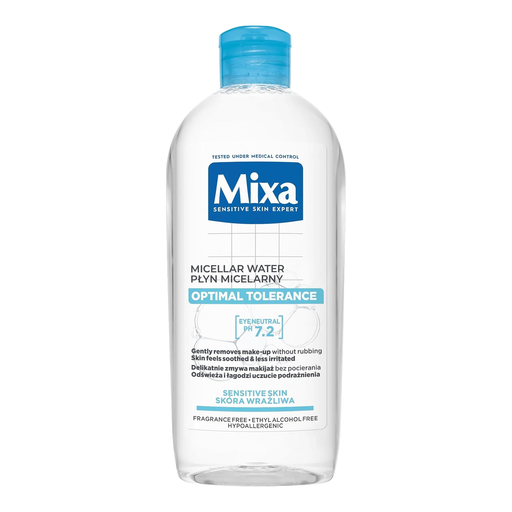
Why this product fits the profile: This micellar water is designed for cleansing the face and eyes, and according to the product information, it can be used without rubbing. The 400ml size is ideal for a regular routine.
The product description states a physiological pH of 5.5 and the instruction “Do not rub”. This makes the application clearer than a mere marketing claim like “mild”.
Micellar formulation, face and eye cleansing, and a large 400ml fill volume.
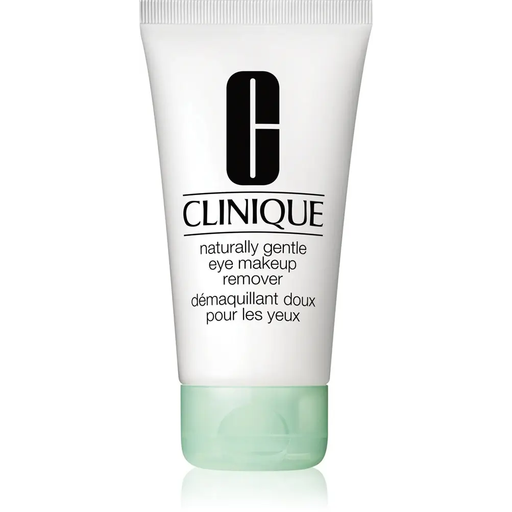
Why this product fits the profile: According to the product information, this creamy texture is suitable for all skin types, is fragrance-free and suitable for contact lens wearers.
The details specifically state “100% fragrance-free” and that it should be used with rinsing. This clearly describes the cleansing routine.
Creamy texture, fragrance-free formulation and declared suitability for contact lens wearers.
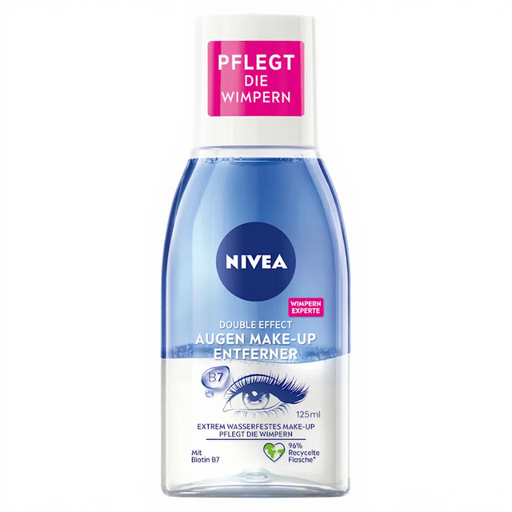
Why this product fits the profile: According to the product description, this two-phase formulation is designed for waterproof make-up and is also suitable for contact lens wearers.
Before use, you shake the bottle so that the two phases combine. This supports targeted application for long-lasting make-up without heavy rubbing.
Two-phase texture, focus on waterproof make-up and a bottle with a high recycled content according to the product information.
We have compiled a complete, regularly updated list of products that fully meet these strict selection criteria and the safety regulations in force in the EU.
The INCI list can change. Therefore, check the current packaging information before buying and before use. A patch test on a small area of skin can provide additional guidance for sensitive skin, but it does not replace medical advice.
A waterproof eye make-up remover with a two-phase formulation, a cleansing milk or a balm are often suitable options. The key is that the manufacturer explicitly states the removal of waterproof make-up. The product should be left on your closed eye for a few seconds before being gently wiped away.
Micellar water can be suitable for the eyes if the product description explicitly states this. A facial cleanser without such an indication should not automatically be used on the eye area. For very stubborn make-up, a dedicated eye make-up remover may be more effective.
The symbol for the shelf life after opening on the packaging is decisive, for example “6M” for six months. You should regularly check the smell, colour and consistency. If there are any changes or irritation occurs, stop using the product.