
Lieferung heute & morgen

Qualitätsgarantie

Willkommens-Angebote freischalten: KOSTENLOSE Lieferung | Bis zu 80 % RABATT | Kostenlose 30-Tage-JoyPlus-Testphase
App herunterladen
An eyeshadow palette can create a variety of looks, from subtle office make-up to a striking evening look. But a wide choice of colours and claims such as ‘highly pigmented’ or ‘long-lasting’ don’t automatically make a palette the right choice for you. What matters is the colours it actually contains, the finishes, how it applies and the information on the packaging.
A palette with a wide range of shades may seem versatile at first. In practice, though, many colours may overlap or be difficult to combine. For natural everyday looks, several coordinated base, transition and accent shades are usually more useful than the largest possible number of individual colours.
A brown eyeshadow palette, or one with muted sand, taupe and rose shades, can often be worked into your everyday eye make-up more easily. If you’re looking to create more imaginative looks, you could look for purple eyeshadow, bold contrasting colours or several glitter finishes.
‘Highly pigmented eyeshadow’ doesn’t automatically mean it will blend easily. Matte textures can require a precise touch when they deliver intense colour. Shimmering eyeshadow reflects the light, but can also draw attention to the texture of your eyelid. Glitter eyeshadow may contain loose particles, so take suitable care when applying it.
Check whether the palette contains matte, satin, shimmer or glitter shades, and whether the product description says they can be layered to build up colour. If you’re just getting started, coordinated matte transition shades and one or two accent colours are often more practical than a palette made up entirely of very intense shades.
When choosing eyeshadow for sensitive skin, don’t rely solely on claims such as ‘gentle’ or ‘nourishing’. Check the full INCI list, including details of fragrances, preservatives and colourants, and bear in mind any ingredients you know you’re sensitive to.
Cosmetics are used on the delicate skin around the eyes. Stop using the product if you experience redness, itching or a burning sensation. Before buying, also check the responsible person, batch number, shelf-life information and warnings. This information should be clearly provided on the packaging.
First, think about the looks you actually want to create:
A palette for natural looks should contain at least one light base shade, a mid-toned transition shade and a darker shade for definition. These gradations are especially important in a matte eyeshadow palette, as depth is created mainly through colour and blending.
Powder textures can be built up with a brush and blended together. You can also apply individual eyeshadows with your finger, especially creamy or highly shimmery formulas. According to the product description, a ‘Cream-to-Powder’ texture combines an initially creamy feel with a powder finish.
Think about how you plan to apply the product. A fine brush is useful for the crease and lower lash line, while a flat brush gives more intense colour. If you’re using loose glitter, check whether it’s designed to be applied over a special adhesive base. Avoid direct contact with the eye.
The ingredients list should be complete and easy to read. Common ingredients such as mica, talc, silica or colour pigments aren’t enough on their own to determine whether a product will suit you. If you want to avoid particular substances, check the INCI list for each shade, as the ingredients may differ within a palette.
Fragrance-free formulas may be worth considering if you have sensitive skin, for example. However, this doesn’t replace checking how your skin responds to a product. General usage instructions remain important even for products described as ‘vegan’, ‘oil-free’ or ‘paraben-free’.
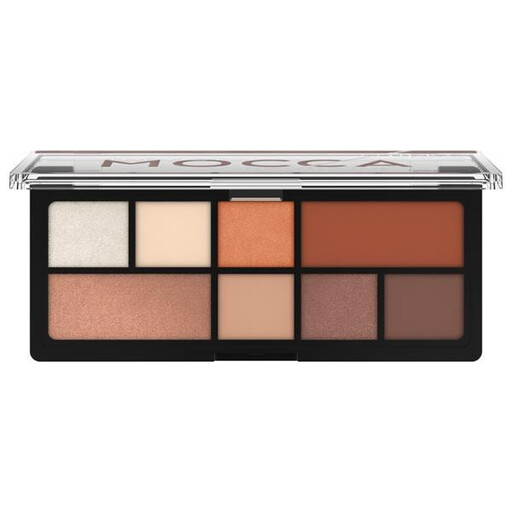
Why it suits this profile: The warm colour scheme works well for everyday brown and subtle eye make-up looks. The palette offers several shades in a compact format.
The palette focuses on warm, easy-to-combine shades rather than tricky trend colours. Ingredient information is listed for each shade.
Described as containing eight matte shades; the palette is also said to be fragrance-free, oil-free, alcohol-free and paraben-free.
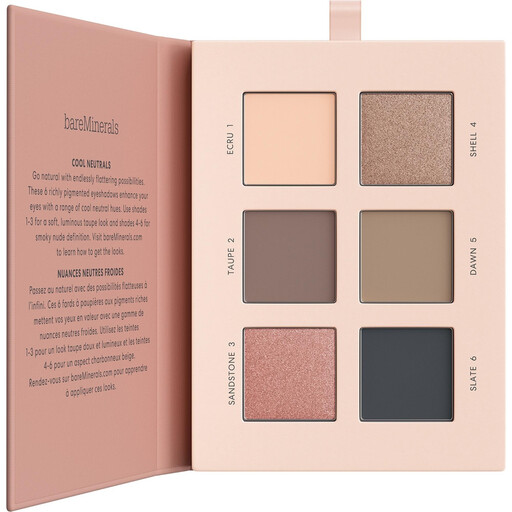
Why it suits this profile: Six shades with matte, satin and metallic finishes offer options for both daytime and evening looks.
The carefully selected range of shades means fewer colours are left unused. The product description specifies a formula that’s talc-free and fragrance-free, with several different finishes.
Described as vegan, talc-free and silicone-free, with recyclable, plastic-free packaging.
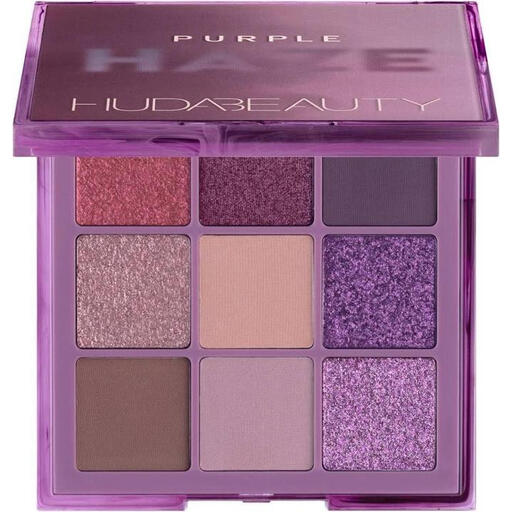
Why it suits this profile: The nine purple shades are designed for creative looks, smoky eyes and buildable intensity.
If you’re specifically looking for purple shades, this gives you a clearly defined colour scheme rather than a palette with just one accent shade.
The product description says the palette contains matte and shimmer finishes, as well as buildable powder shades.
We’ve put together a complete, regularly updated list of products that meet these strict selection criteria and fully comply with the safety regulations in force in the EU.
Apply eyeshadow to a clean, dry eyelid. An eyeshadow primer can smooth the skin and help the colour apply more evenly, but not every product requires one. Start with a small amount of colour and build up the intensity gradually. Matte shades are useful for shading, while shimmer shades can be placed precisely in the centre of the lid or at the inner corner of the eye.
Close the palette after each use and store it somewhere cool and dry, away from direct sunlight. Powder products can last a long time when stored carefully, but always check the printed expiry date, the PAO symbol and the condition of the product. A change in smell, colour or texture may be a sign that the product has changed.
Choose palettes with matte beige, brown, taupe or rose shades, including at least one light and one darker shade. A brown eyeshadow palette usually offers plenty of combinations for everyday and office wear.
A clean, dry eyelid and a suitable primer can help eyeshadow stay put. Apply several thin layers instead of using a large amount all at once. How long it lasts depends on the formula, your skin type, your surroundings and how you apply it.
Check the full ingredients list, choose fragrance-free formulas if appropriate and follow the manufacturer’s warnings. Stop using the product straight away if you experience any discomfort. Seek medical advice if irritation persists.